
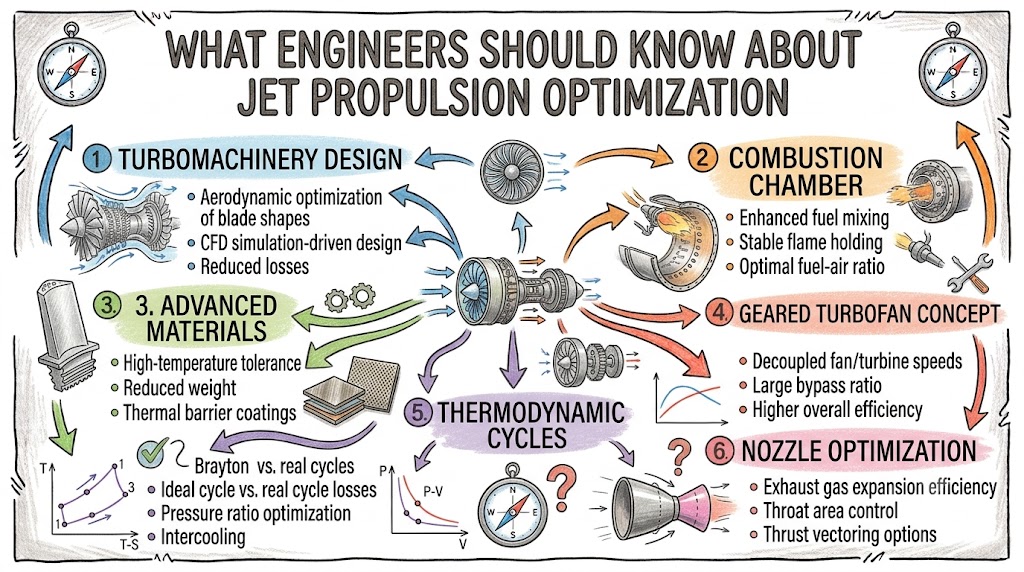
Introduction
Jet propulsion systems are among the most advanced engineering achievements in modern aviation. They generate the thrust needed to move aircraft efficiently across long distances while operating under demanding conditions such as high temperatures, extreme pressures, and varying atmospheric environments. As aircraft technology continues to evolve, optimizing jet propulsion has become increasingly important for improving performance, enhancing reliability, reducing fuel consumption, and supporting long-term operational efficiency.
For aerospace engineers, understanding propulsion optimization involves much more than increasing engine power. It requires balancing airflow, combustion efficiency, thermal management, material performance, maintenance strategies, and operational considerations. Every improvement, even a small one, can contribute to better aircraft performance and lower operating costs.
This guide explains the key principles of jet propulsion optimization, the engineering factors that influence engine efficiency, and the best practices engineers should understand when working with modern jet propulsion systems.
Understanding Jet Propulsion Systems
A jet engine converts fuel energy into thrust by accelerating a stream of high-speed exhaust gases.
The basic propulsion process includes:
- Air intake
- Compression
- Combustion
- Turbine operation
- Exhaust flow
- Thrust generation
Each stage must operate efficiently to maximize engine performance.
Air Intake
The propulsion cycle begins when outside air enters the engine.
An effective air intake system helps:
- Maintain smooth airflow
- Reduce pressure losses
- Improve compressor performance
- Support efficient combustion
Well-designed intake systems contribute directly to engine efficiency.
Compression
The compressor increases the pressure of incoming air before combustion.
Efficient compression provides:
- Better combustion conditions
- Improved fuel utilization
- Stable engine operation
Compressor performance has a significant influence on overall propulsion efficiency.
Combustion
Inside the combustion chamber, compressed air mixes with fuel and burns to produce high-energy gases.
Effective combustion requires:
- Proper fuel-air mixing
- Stable flame characteristics
- Controlled temperatures
- Efficient energy release
Combustion optimization supports both performance and reliability.
Turbine
Hot gases pass through turbine stages, extracting energy to drive the compressor and other engine systems.
Efficient turbine operation depends on:
- Blade design
- Material strength
- Cooling effectiveness
- Mechanical balance
Turbine performance directly influences engine durability.
Exhaust and Thrust Generation
After passing through the turbine, exhaust gases exit the engine at high speed.
The resulting momentum produces the thrust required for flight.
Optimizing exhaust flow improves propulsion efficiency and aircraft performance.
Why Jet Propulsion Optimization Matters
Improving propulsion efficiency benefits both aircraft operators and passengers.
Optimization contributes to:
- Better fuel economy
- Increased aircraft range
- Lower operating costs
- Improved engine reliability
- Enhanced flight performance
- Greater operational efficiency
Even small efficiency improvements can produce meaningful long-term benefits.
Airflow Management
Managing airflow effectively is one of the most important aspects of propulsion optimization.
Engineers focus on:
Intake Efficiency
Smooth airflow entering the engine improves compressor performance.
Compressor Performance
Efficient compressors increase pressure while minimizing energy losses.
Airflow Balance
Balanced airflow supports stable combustion throughout the engine.
Pressure Management
Maintaining appropriate pressure ratios improves engine efficiency.
Aerodynamic Design
Careful aerodynamic design reduces airflow disturbances inside the engine.
Combustion Optimization
Efficient combustion maximizes useful energy while supporting reliable engine operation.
Key considerations include:
Fuel-Air Mixture
Proper mixing improves combustion efficiency.
Combustion Stability
Stable combustion reduces performance fluctuations.
Temperature Control
Managing combustion temperatures protects engine components.
Efficient Energy Conversion
Better combustion improves thrust while supporting fuel efficiency.
Reduced Emissions
Optimized combustion helps improve overall environmental performance.
Thermal Management
Jet engines operate under extremely high temperatures.
Thermal management protects engine components through:
- Cooling systems
- Heat-resistant materials
- Temperature monitoring
- Protective coatings
- Efficient airflow
Effective thermal management extends engine service life.
Turbine Performance Optimization
Turbine efficiency significantly affects propulsion performance.
Engineers evaluate:
Blade Design
Aerodynamic blade shapes improve energy extraction.
Material Selection
Advanced materials improve durability under high temperatures.
Mechanical Balance
Balanced rotating assemblies reduce vibration.
Performance Monitoring
Routine monitoring identifies efficiency changes before they become major problems.
Maintenance and Reliability
Engine optimization depends on consistent maintenance.
Important maintenance activities include:
- Scheduled inspections
- Preventive maintenance
- Component replacement
- Condition monitoring
- Engine performance analysis
Reliable maintenance supports long-term efficiency.
Engine Health Monitoring
Modern propulsion systems often include advanced monitoring capabilities.
Engineers evaluate:
- Temperature trends
- Pressure measurements
- Fuel consumption
- Vibration
- Engine performance
Monitoring helps identify developing issues early.
Predictive Maintenance
Instead of waiting for failures, predictive maintenance uses performance data to identify maintenance needs before significant problems occur.
Benefits include:
- Reduced downtime
- Better planning
- Improved reliability
- Lower maintenance costs
Predictive maintenance supports efficient operations.
Advanced Materials
Modern jet engines use materials designed to withstand demanding operating environments.
Examples include:
- High-temperature alloys
- Composite materials
- Protective coatings
- Lightweight structural materials
Material selection influences both performance and durability.
Common Challenges in Propulsion Optimization
Several factors can reduce engine efficiency over time.
Component Wear
Moving parts naturally experience wear during operation.
High Operating Temperatures
Extreme temperatures place continuous stress on engine components.
Compressor Fouling
Contamination may reduce compressor efficiency.
Fuel Quality
Fuel characteristics influence combustion performance.
Environmental Conditions
Dust, moisture, temperature, and atmospheric conditions affect engine operation.
Aging Equipment
Long-term operation gradually changes engine performance characteristics.
Best Practices for Engineers
Successful propulsion optimization requires a systematic approach.
Perform Regular Performance Analysis
Compare engine performance with expected operating parameters.
Follow Preventive Maintenance Programs
Routine maintenance reduces long-term performance losses.
Monitor Engine Data
Analyze operational trends continuously.
Maintain Accurate Documentation
Well-organized records support maintenance planning.
Investigate Performance Changes
Small changes often indicate developing maintenance needs.
Continue Professional Learning
Advancing technology requires engineers to remain current with evolving propulsion systems.
Benefits of Effective Jet Propulsion Optimization
Optimization provides lasting operational advantages.
Better Fuel Economy
Improved efficiency reduces fuel consumption.
Enhanced Aircraft Performance
Optimized engines produce reliable thrust throughout operating conditions.
Lower Operating Costs
Efficient engines reduce maintenance and fuel expenses.
Improved Safety
Reliable propulsion systems support safe flight operations.
Longer Engine Service Life
Proper optimization helps reduce unnecessary wear.
Greater Operational Reliability
Well-maintained engines consistently perform as expected.
Jet Propulsion Optimization Checklist
Performance Monitoring:
- Review engine data
- Monitor temperatures
- Analyze fuel consumption
- Observe vibration trends
Maintenance:
- Complete scheduled inspections
- Replace worn components
- Maintain accurate records
- Follow preventive maintenance programs
Engineering Evaluation:
- Review airflow performance
- Assess combustion efficiency
- Evaluate turbine condition
- Monitor cooling effectiveness
Frequently Asked Questions
1. What is jet propulsion optimization?
Jet propulsion optimization involves improving engine performance, efficiency, reliability, and durability through engineering design, maintenance, and operational improvements.
2. Why is engine efficiency important?
Efficient engines improve fuel economy, reduce operating costs, increase aircraft range, and support reliable performance.
3. How does airflow affect engine performance?
Proper airflow improves compressor efficiency, supports combustion stability, and contributes to effective thrust generation.
4. What is combustion optimization?
Combustion optimization focuses on improving fuel-air mixing, temperature control, combustion stability, and overall energy conversion.
5. Why is thermal management important?
Managing engine temperatures protects components from excessive heat while improving reliability and service life.
6. How does maintenance improve engine efficiency?
Routine inspections, preventive maintenance, and timely component replacement help maintain consistent engine performance.
7. What technologies support propulsion optimization?
Modern engines use sensors, digital monitoring systems, performance analysis tools, and predictive maintenance techniques.
8. How do engineers monitor engine health?
Engineers evaluate temperature, vibration, pressure, fuel consumption, and other operational parameters to monitor engine condition.
9. What causes engine performance loss?
Component wear, contamination, high temperatures, aging equipment, and environmental conditions may gradually reduce engine efficiency.
10. How can optimization improve aircraft performance?
Efficient propulsion improves thrust, fuel economy, operational reliability, maintenance planning, and overall aircraft performance.
Conclusion
Jet propulsion optimization is a continuous engineering process that combines efficient airflow management, stable combustion, effective thermal control, advanced materials, preventive maintenance, and modern monitoring technologies to achieve reliable engine performance. Rather than focusing solely on increasing thrust, optimization seeks to improve the overall balance between performance, efficiency, durability, and operational reliability.
For engineers working with modern aircraft engines, understanding these principles is essential for supporting safe operations, reducing operating costs, extending engine life, and improving aircraft performance. Through careful analysis, regular maintenance, and ongoing technological development, propulsion optimization continues to play a critical role in the future of aerospace engineering.

