
Introduction
Jet engines are among the most remarkable engineering achievements in modern aviation. They provide the power that enables commercial airliners, business jets, military aircraft, and cargo planes to travel long distances at high speeds while carrying passengers and cargo safely across the world. However, the true capability of a jet engine is not determined only by how much thrust it produces—it also depends on how efficiently it converts fuel into useful power.
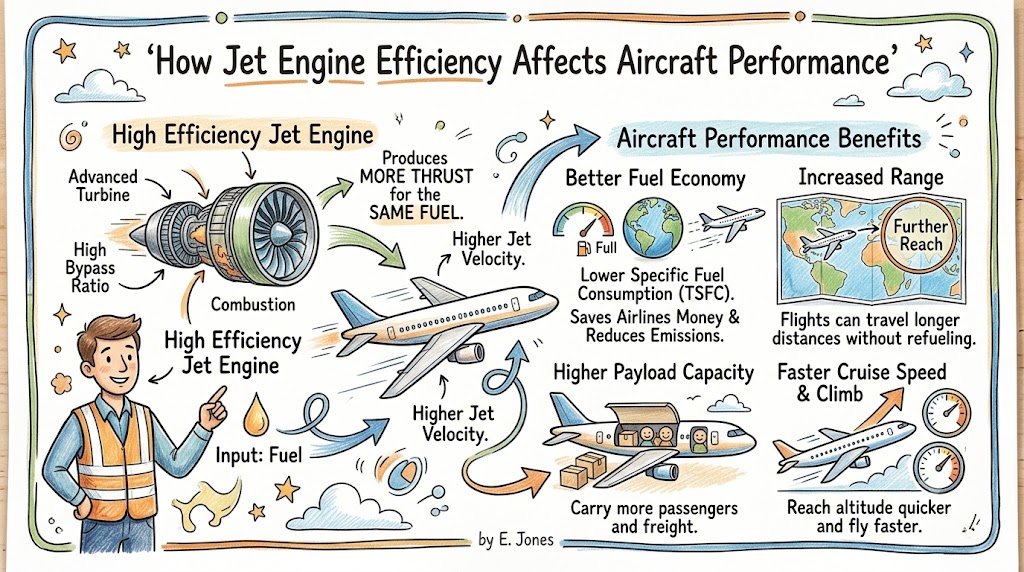
Jet engine efficiency directly affects nearly every aspect of aircraft performance, including fuel consumption, cruising range, climb capability, operating costs, payload capacity, environmental impact, and overall reliability. Even small improvements in engine efficiency can result in significant savings over thousands of flight hours while improving operational performance.
This guide explains what jet engine efficiency means, the factors that influence it, and how it impacts aircraft performance from takeoff to landing.
What Is Jet Engine Efficiency?
Jet engine efficiency refers to how effectively an engine converts the energy stored in fuel into useful thrust that moves an aircraft forward.
An efficient engine:
- Produces more thrust from the same amount of fuel
- Consumes less fuel during flight
- Generates lower emissions
- Operates more reliably
- Supports better overall aircraft performance
Engine efficiency combines both thermal efficiency and propulsive efficiency to determine how effectively fuel energy is transformed into forward motion.
How a Jet Engine Produces Thrust
Understanding engine efficiency begins with understanding how a jet engine works.
The process involves several stages.
Air Intake
The engine draws large amounts of air into the inlet.
Clean, smooth airflow is essential for efficient operation.
Compression
The compressor increases air pressure before combustion.
Higher pressure improves combustion efficiency and engine performance.
Combustion
Fuel is mixed with compressed air and ignited.
The resulting high-temperature gases expand rapidly.
Turbine
Expanding gases spin turbine blades that power the compressor and other engine systems.
Exhaust
The remaining high-speed exhaust gases exit the engine, creating forward thrust according to Newton’s Third Law of Motion.
Each stage contributes to overall engine efficiency.
Types of Jet Engine Efficiency
Engine performance depends on multiple forms of efficiency.
Thermal Efficiency
Thermal efficiency measures how effectively fuel energy becomes useful mechanical energy.
Higher thermal efficiency means less energy is wasted as heat.
Propulsive Efficiency
Propulsive efficiency measures how effectively engine power becomes forward movement.
Engines that accelerate larger amounts of air more gently often achieve better propulsive efficiency.
Overall Efficiency
Overall engine efficiency combines thermal and propulsive performance.
Both must work together to achieve optimal aircraft performance.
Factors That Influence Jet Engine Efficiency
Many variables affect engine performance.
Engine Design
Modern engines incorporate advanced engineering to improve efficiency.
Examples include:
- Improved compressors
- Advanced turbines
- Better airflow management
- Optimized combustion chambers
Compressor Performance
Compressors increase air pressure before combustion.
Efficient compressors improve:
- Fuel combustion
- Engine power
- Overall fuel economy
Turbine Technology
Modern turbine blades operate at extremely high temperatures.
Advanced materials allow turbines to:
- Operate efficiently
- Withstand thermal stress
- Improve engine durability
Combustion Efficiency
Efficient combustion ensures that fuel burns completely.
Benefits include:
- Greater thrust
- Lower fuel consumption
- Reduced emissions
Bypass Ratio
Many commercial aircraft use high-bypass turbofan engines.
Higher bypass ratios generally provide:
- Better fuel efficiency
- Lower noise
- Improved cruise performance
Aircraft Weight
Heavier aircraft require more thrust.
Higher thrust often increases fuel consumption.
Reducing unnecessary weight helps improve efficiency.
Flight Altitude
Jet engines typically operate most efficiently at higher cruising altitudes where air resistance is lower.
Outside Air Temperature
Temperature affects air density.
Very hot conditions may reduce engine performance during takeoff.
Maintenance Condition
Well-maintained engines generally operate more efficiently than poorly maintained engines.
Routine inspections help preserve performance.
Fuel Efficiency and Aircraft Performance
Fuel represents one of the largest operating expenses in aviation.
Efficient engines help reduce:
- Fuel consumption
- Operating costs
- Refueling frequency
- Environmental impact
Lower fuel burn also allows airlines to improve long-distance operations.
Aircraft Range
Engine efficiency directly affects how far an aircraft can travel.
More efficient engines allow aircraft to:
- Fly longer distances
- Carry additional payload
- Reduce refueling stops
- Improve route flexibility
Long-range aircraft particularly benefit from efficient propulsion systems.
Thrust and Takeoff Performance
Takeoff requires significant engine power.
Efficient engines provide:
- Strong acceleration
- Improved climb performance
- Better runway performance
- Greater payload capability
Reliable thrust improves operational flexibility at different airports.
Climb Performance
After takeoff, efficient engines help aircraft reach cruising altitude more effectively.
Benefits include:
- Reduced climb time
- Lower fuel consumption
- Improved operational efficiency
Cruise Performance
Most commercial aircraft spend the majority of flight time cruising.
Efficient engines help maintain:
- Optimal cruising speed
- Fuel economy
- Stable engine operation
- Lower operating costs
Cruise efficiency has a major impact on total flight economics.
Payload Capability
Engine efficiency affects how much useful weight an aircraft can carry.
Improved efficiency may support:
- More passengers
- Additional cargo
- Greater operational flexibility
Payload capability is especially important for commercial and cargo operators.
Aircraft Operating Costs
Efficient engines contribute directly to lower operating expenses.
Savings may include:
- Reduced fuel costs
- Lower maintenance expenses
- Improved reliability
- Fewer unscheduled repairs
Over an aircraft’s lifetime, even small efficiency improvements can produce substantial financial benefits.
Engine Maintenance and Efficiency
Regular maintenance helps engines operate at peak performance.
Maintenance activities include:
Compressor Cleaning
Clean compressor blades improve airflow and engine performance.
Turbine Inspection
Routine inspections identify wear before it affects efficiency.
Fuel System Maintenance
Proper fuel delivery supports efficient combustion.
Oil System Inspection
Reliable lubrication reduces internal friction and component wear.
Performance Monitoring
Engine monitoring systems help maintenance teams identify performance trends and potential issues early.
Environmental Benefits of Efficient Jet Engines
Improving engine efficiency also benefits the environment.
Advantages include:
- Lower fuel burn
- Reduced carbon emissions
- Lower nitrogen oxide emissions
- Reduced operational noise
- Improved sustainability
Modern aviation continues investing in technologies that support cleaner and more efficient flight.
Technological Advances Improving Jet Engine Efficiency
Aircraft engine technology continues to evolve.
Important developments include:
High-Bypass Turbofan Engines
These engines improve fuel efficiency by moving larger volumes of air around the engine core.
Composite Fan Blades
Lightweight materials reduce engine weight while improving durability.
Advanced Turbine Materials
Modern alloys withstand higher temperatures, increasing thermal efficiency.
Digital Engine Controls (FADEC)
Electronic control systems optimize engine performance under varying flight conditions.
Improved Aerodynamics
Engine nacelles and internal airflow designs continue improving propulsion efficiency.
Predictive Maintenance
Advanced monitoring systems help detect potential maintenance needs before failures occur.
Common Misconceptions About Jet Engine Efficiency
Several misunderstandings exist regarding aircraft engines.
Bigger Engines Are Always More Efficient
Efficiency depends on engine design and operating conditions, not simply engine size.
More Thrust Always Means Better Performance
Excessive thrust may increase fuel consumption if not matched to aircraft requirements.
Older Engines Cannot Operate Efficiently
Proper maintenance can help many engines continue operating effectively throughout their service lives.
Fuel Economy Depends Only on the Engine
Aircraft weight, aerodynamics, altitude, weather, and flight planning also influence fuel consumption.
Maintenance Has Little Effect
Routine maintenance plays an essential role in preserving engine efficiency and reliability.
Benefits of High Jet Engine Efficiency
Efficient engines provide numerous operational advantages.
Lower Fuel Costs
Reduced fuel consumption lowers operating expenses.
Longer Aircraft Range
Efficient fuel use enables longer flights.
Better Reliability
Properly maintained engines often experience fewer operational issues.
Improved Passenger Comfort
Efficient engines frequently produce lower vibration and reduced cabin noise.
Reduced Environmental Impact
Lower fuel burn contributes to lower emissions.
Increased Airline Profitability
Fuel savings improve long-term financial performance.
Jet Engine Efficiency Checklist
To maximize engine efficiency:
- Follow scheduled maintenance
- Monitor engine performance
- Maintain clean compressors
- Inspect turbine components
- Optimize flight planning
- Reduce unnecessary aircraft weight
- Use approved replacement parts
- Monitor fuel consumption trends
Frequently Asked Questions
1. What is jet engine efficiency?
Jet engine efficiency measures how effectively an engine converts fuel energy into useful thrust that propels an aircraft.
2. Why is fuel efficiency important?
Fuel efficiency reduces operating costs, extends aircraft range, lowers emissions, and improves overall aircraft performance.
3. How does engine efficiency affect aircraft range?
Efficient engines consume less fuel, allowing aircraft to travel farther using the same fuel supply.
4. Does engine maintenance improve efficiency?
Yes. Regular inspections, cleaning, lubrication, and performance monitoring help maintain optimal engine operation.
5. What is thrust?
Thrust is the forward force generated by a jet engine that moves an aircraft through the air.
6. How do modern engines save fuel?
Modern engines use advanced materials, improved aerodynamics, digital controls, and optimized combustion systems to increase efficiency.
7. What factors affect engine performance?
Engine design, maintenance, altitude, temperature, aircraft weight, and operating conditions all influence performance.
8. What is a high-bypass turbofan?
A high-bypass turbofan routes a large volume of air around the engine core, improving fuel efficiency while reducing noise.
9. Can efficient engines reduce emissions?
Yes. Lower fuel consumption generally produces fewer emissions and supports more sustainable aviation operations.
10. Why is engine efficiency important for airlines?
Efficient engines reduce fuel costs, improve profitability, increase aircraft availability, and enhance operational performance.
Conclusion
Jet engine efficiency is one of the most important factors influencing modern aircraft performance. From generating thrust and improving fuel economy to extending aircraft range, reducing operating costs, and lowering environmental impact, efficient engines support safer, more reliable, and more economical aviation operations. Advances in engine design, materials, digital control systems, and maintenance practices continue to improve performance while helping airlines and operators meet growing demands for efficiency and sustainability.
Whether you are an aviation student, engineer, pilot, or enthusiast, understanding how jet engine efficiency affects aircraft performance provides valuable insight into the technology that powers modern flight and keeps aircraft operating safely and effectively.

