
Introduction
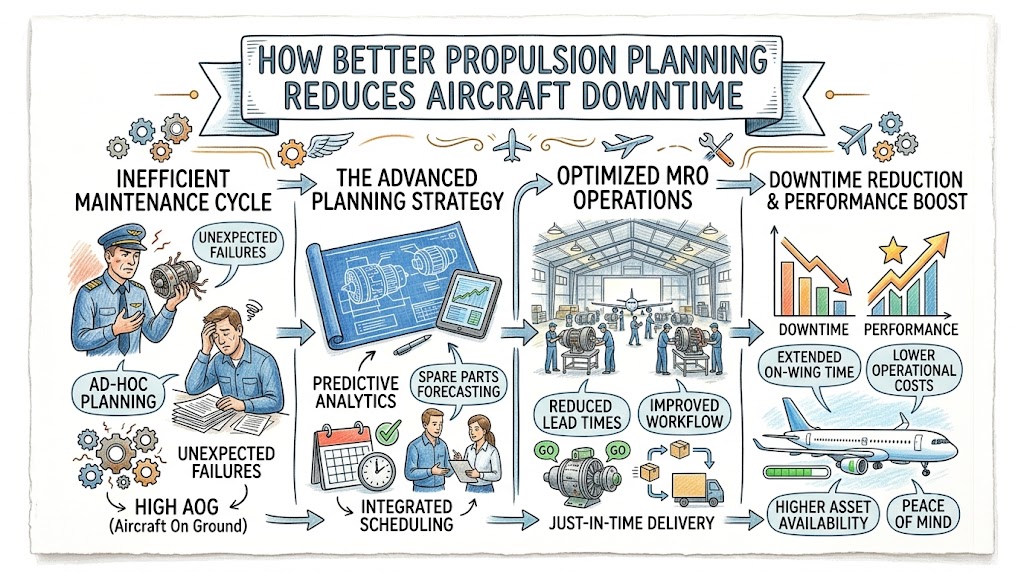
Aircraft propulsion systems are the heart of aviation operations. When a jet engine is unavailable due to unexpected failure or maintenance issues, the entire aircraft can be grounded, leading to costly delays, operational disruption, and reduced fleet efficiency. This situation, commonly known as Aircraft on Ground (AOG), is one of the most expensive challenges in aviation.
Better propulsion planning helps prevent these disruptions by ensuring that engine performance is continuously monitored, maintenance is scheduled proactively, and potential issues are addressed before they escalate. Through predictive maintenance, data analysis, and coordinated planning between flight operations and MRO teams, airlines and operators can significantly reduce aircraft downtime and improve overall reliability.
This guide explains how effective propulsion planning directly reduces downtime and strengthens operational performance.
Real-world Use Cases
A commercial airline reduces AOG incidents by using predictive engine analytics to schedule maintenance before failures occur.
A fleet operator plans engine inspections based on vibration and temperature trend data, preventing unexpected breakdowns.
An MRO team detects early turbine wear during routine inspection and replaces components before engine damage spreads.
A pilot reports abnormal vibration during climb, triggering immediate preventive maintenance actions.
A maintenance planner optimizes spare parts inventory to ensure quick engine servicing without delays.
A cargo airline minimizes delivery disruptions by continuously tracking propulsion system health.
A training scenario helps engineers interpret propulsion data to improve maintenance decision-making skills.
Evaluation Criteria for Effective Propulsion Planning
Effective propulsion planning depends on:
- Engine health monitoring accuracy
- Vibration and thermal data trends
- Maintenance scheduling precision
- Spare parts availability and forecasting
- FADEC system performance tracking
- Fuel efficiency indicators
- Historical engine performance data
- Inspection cycle optimization
- Risk assessment of engine components
- Coordination between flight and maintenance teams
- Regulatory compliance requirements
- Aircraft utilization patterns
These criteria help ensure reliable propulsion system performance and reduced downtime.
Predictive Engine Maintenance Scheduling
Predictive scheduling ensures maintenance happens before failure.
For example, engines showing early wear trends are serviced before breakdown occurs, preventing AOG situations.
Real-Time Engine Health Monitoring
Modern aircraft systems continuously monitor engine performance.
For example, abnormal temperature spikes are detected early, allowing preventive action.
Early Detection of Vibration and Thermal Anomalies
Vibration and heat changes indicate engine issues.
For example, increasing vibration levels may indicate rotor imbalance or wear.
Optimized Component Replacement Cycles
Replacing parts at the right time reduces unexpected failures.
For example, turbine components are replaced before reaching critical wear limits.
Fuel System Efficiency Planning
Fuel system health affects engine performance and downtime risk.
For example, clogged injectors may reduce thrust and require immediate servicing.
Compressor and Turbine Degradation Forecasting
Monitoring wear trends helps predict failures.
For example, gradual compressor efficiency loss signals upcoming maintenance needs.
FADEC System Performance Analysis
FADEC systems control engine performance digitally.
For example, faulty FADEC signals can trigger incorrect fuel adjustments if not monitored.
Spare Parts Availability Planning
Proper inventory planning reduces repair delays.
For example, having turbine blades in stock prevents long AOG downtime.
Engine Inspection Scheduling Alignment
Scheduled inspections prevent unexpected failures.
For example, aligning inspections with flight cycles reduces disruption.
Reduction of Unscheduled AOG Events
Better planning directly reduces aircraft grounding incidents.
For example, early detection of oil leakage avoids sudden engine shutdown.
Improved Maintenance Turnaround Time
Efficient planning speeds up repair operations.
For example, pre-arranged parts and tools reduce engine servicing time.
Data-Driven Propulsion Performance Tracking
Engine data helps identify performance trends.
For example, increasing fuel burn indicates possible compressor inefficiency.
Risk-Based Maintenance Prioritization
High-risk components are serviced first.
For example, worn bearings are replaced before minor issues escalate.
Coordination Between Flight Ops and MRO Teams
Communication ensures smoother operations.
For example, flight schedules are adjusted to accommodate maintenance windows.
Lifecycle Tracking of Propulsion Components
Tracking part usage improves reliability.
For example, components are replaced based on lifecycle hours rather than failure.
Planned vs Unplanned Downtime
| Factor | Planned Downtime | Unplanned Downtime |
|---|---|---|
| Cost Impact | Lower | Higher |
| Predictability | High | Low |
| Operational Disruption | Minimal | Severe |
| Safety Risk | Controlled | High |
Predictive Maintenance vs Reactive Maintenance
| Factor | Predictive | Reactive |
| Timing | Before failure | After failure |
| Cost | Lower | Higher |
| Efficiency | High | Low |
| Risk | Low | High |
Data-Driven vs Manual Planning
| Factor | Data-Driven | Manual |
| Accuracy | High | Moderate |
| Downtime Reduction | Strong | Weak |
| Efficiency | High | Low |
| Reliability | High | Variable |
Benefits of Better Propulsion Planning
Better propulsion planning helps:
- Reduce aircraft downtime
- Prevent unexpected engine failures
- Improve fleet availability
- Optimize maintenance schedules
- Reduce operational costs
- Enhance safety performance
- Improve fuel efficiency
- Strengthen predictive maintenance systems
- Increase dispatch reliability
- Improve overall operational efficiency
Practical Tips for Operators
- Use real-time engine monitoring systems
- Track vibration and temperature trends
- Schedule predictive maintenance regularly
- Maintain spare parts inventory
- Coordinate between MRO and operations teams
- Analyze historical engine performance
- Act early on abnormal warnings
Common Mistakes to Avoid
- Ignoring early warning signals
- Delaying scheduled maintenance
- Poor spare parts planning
- Lack of engine data analysis
- Weak coordination between teams
- Overlooking vibration trends
FAQs
1. How does propulsion planning reduce downtime?
It prevents unexpected engine failures through predictive maintenance and monitoring.
2. What is aircraft downtime?
It is the period when an aircraft is grounded and unavailable for operations.
3. What causes most propulsion downtime?
Engine wear, component failure, and poor maintenance planning.
4. What is predictive maintenance?
Maintenance based on data trends instead of waiting for failure.
5. Why is engine monitoring important?
It helps detect issues before they become critical failures.
6. What is AOG?
Aircraft on Ground, meaning the aircraft is unable to fly due to issues.
7. How does spare parts planning help?
It reduces delays during maintenance and repairs.
8. What role does FADEC play?
It controls engine performance digitally and improves efficiency.
9. How is vibration used in monitoring?
Vibration changes indicate mechanical imbalance or wear.
10. What is the biggest benefit of propulsion planning?
Reduced downtime and improved operational reliability.
Conclusion
Better propulsion planning is essential for reducing aircraft downtime and ensuring smooth aviation operations. By using predictive maintenance, real-time monitoring, and data-driven decision-making, operators can detect issues early and prevent costly AOG situations. Effective coordination between engineering and operations teams further enhances efficiency and reliability. In modern aviation, propulsion planning is not just a maintenance strategy—it is a critical factor in achieving maximum fleet availability, safety, and performance.

