
Introduction
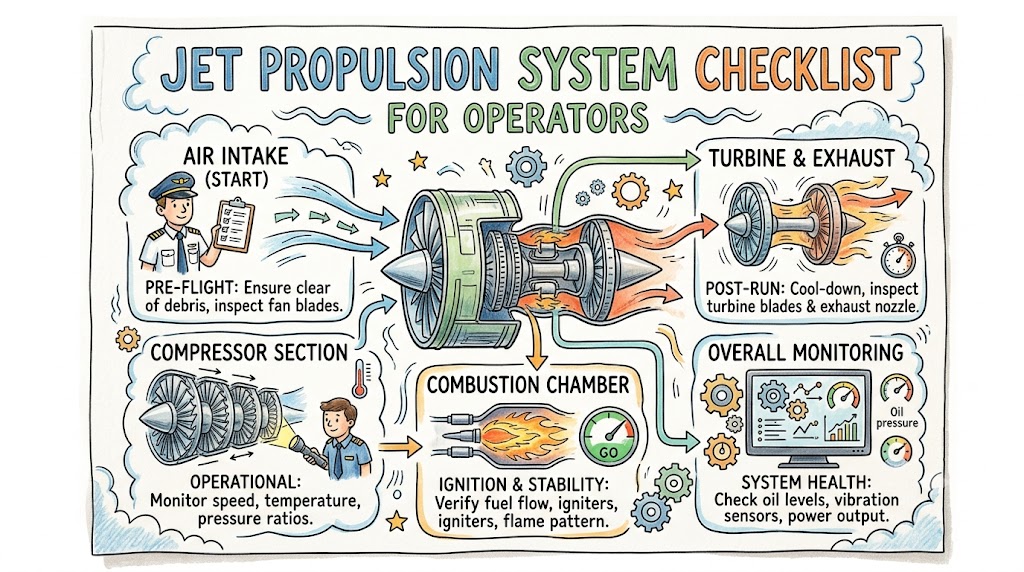
Jet propulsion systems are the core of modern aviation, powering aircraft with the thrust needed for takeoff, climb, cruise, and landing. These systems operate under extreme conditions involving high temperatures, pressure variations, and continuous mechanical stress. Because of this, even small inefficiencies or undetected faults can quickly escalate into serious safety risks.
For aircraft operators, maintaining a structured jet propulsion system checklist is essential. It ensures that engines remain reliable, efficient, and compliant with aviation safety standards. Regular monitoring, inspection, and maintenance help prevent unexpected failures, reduce operational downtime, and improve overall flight safety.
This guide outlines a comprehensive checklist that operators can use to ensure jet propulsion systems remain in optimal condition throughout their lifecycle.
Real-world Use Cases
A commercial airline monitoring engine performance trends identifies early signs of fuel inefficiency and schedules preventive maintenance before a fault occurs.
A pilot reporting abnormal vibration during climb triggers immediate engine inspection, preventing potential turbine damage.
An MRO technician inspecting turbine blades detects early fatigue cracks and replaces components before failure risk increases.
A fleet operator managing multiple aircraft uses propulsion data analytics to track engine health across the entire fleet.
A ground engineer detects fuel system inefficiency during pre-flight checks and corrects it before departure.
A maintenance team performing scheduled engine checks ensures compliance with safety regulations and operational readiness.
In one scenario, early detection of compressor imbalance prevents a possible in-flight engine shutdown.
Evaluation Criteria for Jet Propulsion System Readiness
Operators should evaluate:
- Engine thrust performance consistency
- Fuel efficiency and combustion stability
- Vibration and noise levels
- Thermal behavior and temperature readings
- Oil and lubrication system condition
- Sensor and FADEC system accuracy
- Compressor and turbine health
- Foreign object damage risk
- Exhaust and airflow efficiency
- Maintenance record compliance
- OEM part usage verification
- Trend monitoring data accuracy
- Leak detection status
- Inspection cycle completion
These criteria ensure propulsion systems remain safe and reliable.
Engine Thrust Performance Monitoring
Thrust is the primary output of a jet engine and must remain stable across all flight phases.
For example, reduced thrust during takeoff may indicate compressor wear or fuel inefficiency.
Fuel Flow and Combustion Efficiency Checks
Proper fuel combustion ensures optimal engine performance and efficiency.
For example, irregular fuel flow can cause uneven combustion and reduce thrust output.
Compressor and Turbine Blade Condition Inspection
Blades operate under extreme stress and require regular inspection for cracks or erosion.
For example, damaged turbine blades can lead to vibration and reduced engine stability.
Lubrication and Oil System Health
Oil systems reduce friction and prevent overheating of moving parts.
For example, low oil pressure can accelerate engine wear and lead to system failure.
Thermal Stress and Temperature Monitoring
Jet engines operate at very high temperatures, requiring continuous thermal monitoring.
For example, overheating in turbine sections can indicate cooling system inefficiency.
FADEC System Performance Verification
FADEC controls engine performance automatically and must function accurately.
For example, faulty sensor data can lead to incorrect fuel management.
Vibration and Imbalance Detection
Vibration analysis helps identify mechanical imbalance early.
For example, increased vibration may signal rotor misalignment.
Foreign Object Damage (FOD) Inspection
FOD can cause immediate and severe engine damage.
For example, runway debris ingestion may damage compressor blades.
Exhaust System Condition Analysis
Exhaust flow affects thrust efficiency and engine stability.
For example, blockage in exhaust pathways reduces engine performance.
Air Intake System Cleanliness
Clean air intake ensures proper combustion and engine efficiency.
For example, dust accumulation can reduce airflow and engine performance.
Engine Start-up and Shutdown Performance Checks
Smooth start and shutdown cycles indicate engine health.
For example, delayed startup may suggest ignition system issues.
Scheduled Maintenance Cycles
Engines undergo structured inspections based on usage hours and cycles.
For example, routine checks help identify early wear before failure occurs.
Sensor and Instrumentation Accuracy
Accurate sensors ensure reliable engine monitoring.
For example, faulty temperature sensors may hide overheating conditions.
Hydraulic and Pneumatic Integration Checks
These systems support engine and aircraft functions.
For example, hydraulic leaks can affect engine-related systems indirectly.
Engine Performance Trend Analysis
Tracking engine data helps detect long-term performance changes.
For example, increasing fuel consumption may indicate internal wear.
OEM Part Compliance Verification
Using certified parts ensures safety and compatibility.
For example, non-certified components may not withstand engine stress levels.
Emergency Shutdown System Readiness
Emergency systems must always function correctly.
For example, failure of shutdown controls can increase operational risk.
Engine Mounting and Structural Integrity
Engine mounts must remain secure under high vibration loads.
For example, loose mounting bolts can cause structural instability.
Leak Detection (Fuel, Oil, Hydraulic)
Leaks can quickly escalate into major safety issues.
For example, undetected oil leaks can lead to engine overheating.
Regulatory Compliance Checks
Engines must meet aviation authority standards.
For example, missing inspection records can delay aircraft clearance.
Preventive Maintenance vs Reactive Repair
| Factor | Preventive Maintenance | Reactive Repair |
|---|---|---|
| Safety | High | Lower |
| Cost | Predictable | Higher |
| Downtime | Planned | Unexpected |
| Reliability | High | Variable |
Healthy vs Degraded Propulsion Systems
| Factor | Healthy System | Degraded System |
| Performance | Stable | Unstable |
| Fuel Efficiency | High | Reduced |
| Safety | High | Risky |
| Reliability | Strong | Weak |
OEM vs Non-Certified Components
| Factor | OEM Parts | Non-Certified Parts |
| Safety | High | Uncertain |
| Reliability | High | Low |
| Compatibility | Exact | Variable |
| Compliance | Full | Limited |
Real-Time Monitoring vs Delayed Inspection
| Factor | Real-Time Monitoring | Delayed Inspection |
| Risk Level | Low | High |
| Detection Speed | Fast | Slow |
| Maintenance Efficiency | High | Lower |
| Safety Outcome | Improved | Compromised |
Benefits of Jet Propulsion System Checklist
A structured checklist helps operators:
- Improve flight safety
- Enhance engine reliability
- Reduce failure risks
- Optimize fuel efficiency
- Extend engine lifespan
- Improve maintenance planning
- Ensure compliance standards
- Reduce downtime
- Strengthen fleet performance
- Increase operational confidence
Practical Tips for Operators
- Monitor engine data continuously
- Schedule preventive maintenance regularly
- Track vibration and temperature trends
- Use certified OEM parts only
- Avoid foreign object damage (FOD) risks
- Maintain detailed engine logs
- Train staff on early warning detection
Common Mistakes to Avoid
- Ignoring vibration changes
- Skipping scheduled inspections
- Using uncertified parts
- Delaying maintenance actions
- Poor data tracking practices
- Overlooking small leaks or noise changes
FAQs
1. What is a jet propulsion system checklist?
It is a structured guide used by operators to monitor engine health, safety, and performance.
2. Why is engine monitoring important?
It helps detect early issues before they become serious safety risks.
3. How often are jet engines inspected?
Inspection frequency depends on flight hours, cycles, and regulatory requirements.
4. What causes engine vibration?
Vibration can be caused by imbalance, blade damage, or mechanical wear.
5. What is FADEC?
FADEC is an automated system that controls engine performance parameters.
6. Why is FOD dangerous?
Foreign object damage can severely impact engine components instantly.
7. What is preventive maintenance?
It is scheduled maintenance aimed at preventing failures before they occur.
8. Why are OEM parts important?
OEM parts ensure safety, compatibility, and regulatory compliance.
9. What is engine trend analysis?
It is tracking performance data over time to identify degradation patterns.
10. How does maintenance improve safety?
It ensures engines operate reliably and reduces risk of in-flight failure.
Conclusion
A jet propulsion system checklist is essential for operators to ensure safe, efficient, and reliable aircraft performance. Jet engines operate under extreme conditions, making continuous monitoring and preventive maintenance critical. By following structured inspection procedures, analyzing performance trends, and using certified components, operators can significantly reduce risks and improve operational efficiency. A disciplined checklist approach not only enhances engine life but also ensures consistent flight safety across all aviation operations.

