
Introduction
Jet propulsion systems are among the most powerful and complex engineering systems used in aviation. They operate under extreme heat, high pressure, and continuous mechanical stress. While modern jet engines are highly reliable, they are not immune to wear, contamination, or system malfunctions over time.
Detecting propulsion problems early is critical for flight safety, operational efficiency, and cost control. Small abnormalities in vibration, temperature, fuel flow, or thrust performance often serve as early warning signs of larger mechanical issues. If ignored, these issues can escalate into engine failure or expensive maintenance overhauls.
This guide explores the most common jet propulsion problems and the warning signs that pilots, engineers, and maintenance teams should never ignore.
Real-world Use Cases
A commercial pilot notices abnormal vibration during climb and reports it for immediate engine inspection.
An MRO technician detects early turbine blade cracking during routine maintenance checks, preventing a major failure.
A maintenance planner identifies rising fuel consumption trends, indicating compressor inefficiency.
A private jet operator experiences reduced thrust during takeoff and schedules urgent engine diagnostics.
A fleet engineer analyzes engine health monitoring data to detect early FADEC-related anomalies.
A ground engineer identifies oil leakage before dispatch, preventing in-flight risk.
A training environment uses simulated engine faults to teach aviation students diagnostic interpretation.
Evaluation Criteria for Early Detection of Jet Propulsion Problems
Engine condition is evaluated using:
- Vibration levels and frequency patterns
- Exhaust gas temperature (EGT) readings
- Fuel flow consistency
- Oil pressure and leakage status
- Thrust output performance
- Sensor and FADEC system accuracy
- Compressor and turbine condition
- Combustion stability indicators
- Engine start-up behavior
- Noise and acoustic variations
- Maintenance trend data
- Foreign object damage indicators
These parameters help detect early-stage propulsion issues before failure occurs.
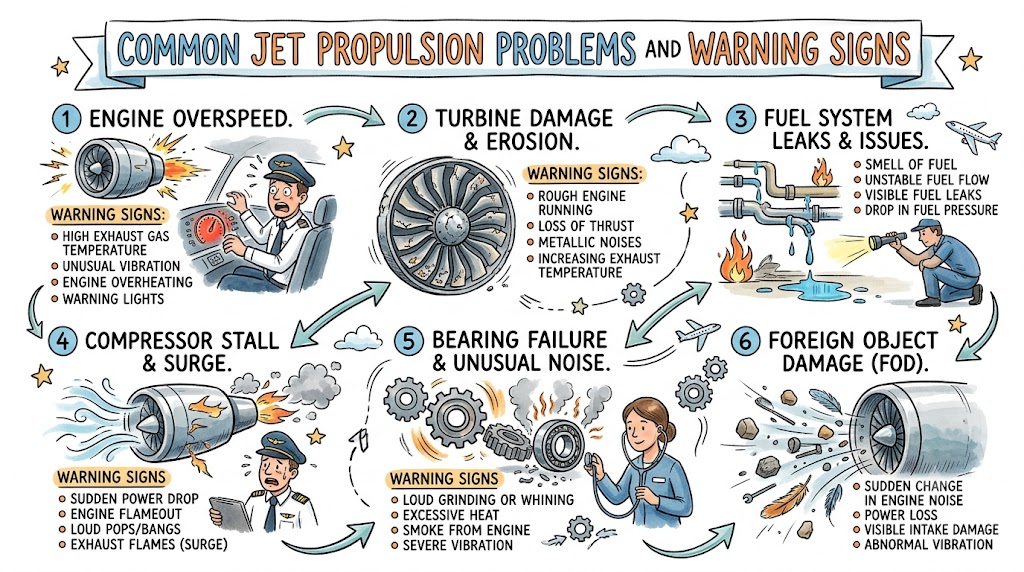
Compressor Stall and Surge
A compressor stall occurs when airflow through the engine becomes disrupted.
Warning signs: sudden engine noise changes, loss of thrust, or fluctuating RPM.
Example: A pilot experiences a brief power drop during climb due to unstable airflow.
Prevention: Regular compressor inspection and proper engine handling procedures.
Turbine Blade Wear and Cracking
Turbine blades operate under extreme temperatures and stress.
Warning signs: vibration increase, reduced efficiency, and abnormal EGT readings.
Example: Micro-cracks are found during inspection before catastrophic failure.
Prevention: Routine thermal inspection and material fatigue monitoring.
Fuel System Contamination or Imbalance
Contaminated fuel affects combustion stability.
Warning signs: engine roughness, inconsistent thrust, and startup issues.
Example: Water contamination leads to uneven engine performance.
Prevention: Strict fuel quality control and filtration maintenance.
Abnormal Vibration Levels
Vibration often indicates internal imbalance or wear.
Warning signs: cockpit vibration feedback or instrument alerts.
Example: Increased vibration during cruise indicates rotor imbalance.
Prevention: Vibration monitoring and balancing of rotating components.
Oil System Leaks or Pressure Drops
Oil ensures lubrication and cooling of engine components.
Warning signs: low oil pressure alerts or visible leakage.
Example: A slow oil leak leads to bearing wear over time.
Prevention: Regular oil system inspection and seal replacement.
Overheating in Turbine Sections
High temperatures can damage engine components.
Warning signs: rising EGT values beyond normal range.
Example: Overheating during takeoff reduces turbine lifespan.
Prevention: Cooling system checks and combustion efficiency tuning.
Reduced Thrust Performance
Loss of thrust indicates internal inefficiency.
Warning signs: longer takeoff roll and slower climb rates.
Example: Compressor fouling reduces overall engine output.
Prevention: Regular cleaning and performance monitoring.
Ignition System Failure or Instability
Ignition ensures proper engine start and combustion.
Warning signs: difficult engine start or flame instability.
Example: Engine fails to start in cold weather conditions.
Prevention: Routine ignition system testing.
Exhaust Gas Temperature (EGT) Abnormalities
EGT indicates combustion efficiency.
Warning signs: sudden spikes or uneven temperature distribution.
Example: Fuel imbalance causes overheating in one turbine section.
Prevention: Fuel system calibration and monitoring.
Foreign Object Damage (FOD) Ingestion
FOD is one of the most dangerous propulsion threats.
Warning signs: sudden noise, vibration, or power loss.
Example: Small debris causes compressor blade damage.
Prevention: Strict runway and intake inspection procedures.
Compressor Fouling and Efficiency Loss
Dirt buildup reduces airflow efficiency.
Warning signs: gradual thrust reduction and higher fuel consumption.
Example: Dust accumulation in desert operations affects performance.
Prevention: Regular compressor washing and intake protection.
Bearing Wear and Lubrication Issues
Bearings support high-speed rotating parts.
Warning signs: unusual noise, vibration, and oil debris.
Example: Worn bearings lead to rotor imbalance.
Prevention: Oil analysis and scheduled replacement.
Sensor or FADEC System Malfunction
FADEC controls engine performance automatically.
Warning signs: inconsistent readings or system warnings.
Example: Faulty sensor sends incorrect fuel flow data.
Prevention: Regular calibration and diagnostics.
Air Intake Blockage or Distortion
Air intake must remain unobstructed for efficient combustion.
Warning signs: reduced thrust and unstable airflow.
Example: Ice buildup reduces airflow during cold conditions.
Prevention: Intake inspection and anti-icing systems.
Combustion Instability and Flameout Risk
Stable combustion is essential for engine operation.
Warning signs: engine surging or flameout events.
Example: Fuel-air imbalance causes temporary shutdown.
Prevention: Fuel system tuning and monitoring.
Nozzle or Exhaust Inefficiency
Exhaust systems affect thrust output.
Warning signs: reduced acceleration and abnormal exhaust patterns.
Example: Damaged nozzle reduces propulsion efficiency.
Prevention: Regular exhaust inspection and repair.
Healthy vs Degrading Jet Engine
| Factor | Healthy Engine | Degrading Engine |
|---|---|---|
| Vibration | Stable | Increasing |
| Fuel Efficiency | High | Low |
| Temperature | Normal | Rising |
| Thrust Output | Consistent | Reducing |
Normal vs Abnormal Vibration
| Factor | Normal | Abnormal |
| Engine Behavior | Stable | Irregular |
| Noise Level | Consistent | Fluctuating |
| Maintenance Need | Routine | Urgent |
Efficient vs Unstable Combustion
| Factor | Efficient | Unstable |
| Fuel Burn | Optimal | Irregular |
| Temperature | Controlled | High variation |
| Safety | High | Risky |
Preventive Maintenance vs Reactive Repair
| Factor | Preventive | Reactive |
| Cost | Lower | Higher |
| Downtime | Planned | Unexpected |
| Safety | Higher | Lower |
Benefits of Early Detection
Early detection of jet propulsion issues helps:
- Improve flight safety
- Reduce engine failure risk
- Lower maintenance costs
- Extend engine lifespan
- Improve fuel efficiency
- Reduce downtime
- Enhance fleet reliability
- Improve predictive maintenance accuracy
- Increase operational readiness
- Support regulatory compliance
Practical Tips for Engineers and Pilots
- Monitor vibration and EGT trends regularly
- Conduct routine oil and fuel checks
- Inspect compressor and turbine conditions
- Use FADEC diagnostics effectively
- Avoid FOD exposure on runways
- Track performance data continuously
- Act immediately on abnormal warnings
Common Mistakes to Avoid
- Ignoring minor vibration changes
- Delaying maintenance alerts
- Overlooking fuel contamination risks
- Skipping routine engine inspections
- Misinterpreting sensor data
- Neglecting compressor cleaning
FAQs
1. What are common jet propulsion problems?
They include compressor stall, turbine wear, fuel issues, and vibration abnormalities.
2. What is a compressor stall?
It is a disruption in airflow that reduces engine efficiency.
3. What causes turbine blade damage?
High heat, stress, and fatigue over time.
4. Why is EGT important?
It indicates combustion efficiency and engine temperature health.
5. How does vibration indicate problems?
Increased vibration often signals imbalance or internal wear.
6. What is FOD?
Foreign Object Damage caused by debris entering the engine.
7. What does FADEC do?
It automatically controls engine performance parameters.
8. Can fuel issues affect engine performance?
Yes, contamination or imbalance affects combustion stability.
9. How can engine failures be prevented?
Through regular inspection and preventive maintenance.
10. What is the first warning sign of engine trouble?
Usually abnormal vibration or temperature changes.
Conclusion
Jet propulsion systems are highly advanced but require constant monitoring to ensure safe operation. Early warning signs such as vibration changes, temperature spikes, fuel irregularities, or thrust reduction should never be ignored. Identifying and addressing these issues early helps prevent costly failures, improves efficiency, and extends engine life. A proactive maintenance approach ensures that jet engines remain reliable, safe, and ready for demanding aviation operations.

