
Introduction
Jet engines are among the most complex and powerful engineering systems in modern aviation. They generate the thrust needed to lift massive aircraft into the sky, operate at extremely high temperatures and pressures, and must perform reliably under all flight conditions. Because of this complexity, even a minor issue inside a jet engine can have serious implications for aircraft performance and passenger safety.
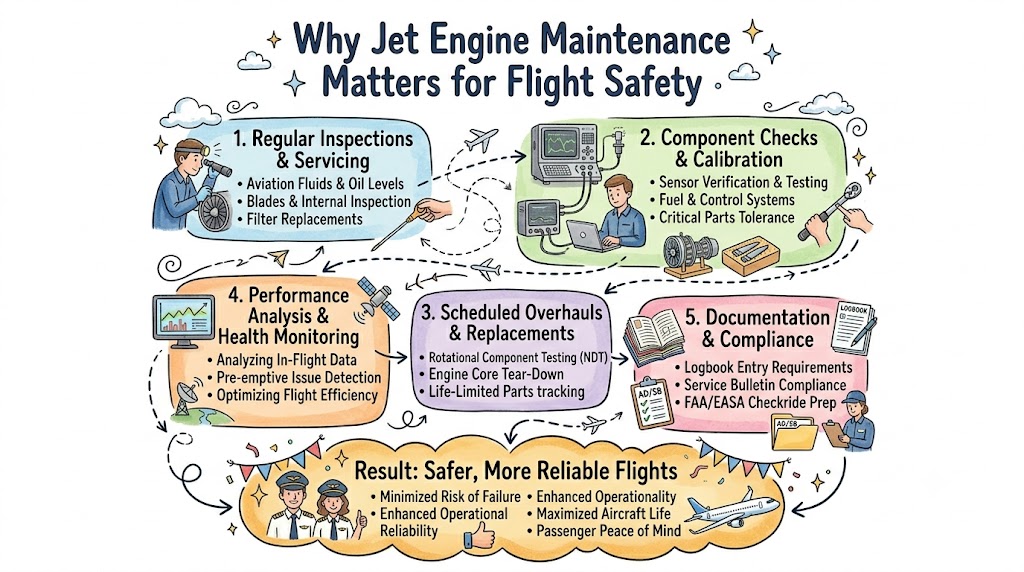
Jet engine maintenance is not just a technical requirement—it is a critical safety process that ensures every flight operates within safe engineering limits. Through inspections, monitoring, part replacements, and performance analysis, maintenance teams detect early warning signs before they turn into serious failures. Without proper maintenance, risks such as engine vibration, thrust loss, overheating, or in-flight shutdown can increase significantly.
In aviation, safety depends heavily on prevention. That is why regular jet engine maintenance is essential for ensuring reliability, efficiency, and safe flight operations across all types of aircraft—from commercial jets to private aviation fleets.
Real-world Use Cases
A commercial airline engine undergoing routine inspection is carefully checked for turbine wear, fuel efficiency, and vibration levels to ensure safe passenger operations.
A private jet experiencing unusual vibration during climb may be flagged for immediate inspection to identify compressor imbalance or blade fatigue.
A maintenance engineer detecting early turbine blade wear can replace components before they fail in high-temperature conditions.
A fleet operator continuously tracks engine performance trends to detect inefficiencies across multiple aircraft engines.
A pilot reporting abnormal engine noise during taxi helps trigger early diagnostics before takeoff clearance.
An MRO technician replacing fuel system components ensures proper combustion efficiency and safe engine performance.
In some cases, early detection of engine anomalies has prevented serious in-flight failures by addressing issues during scheduled maintenance windows.
Evaluation Criteria for Jet Engine Maintenance Safety
When evaluating jet engine maintenance effectiveness, consider:
- Engine performance consistency
- Vibration and noise levels
- Fuel efficiency trends
- Temperature and pressure stability
- Inspection frequency and quality
- Condition of critical components
- Maintenance record accuracy
- OEM part usage and compliance
- Detection of early warning signals
- Maintenance response time
- Regulatory compliance adherence
- Engine lifecycle tracking
These factors directly influence flight safety and operational reliability.
Engine Thrust Reliability
Jet engines must consistently generate the required thrust for takeoff, climb, cruise, and landing phases. Any reduction in thrust can impact flight safety margins.
For example, a worn compressor may reduce engine efficiency, leading to longer takeoff distances and reduced climb performance.
Combustion System Health
The combustion chamber must burn fuel efficiently and evenly. Poor combustion can lead to overheating or incomplete fuel burn.
For example, irregular fuel spray patterns may cause hot spots inside the engine, increasing wear and risk.
Compressor and Turbine Blade Integrity
Compressor and turbine blades operate under extreme stress and high temperatures. Even small cracks or erosion can lead to failure.
For example, a damaged turbine blade may cause vibration and reduce overall engine stability.
Fuel System Efficiency and Safety
The fuel system ensures proper fuel delivery and combustion balance. Any blockage or leak can affect engine performance.
For example, contaminated fuel filters may reduce engine power output during critical phases of flight.
Oil Lubrication System Monitoring
Lubrication reduces friction between moving engine parts and prevents overheating.
For example, low oil pressure can increase wear on rotating components and lead to engine damage.
Thermal Stress Management
Jet engines operate at extremely high temperatures, making thermal management critical for durability.
For example, repeated overheating cycles can weaken metal components over time.
Foreign Object Damage (FOD) Prevention
Foreign objects like debris or small particles can cause serious internal engine damage.
For example, runway debris ingestion during takeoff can damage compressor blades instantly.
Vibration and Imbalance Detection
Excessive vibration often indicates mechanical imbalance or internal wear.
For example, an imbalance in rotating components may signal early-stage turbine damage.
Exhaust System Performance
The exhaust system ensures smooth gas flow and optimal thrust output.
For example, blockage or irregular flow can reduce engine efficiency and increase fuel consumption.
Engine Control System (FADEC) Reliability
The FADEC system manages engine performance automatically and must function precisely.
For example, a faulty sensor in FADEC can mismanage fuel flow and reduce engine efficiency.
Regular Inspection Schedules
Jet engines undergo structured inspections to detect wear and prevent failures before they occur.
For example, scheduled checks help identify early-stage cracks in engine components.
Early Detection of Component Fatigue
Fatigue occurs due to repeated stress cycles on engine parts.
For example, microscopic cracks in blades can grow over time if not detected early.
Preventing In-Flight Engine Failure
Proper maintenance significantly reduces the risk of engine failure during flight.
For example, replacing worn components during scheduled maintenance prevents emergency situations.
Compliance with Aviation Safety Regulations
Jet engine maintenance must comply with strict aviation safety standards.
For example, regulatory inspections ensure engines meet operational airworthiness requirements.
Maintenance Documentation and Traceability
Accurate records help track engine history and maintenance actions.
For example, missing documentation may delay inspections or aircraft clearance.
Spare Part Quality and OEM Standards
Using certified OEM parts ensures compatibility and safety.
For example, non-certified turbine components may not withstand operational stress levels.
MRO Best Practices
Maintenance, Repair, and Overhaul (MRO) providers follow structured procedures to ensure engine reliability.
For example, standardized inspection procedures reduce human error risks.
Engine Performance Trend Monitoring
Tracking engine performance over time helps detect gradual degradation.
For example, increasing fuel consumption may indicate internal wear or inefficiency.
Preventive Maintenance vs Reactive Repair
| Factor | Preventive Maintenance | Reactive Repair |
|---|---|---|
| Safety | High assurance | Higher risk |
| Cost | Predictable | Expensive |
| Downtime | Planned | Unexpected |
| Reliability | High | Variable |
| Failure Risk | Low | Higher |
Well-Maintained vs Poorly Maintained Engines
| Factor | Well-Maintained Engines | Poorly Maintained Engines |
| Performance | Stable | Unreliable |
| Safety | High | Risky |
| Fuel Efficiency | Optimized | Reduced |
| Lifespan | Extended | Shortened |
OEM Parts vs Non-Certified Components
| Factor | OEM Parts | Non-Certified Parts |
| Quality | Verified | Uncertain |
| Safety | High | Riskier |
| Compatibility | Exact | May vary |
| Reliability | High | Low to variable |
Regular vs Delayed Inspections
| Factor | Regular Inspections | Delayed Inspections |
| Risk Level | Low | High |
| Damage Detection | Early | Late |
| Cost Impact | Lower | Higher |
| Safety Outcome | Improved | Compromised |
Benefits of Jet Engine Maintenance
Proper jet engine maintenance improves:
- Flight safety
- Engine reliability
- Fuel efficiency
- Operational performance
- Reduction in in-flight failures
- Compliance with aviation regulations
- Lower long-term maintenance costs
- Better aircraft availability
- Extended engine lifespan
- Passenger confidence
Practical Tips for Jet Engine Maintenance
- Monitor vibration and temperature trends regularly
- Follow strict inspection schedules
- Use certified OEM parts only
- Avoid foreign object damage (FOD) risks
- Track engine performance data consistently
- Ensure proper lubrication levels
- Work with certified MRO providers
- Maintain complete maintenance logs
Common Mistakes to Avoid
- Ignoring small vibration changes
- Skipping scheduled inspections
- Using uncertified replacement parts
- Delaying corrective maintenance
- Poor documentation practices
- Overlooking early warning signs
- Not tracking engine performance trends
FAQs
1. Why is jet engine maintenance important?
Jet engine maintenance ensures safety, performance, and reliability by detecting and fixing issues before they become critical failures.
2. How often are jet engines inspected?
Jet engines are inspected at regular intervals based on flight hours, cycles, and regulatory requirements.
3. What are signs of engine problems?
Common signs include vibration, unusual noise, fuel inefficiency, and temperature irregularities.
4. What causes engine vibration?
Vibration may be caused by imbalance, blade damage, or internal wear in rotating components.
5. What is the role of MRO services?
MRO providers perform inspection, repair, and overhaul to ensure engine safety and performance.
6. What is preventive maintenance?
Preventive maintenance focuses on identifying and fixing issues before they cause engine failure.
7. Can engine failure be prevented?
While not all failures can be avoided, proper maintenance significantly reduces the risk.
8. Why are OEM parts important?
OEM parts ensure compatibility, reliability, and compliance with aviation standards.
9. What is engine performance monitoring?
It involves tracking engine data over time to detect early signs of degradation.
10. How does maintenance improve flight safety?
It ensures engines operate reliably, reducing the risk of in-flight malfunctions.
Conclusion
Jet engine maintenance is a fundamental pillar of aviation safety. Every component inside a jet engine operates under extreme conditions, making regular inspection and preventive maintenance essential for reliable performance. By identifying early warning signs, using certified parts, and following structured maintenance programs, aviation professionals can significantly reduce risks and ensure safe flight operations. Proper maintenance not only enhances engine lifespan and efficiency but also plays a direct role in protecting passengers, crew, and aircraft integrity.

