
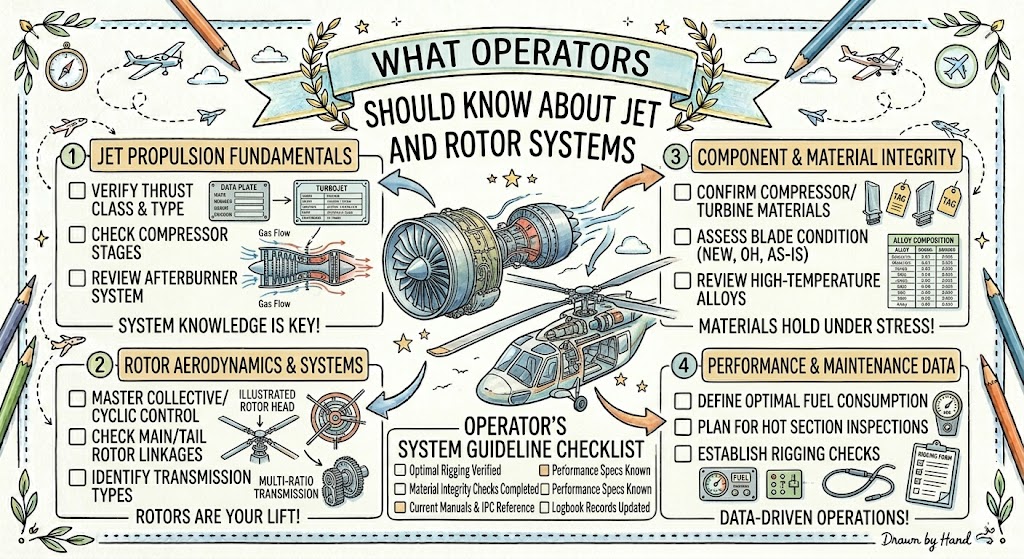
Introduction
Jet aircraft and rotorcraft are both important parts of modern aviation, but they serve very different operational needs. A jet is usually selected for speed, range, altitude performance, business travel, charter service, and long-distance mobility. A rotorcraft, such as a helicopter, is chosen for vertical takeoff, hovering, short-distance access, emergency response, offshore work, and missions where runway access is limited.
For operators, understanding the basic difference between jet and rotor systems is not only a technical matter. It affects flight planning, crew training, maintenance scheduling, fuel budgeting, safety procedures, infrastructure needs, and overall operating cost. A jet and a helicopter may both move people or cargo, but the systems that make them fly are very different.
Jet systems are built around thrust, speed, altitude, pressurization, and efficient point-to-point travel. Rotor systems are built around lift, hover control, drivetrain performance, rotor balance, and mission flexibility. Both require strong maintenance discipline, trained crews, accurate documentation, and safety-first decision-making.
This guide explains what operators should know about jet and rotor systems before planning operations, managing maintenance, choosing aircraft, or building an aviation service model.
What Are Jet Systems?
Jet systems are the major mechanical, electrical, hydraulic, fuel, avionics, and control systems that allow a jet aircraft to operate safely and efficiently. Jet aircraft are fixed-wing aircraft, meaning the wings generate lift as the aircraft moves forward through the air. The engines produce thrust, which pushes the aircraft forward.
Jets are commonly used for business travel, charter flights, private aviation, corporate mobility, airline operations, medical transport, cargo movement, and long-distance missions.
Key Parts of Jet Systems
Jet Engines
Jet engines create thrust by taking in air, compressing it, mixing it with fuel, burning the mixture, and forcing high-speed exhaust out of the engine. This thrust moves the aircraft forward. The faster the aircraft moves, the more lift the wings can produce.
Fuel Systems
The fuel system stores, transfers, monitors, and delivers fuel to the engines. Operators must understand fuel capacity, fuel burn, fuel reserves, fuel quality, and fuel planning because poor fuel planning can create serious safety risks.
Hydraulic Systems
Hydraulic systems use pressurized fluid to move important aircraft components. These may include landing gear, brakes, flaps, spoilers, steering, and some flight control surfaces. Hydraulic reliability is important for safe operation.
Electrical Systems
Electrical systems power avionics, lighting, communication equipment, navigation systems, cockpit displays, sensors, and backup systems. Operators should ensure battery health, generator performance, and electrical redundancy are properly maintained.
Pressurization Systems
Many jets fly at high altitudes where outside air pressure is too low for comfortable breathing. Pressurization systems maintain a safe and comfortable cabin environment for passengers and crew.
Avionics and Flight Control Systems
Avionics include navigation, communication, weather radar, autopilot, flight displays, transponders, and monitoring systems. Modern jet operations depend heavily on accurate avionics and reliable flight control systems.
Landing Gear and Braking Systems
Jets operate from runways and require reliable landing gear, tires, brakes, anti-skid systems, and steering. Operators must monitor brake wear, tire condition, and landing gear inspection schedules.
What Are Rotor Systems?
Rotor systems are the mechanical and aerodynamic systems that allow helicopters and other rotorcraft to lift off vertically, hover, move forward, turn, climb, descend, and land in confined spaces. Unlike fixed-wing jets, rotorcraft generate lift through rotating blades.
Rotor systems are used in helicopters for missions such as emergency medical services, search and rescue, utility work, offshore operations, law enforcement, aerial survey, tourism, VIP transport, and remote-area access.
Key Parts of Rotor Systems
Main Rotor
The main rotor is the large rotating blade system above the helicopter. It produces lift and helps control movement. By changing blade pitch, the helicopter can climb, descend, hover, or move in different directions.
Tail Rotor or Anti-Torque System
When the main rotor spins, it creates torque that would make the helicopter body rotate in the opposite direction. A tail rotor or anti-torque system controls this effect and helps maintain directional control.
Rotor Blades
Rotor blades act like rotating wings. Their condition, balance, shape, and structural health are critical for safe operation. Even minor damage or imbalance can affect flight safety.
Transmission System
The transmission transfers engine power to the rotor system. It reduces engine speed to a usable rotor speed and supports power distribution. Transmission health is a major maintenance focus.
Swashplate
The swashplate transfers pilot control inputs to the rotating rotor blades. It allows changes in blade pitch and helps control helicopter movement.
Flight Controls
Rotorcraft controls include cyclic, collective, and pedals. These controls allow the pilot to manage direction, altitude, lift, and yaw.
Hydraulic Assistance
Many helicopters use hydraulic systems to reduce pilot workload and help move control linkages smoothly. Hydraulic issues can affect control feel and handling.
Engine and Drivetrain Connection
The engine provides power, but the drivetrain transfers that power to the rotor system. Operators must monitor engine performance, gearbox condition, shafts, couplings, and related components.
Key Differences Between Jet and Rotor Operations
Jet and rotorcraft operations are different in mission style, infrastructure needs, training, cost, and maintenance focus.
| Factor | Jet Aircraft | Rotorcraft |
|---|---|---|
| Takeoff and landing | Requires runway | Can take off and land vertically |
| Speed | Faster for long-distance travel | Slower compared to jets |
| Range | Better for longer routes | Better for short and flexible missions |
| Altitude capability | Usually operates at higher altitudes | Often operates at lower altitudes |
| Mission flexibility | Best for airport-to-airport travel | Best for point-to-point access |
| Infrastructure | Needs airports and runways | Can use helipads or approved landing zones |
| Maintenance focus | Engines, avionics, hydraulics, landing gear, pressurization | Rotor blades, transmission, gearbox, drivetrain, vibration |
| Crew training | Focus on high-speed, high-altitude, IFR, runway operations | Focus on hover, low-altitude, confined area, vertical lift |
| Weather limitations | Affected by runway, icing, storms, visibility | Strongly affected by wind, visibility, terrain, low-level weather |
| Operating cost | High fuel and maintenance cost, but efficient for range | High maintenance intensity, especially rotor and drivetrain parts |
| Best use case | Business travel, charter, long-distance transport | EMS, utility, offshore, VIP short routes, remote access |
Operational Planning for Jet Aircraft
Jet operations require careful planning because jets are often used for fast, high-altitude, and long-distance flights. Operators must manage routes, airports, fuel, crew duty, passenger comfort, and maintenance availability.
Runway Requirements
Jets need suitable runways for takeoff and landing. Operators must consider runway length, surface condition, airport elevation, temperature, aircraft weight, and weather. A runway that is suitable in cool weather may be more limiting in hot conditions.
Flight Planning
Jet flight planning includes route selection, altitude planning, weather review, airspace restrictions, alternate airports, and fuel reserves. Operators must ensure the aircraft can complete the mission safely and legally.
Fuel Planning
Fuel planning is a major part of jet operations. Operators must account for taxi fuel, trip fuel, reserve fuel, alternate airport fuel, holding fuel, and possible weather delays.
Crew Scheduling
Jet crews must be trained, rested, and qualified for the mission. Operators need to manage duty time, training records, route familiarity, and operational approvals.
Passenger Handling
Many jet operations involve business or VIP passengers. Operators should plan boarding, baggage, catering, ground transport, cabin comfort, and privacy needs.
High-Altitude Operations
Jets often fly at higher altitudes where pressurization, oxygen systems, anti-icing, weather avoidance, and engine performance are important.
Airport Selection
Operators must choose airports based on runway suitability, services, fuel availability, customs requirements, hangar space, ground support, and weather conditions.
Ground Support Needs
Jets may need ground power, fueling, towing, lavatory service, catering, de-icing, cleaning, and maintenance support. These services should be confirmed before arrival.
Maintenance Intervals
Jet maintenance is scheduled based on flight hours, cycles, calendar time, and manufacturer requirements. Operators must plan maintenance in advance to avoid unexpected downtime.
Regulatory Compliance
Jet operators must follow applicable aviation regulations, inspection requirements, operating procedures, crew qualification rules, and documentation standards.
Operational Planning for Rotorcraft
Rotorcraft operations are highly flexible, but they require careful mission planning. Helicopters often operate closer to terrain, buildings, obstacles, weather changes, and confined landing zones.
Landing Zone Assessment
Rotorcraft can land in many places, but not every open area is safe. Operators must assess surface condition, slope, obstacles, wires, people, vehicles, dust, debris, and rotor clearance.
Weight and Balance
Weight and balance are critical in helicopter operations. Passenger load, cargo, fuel quantity, and equipment placement can affect performance and safety.
Fuel Planning
Helicopters may operate in remote areas where fuel availability is limited. Operators must plan fuel stops, reserve fuel, mission duration, and emergency options.
Weather and Wind Conditions
Rotorcraft are sensitive to wind, visibility, turbulence, low clouds, and local weather changes. Operators should make conservative weather decisions.
Terrain Awareness
Low-altitude helicopter operations require strong terrain awareness. Mountains, towers, power lines, trees, buildings, and uneven ground create operational risks.
Low-Altitude Operations
Helicopters often operate lower than jets. This requires careful route planning, obstacle awareness, emergency landing options, and strong pilot attention.
Emergency Landing Planning
Rotorcraft operators should always consider where the helicopter could safely land if a problem occurs. This is especially important in urban, offshore, mountain, or remote operations.
Rotor Clearance
Rotor clearance is essential during landing, takeoff, taxi, and ground operations. People and vehicles must remain outside dangerous rotor areas.
Noise Considerations
Helicopter operations can create noise concerns, especially near cities, hospitals, residential areas, and events. Operators should plan routes and procedures responsibly.
Mission-Specific Preparation
Rotorcraft missions may include medical transport, utility lifting, inspection, VIP movement, or offshore support. Each mission requires specific planning, equipment, crew training, and risk review.
Maintenance Considerations for Jet Systems
Jet maintenance must be organized, documented, and planned around manufacturer instructions, operating cycles, and regulatory requirements.
Engine Inspections
Jet engines are high-value systems. Operators must monitor engine performance, temperatures, pressures, vibration, oil condition, and inspection intervals.
Fuel System Checks
Fuel contamination, leaks, pump issues, and fuel quantity errors can create safety risks. Regular checks help keep fuel systems reliable.
Hydraulic System Checks
Hydraulic leaks, pressure issues, or worn components can affect brakes, landing gear, flaps, and flight controls. Operators should monitor hydraulic fluid levels and system performance.
Avionics Inspections
Modern jets rely on avionics for navigation, communication, weather awareness, autopilot, and monitoring. Avionics updates and inspections should be managed carefully.
Landing Gear Maintenance
Landing gear experiences heavy loads during takeoff, landing, and taxi. Operators must inspect struts, tires, brakes, steering, sensors, and retraction systems.
Brake Wear Monitoring
Jet brakes can experience high heat and wear. Brake condition should be monitored to avoid safety issues and costly delays.
Pressurization Checks
Cabin pressure systems must work properly for high-altitude flight. Operators should monitor pressurization performance, seals, valves, and related warning systems.
Scheduled Maintenance Planning
Maintenance should be planned around aircraft usage. Operators should avoid waiting until the last moment because parts availability and shop scheduling may create downtime.
Logbook Accuracy
Accurate maintenance records are essential. Logbooks should clearly show inspections, repairs, component replacements, and compliance actions.
Parts Availability
Some jet parts may have long lead times. Operators should track high-use components and plan ahead for scheduled replacements.
Maintenance Considerations for Rotor Systems
Rotorcraft maintenance is often more intensive because rotor systems include many moving parts that experience vibration, load changes, and mechanical stress.
Rotor Blade Inspection
Rotor blades must be inspected for cracks, corrosion, erosion, impact damage, delamination, and balance issues. Blade condition directly affects safety.
Transmission System Checks
The transmission is critical because it transfers engine power to the rotor system. Operators should monitor oil condition, temperature, vibration, and inspection intervals.
Tail Rotor or Anti-Torque System Checks
Tail rotor systems are essential for directional control. Operators should inspect blades, linkages, bearings, gearboxes, and control response.
Swashplate and Control Linkage Inspection
The swashplate and control linkages must move correctly and smoothly. Wear, looseness, or damage can affect handling.
Vibration Monitoring
Vibration is a major warning sign in rotorcraft. Operators should take unusual vibration seriously and investigate quickly.
Gearbox Maintenance
Gearboxes require proper lubrication, inspection, and monitoring. Gearbox problems can become serious if ignored.
Hydraulic System Checks
Hydraulic assistance helps reduce pilot workload. Operators must monitor leaks, pressure, and system response.
Engine and Drivetrain Inspection
The engine, shafts, couplings, transmission, and rotor drive components must be inspected according to the maintenance schedule.
Pre-Flight and Post-Flight Inspections
Rotorcraft benefit from careful pre-flight and post-flight inspection because many components are exposed and mission conditions can be demanding.
Component Life Tracking
Many rotorcraft components have life limits based on hours, cycles, or calendar time. Operators must track these limits carefully.
Safety Factors Operators Should Understand
Safety in jet and rotor operations depends on people, procedures, equipment, maintenance, and decision-making. Operators should build a safety culture that supports conservative decisions and transparent reporting.
Pilot Training
Pilots must be properly trained for the aircraft type, mission type, weather conditions, and operating environment. Rotorcraft pilots need strong low-altitude and hover skills. Jet pilots need strong high-speed, high-altitude, and systems management skills.
Crew Resource Management
Crew resource management helps pilots, crew members, maintenance staff, and operations teams communicate effectively. Good communication reduces errors.
Maintenance Discipline
Maintenance should never be delayed without proper review. Operators must respect inspection intervals, component limits, and manufacturer instructions.
Weather Decision-Making
Weather is a major aviation risk factor. Operators should avoid pressure to complete flights when conditions are unsafe.
Emergency Procedures
Pilots and crews should regularly review emergency procedures. Operators should support simulator training, scenario training, and emergency drills where applicable.
Pre-Flight Inspections
Pre-flight inspections help identify problems before departure. Operators should encourage thorough inspections rather than rushed departures.
System Redundancy
Many aircraft systems include backup or redundant features. Operators should understand what backup systems are available and how they are maintained.
Risk Assessment
Each flight should include a practical risk review. Weather, crew readiness, aircraft condition, mission urgency, terrain, and passenger needs should be considered.
Communication Protocols
Clear communication between pilots, dispatch, maintenance, ground crews, and clients helps prevent misunderstandings.
Operational Limits
Every aircraft has limits. These may include weight, speed, altitude, temperature, wind, fuel, and performance limits. Operators must respect these limits at all times.
Cost Considerations for Operators
Jet and rotor systems have different cost structures. Operators should calculate total ownership and operating cost, not only purchase price.
Fuel Consumption
Jets often burn more fuel per hour but may be efficient for long-distance travel. Rotorcraft may burn less fuel depending on type, but mission time and hover operations can affect cost.
Maintenance Labor
Rotorcraft maintenance can be labor-intensive because of rotor, gearbox, drivetrain, and vibration-sensitive components. Jet maintenance can also be expensive because of engine, avionics, pressurization, and landing gear systems.
Parts Replacement
Aircraft parts can be costly and may have long lead times. Operators should track life-limited parts and commonly replaced items.
Insurance
Insurance cost depends on aircraft type, usage, pilot experience, mission type, location, and safety record.
Crew Training
Training is a continuous cost. Operators need to budget for initial training, recurrent training, safety training, and mission-specific training.
Hangar or Parking
Jets often need airport hangar or ramp space. Helicopters may use hangars, helipads, or mission bases. Storage cost depends on location and aircraft size.
Inspection Costs
Scheduled inspections, special inspections, and component inspections should be included in the operating budget.
Downtime
Downtime affects revenue and mission availability. Operators should plan maintenance windows and spare aircraft options where possible.
Mission Type
A business jet flying planned routes has a different cost profile than a helicopter performing offshore support or emergency operations.
Utilization Rate
Aircraft used regularly may justify higher fixed costs. Aircraft used rarely may have a higher cost per flight hour because fixed expenses are spread across fewer flights.
Choosing Between Jet and Rotor Operations
The right choice depends on mission need, distance, infrastructure, passengers, terrain, budget, and urgency.
When a Jet May Be Better
A jet may be better for:
- Long-distance business travel
- Fast city-to-city movement
- International or regional travel
- Passenger comfort
- High-altitude travel
- Charter operations
- Corporate aviation
- Longer-range medical transport
- Airport-to-airport service
Jets are ideal when speed, range, cabin comfort, and runway access are available.
When Rotorcraft May Be Better
A rotorcraft may be better for:
- Short-distance travel
- Remote access
- Emergency medical services
- Offshore operations
- Utility work
- Search and rescue
- Aerial survey
- VIP movement in crowded areas
- Confined landing zones
- Locations without runway access
Rotorcraft are ideal when vertical takeoff, hover capability, and flexible landing options are needed.
Common Mistakes Operators Should Avoid
Underestimating Maintenance Requirements
Both jets and rotorcraft require serious maintenance planning. Ignoring maintenance needs can create safety issues and expensive downtime.
Ignoring Aircraft Mission Fit
An aircraft should match the mission. A jet may not be practical for short remote access, and a helicopter may not be efficient for long-distance travel.
Poor Fuel Planning
Fuel planning must include reserves, alternates, weather delays, and mission changes.
Not Tracking Component Life
Life-limited components must be monitored carefully, especially in rotorcraft operations.
Choosing Equipment Only by Purchase Price
The purchase price is only one part of total cost. Maintenance, training, parts, insurance, and downtime may be more important over time.
Overlooking Pilot Training Needs
Aircraft capability is only useful when pilots are properly trained. Operators should invest in strong crew training.
Delaying Inspections
Delayed inspections can lead to safety risks, regulatory concerns, and aircraft downtime.
Ignoring Weather Limitations
Weather should always be respected. Pressure to complete a flight can lead to poor decisions.
Poor Documentation
Incomplete records can create problems during inspections, maintenance, resale, and operational audits.
Not Planning for Downtime
Every aircraft needs downtime for maintenance. Operators should plan backup options and scheduling flexibility.
Jet and Rotor Systems Operator Checklist
| Checklist Item | Why It Matters | Status |
| Define aircraft mission | Helps choose the right aircraft and system support | Pending |
| Review operating environment | Identifies runway, helipad, terrain, and weather needs | Pending |
| Confirm crew qualifications | Ensures pilots are trained for aircraft and mission type | Pending |
| Plan maintenance schedule | Reduces unexpected downtime | Pending |
| Track component life | Supports safety and compliance | Pending |
| Review fuel planning process | Prevents fuel-related risks | Pending |
| Maintain accurate documentation | Supports inspections and operational control | Pending |
| Check parts availability | Helps avoid long aircraft downtime | Pending |
| Review emergency procedures | Improves readiness during abnormal situations | Pending |
| Assess weather decision process | Supports safer go/no-go decisions | Pending |
| Monitor operating costs | Helps with budget and business planning | Pending |
| Review insurance requirements | Protects operation and assets | Pending |
| Train ground support team | Improves safety around aircraft | Pending |
| Conduct regular safety reviews | Builds a stronger safety culture | Pending |
Questions Operators Should Ask Before Managing Jet or Rotor Systems
Operators should ask practical questions before starting or expanding jet or rotor operations:
- What mission is the aircraft expected to perform?
- Is the aircraft suitable for the operating environment?
- What are the maintenance requirements?
- Are trained pilots available?
- Are trained technicians available?
- What are the fuel and operating costs?
- What documentation must be maintained?
- What safety procedures are required?
- What are the downtime risks?
- Are parts and support available?
- What infrastructure is needed?
- What weather limitations should be considered?
- What insurance coverage is required?
- What are the regulatory requirements?
- How will emergency situations be managed?
Jet Operations Checklist for Daily Planning
Jet operators should use a structured daily planning process to reduce operational risk.
| Daily Planning Area | What to Review |
| Aircraft status | Maintenance release, open defects, inspection status |
| Route planning | Airspace, altitude, alternates, restrictions |
| Weather | Departure, destination, en route, alternate weather |
| Fuel | Trip fuel, reserve fuel, alternate fuel, holding fuel |
| Crew | Duty time, qualifications, rest status |
| Passengers | Schedule, baggage, special needs, ground handling |
| Airport | Runway length, services, parking, fuel, ground support |
| Documentation | Flight plan, aircraft documents, permits if required |
| Safety | Risk review, emergency planning, operational limits |
Rotorcraft Operations Checklist for Daily Planning
Rotorcraft operators need a mission-specific checklist because helicopter operations often involve more flexible and unpredictable environments.
| Daily Planning Area | What to Review |
| Landing zone | Size, surface, slope, obstacles, wires |
| Weather | Wind, visibility, clouds, turbulence, local changes |
| Weight and balance | Passengers, cargo, fuel, equipment |
| Fuel | Mission fuel, reserve, refueling points |
| Terrain | Obstacles, elevation, emergency landing options |
| Rotor clearance | People, vehicles, buildings, loose objects |
| Crew | Mission readiness, training, communication |
| Aircraft status | Rotor, gearbox, hydraulic, engine, inspection status |
| Safety | Risk assessment, emergency procedures, passenger briefing |
Documentation Operators Should Maintain
Good documentation is essential for both jet and rotor operations. It supports safety, compliance, maintenance tracking, insurance, and aircraft value.
Operators should maintain:
- Aircraft logbooks
- Engine records
- Component life tracking records
- Maintenance inspection records
- Repair and replacement history
- Pilot training records
- Crew duty records
- Fuel records
- Defect reports
- Safety reports
- Parts documentation
- Warranty records
- Emergency procedure records
- Operational checklists
Poor documentation can create problems during audits, inspections, resale, and maintenance planning. Accurate records show that the aircraft is being managed professionally.
Building a Safety Culture for Jet and Rotor Operations
A strong safety culture means everyone in the operation takes safety seriously. It is not only the pilot’s responsibility. Owners, managers, dispatchers, maintenance teams, ground crews, and passengers all play a role.
Operators can build a safety culture by:
- Encouraging honest reporting
- Avoiding pressure-based flying decisions
- Respecting weather limits
- Supporting regular training
- Completing maintenance on time
- Reviewing incidents and near-misses
- Using checklists consistently
- Keeping communication clear
- Planning for emergencies
- Learning from operational experience
Safety culture is especially important in rotorcraft operations because missions often involve low-altitude flying, confined areas, and changing environments. It is also critical in jet operations because speed, altitude, passenger expectations, and complex systems require disciplined decision-making.
FAQs
1- What is the main difference between jet and rotor systems?
Jet systems are designed around fixed-wing flight, thrust, speed, altitude, and long-distance travel. Rotor systems are designed around rotating blades, vertical lift, hovering, and flexible landing capability. Jets usually need runways, while rotorcraft can operate from helipads or approved landing zones.
2- Are rotor systems more complex than jet systems?
Rotor systems are complex because they include rotating blades, transmission, gearbox, swashplate, anti-torque systems, vibration-sensitive parts, and many moving components. Jet systems are also complex, especially engines, avionics, hydraulics, and pressurization. The complexity is different, not simply greater or lesser.
3- Why is rotor blade inspection important?
Rotor blades create lift and control helicopter flight. Damage, cracks, erosion, imbalance, or structural problems can affect safety. Regular rotor blade inspection helps identify issues before they become serious.
4- What should jet operators check before flight?
Jet operators should review aircraft status, fuel planning, weather, route, runway requirements, crew readiness, passenger needs, maintenance records, avionics status, and alternate airport planning. A structured pre-flight process helps reduce operational risk.
5- Which is better for short-distance operations, jet or rotorcraft?
Rotorcraft are usually better for short-distance operations where runway access is limited or point-to-point travel is needed. Jets are better when speed, range, and airport-to-airport travel are priorities. The best choice depends on mission requirements.
6- Why is maintenance planning important for operators?
Maintenance planning prevents unexpected downtime, supports safety, protects aircraft value, and helps operators control cost. Both jet and rotor systems require scheduled inspections, component tracking, and accurate records.
7- What affects the operating cost of jet and rotor aircraft?
Operating cost depends on fuel consumption, maintenance labor, parts replacement, insurance, crew training, hangar or parking, inspection schedules, downtime, and mission type. Operators should calculate total cost, not only hourly fuel burn.
8- How important is pilot training for rotorcraft operations?
Pilot training is extremely important in rotorcraft operations because helicopters often operate at low altitude, near obstacles, in confined areas, and in changing wind conditions. Strong training improves decision-making, hover control, emergency response, and mission safety.
9- What documentation should operators maintain?
Operators should maintain aircraft logbooks, engine records, component life records, maintenance inspection records, parts documentation, pilot training records, crew duty records, defect reports, and safety reports. Good documentation supports compliance and operational control.
10- How can operators improve aviation safety?
Operators can improve safety by investing in training, maintaining aircraft properly, using checklists, respecting weather limits, tracking components, encouraging honest reporting, reviewing risks before each mission, and keeping communication clear between all teams.
Conclusion
Jet and rotor systems serve different aviation needs, but both require careful planning, trained crews, disciplined maintenance, accurate documentation, and safety-first operations. Jets are best suited for speed, range, passenger comfort, and airport-to-airport travel, while rotorcraft are valuable for vertical lift, hovering, remote access, emergency response, and flexible mission work. Operators should understand the strengths and limitations of each system before making operational decisions. The right aircraft choice depends on mission type, environment, budget, infrastructure, crew capability, and maintenance support. By focusing on mission fit, system knowledge, safety procedures, cost planning, and proper recordkeeping, operators can manage jet and rotor operations more effectively and reduce avoidable risks.

