Introduction
Kubernetes has revolutionized how organizations deploy, manage, and scale containerized applications. As businesses increasingly rely on Kubernetes for their cloud workloads, the importance of securing these environments has grown exponentially. Security breaches, data leaks, and compliance violations can severely damage organizational reputation and finances.
To address this critical need, the Certified Kubernetes Security Specialist (CKS) certification was introduced. It is aimed at IT professionals who want to validate their expertise in securing Kubernetes clusters, ensuring they can protect containerized applications from evolving threats.
This comprehensive guide will walk you through everything you need to know about the CKS – what it entails, why it matters, how to prepare, and how it fits into your broader career development.
What is the Certified Kubernetes Security Specialist (CKS)?
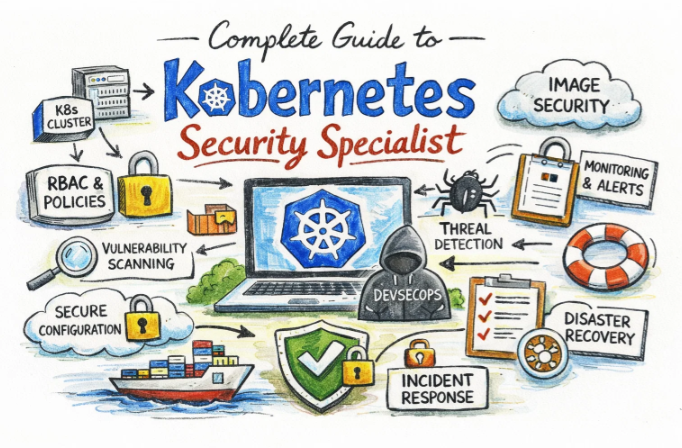
Certified Kubernetes Security Specialist (CKS) is a professional credential awarded to individuals who demonstrate advanced skills in securing Kubernetes environments. Unlike general Kubernetes certifications, CKS focuses specifically on security aspects—covering vulnerabilities, threat mitigation, access controls, and incident response.
In essence, CKS tests your ability to:
- Harden Kubernetes clusters
- Implement security policies
- Manage secrets and sensitive data
- Monitor for security breaches
- Respond effectively to incidents
Who Should Take the CKS?
This certification is suited for a variety of professionals involved in deploying, managing, or securing Kubernetes clusters:
- DevSecOps Engineers: Integrating security into CI/CD pipelines.
- Security Engineers: Responsible for cluster security and compliance.
- Kubernetes Administrators: Managing cluster configurations and security policies.
- Cloud Engineers: Building and maintaining cloud-native applications.
- Platform Engineers: Ensuring platform security and stability.
- Software Developers: Developing containerized applications with security best practices.
- IT Managers & Architects: Overseeing security strategies for cloud environments.
If you are involved in any aspect of Kubernetes deployment or security, this certification will enhance your ability to safeguard your infrastructure.
Skills You’ll Gain
Upon earning the CKS, you’ll possess a robust set of security skills, including:
- Understanding Kubernetes security architecture and components
- Implementing network policies for secure communication
- Managing secrets securely in Kubernetes
- Hardening clusters against common vulnerabilities
- Using security tools like vulnerability scanners, audit logs, and compliance frameworks
- Automating security tasks using scripting and Kubernetes features
- Monitoring and detecting threats in real-time
- Responding to security incidents effectively
This skill set positions you as a security-focused Kubernetes professional capable of preventing, detecting, and responding to threats.
Real-World Projects You Should Be Able to Do
After mastering the concepts in this certification, you will be able to:
- Harden a Kubernetes cluster by disabling unnecessary features, configuring secure defaults, and applying best practices.
- Configure network policies to isolate workloads and prevent lateral movement.
- Implement role-based access control (RBAC) for fine-grained permissions.
- Manage secrets securely using Kubernetes Secrets or external vaults.
- Conduct vulnerability scans on container images and clusters.
These projects mirror real-world security operations, making you job-ready to tackle complex Kubernetes security challenges.
Preparation Plan
7–14 Days (Intensive Short-Term)
- Focus: Fundamentals of Kubernetes security, core concepts, and hands-on practice.
- Activities:
- Review official Kubernetes security documentation.
- Understand cluster architecture and security components.
- Practice setting up secure clusters.
- Take mock exams or quizzes to assess knowledge.
- Join online labs for practical experience.
30 Days (Moderate Preparation)
- Focus: Deepen understanding, explore security tools, and perform hands-on projects.
- Activities:
- Study security best practices in real-world scenarios.
- Practice configuring RBAC, network policies, and secrets.
- Use vulnerability scanners such as kube-bench.
- Participate in workshops or online courses.
- Simulate security incident response scenarios.
- Engage with Kubernetes security community forums.
60 Days (Comprehensive Preparation)
- Focus: Mastery of all topics, advanced security configurations, and exam readiness.
- Activities:
- Review all exam topics systematically.
- Practice with multiple labs covering cluster hardening, network policies, and secrets management.
- Take full-length practice exams.
- Identify weak areas and revisit those topics.
- Collaborate with peers or mentors for peer review.
- Keep updated with the latest Kubernetes security advisories.
Common Mistakes
- Neglecting regular updates: Failing to patch Kubernetes clusters or container images.
- Overlooking network segmentation: Not implementing strict network policies.
- Ignoring secrets management: Using default or insecure methods for handling sensitive data.
- Default configurations: Relying on default cluster settings without hardening.
- Lack of monitoring: Not setting up proper audit logs or security alerts.
Avoiding these pitfalls is crucial for successful certification and effective security implementation.
Best Next Certification After CKS
Once you earn the CKS, consider pursuing:
- Certified Kubernetes Administrator (CKA): Focuses on cluster management.
- Certified Kubernetes Application Developer (CKAD): Emphasizes application deployment.
- Certified Cloud Security Professional (CCSP): Broader cloud security expertise.
- Certified Security Professional (CSP): Advanced security skills.
- Leadership Certifications: Such as CISSP or CISO certifications for strategic roles.
Choosing the right follow-up depends on your career goals—whether technical specialization or leadership.
Choose Your Path
Every professional has a different career goal. The CKS certification can fit into multiple career paths depending on your interest. Below are the most common paths you can follow.
DevOps Path
Recommended flow:
Docker → Kubernetes → CKA → CKS
In this path, you focus on building and managing infrastructure using automation. Adding CKS helps you secure your pipelines, clusters, and deployments.
This path is best for engineers working on CI/CD and cloud infrastructure.
DevSecOps Path
Recommended flow:
Kubernetes → CKA → CKS → Security certifications
This path focuses on integrating security into every stage of development and deployment. CKS plays a key role in securing container workloads and Kubernetes environments.
This is ideal for professionals who want to combine DevOps and security.
SRE Path
Recommended flow:
Kubernetes → CKA → CKS → Reliability certifications
In this path, you focus on system reliability, monitoring, and incident management. Security becomes important because secure systems are also stable systems.
This path is suitable for engineers managing production systems.
AIOps / MLOps Path
Recommended flow:
Kubernetes → CKS → Machine learning operations certifications
This path focuses on managing AI and machine learning systems on Kubernetes. Security is important because ML systems handle sensitive data.
This is best for engineers working with AI platforms and automation.
DataOps Path
Recommended flow:
Data engineering → Kubernetes → CKS
This path focuses on managing data pipelines and platforms using Kubernetes. Security helps protect data, pipelines, and storage systems.
This is suitable for professionals working with data platforms.
FinOps Path
Recommended flow:
Cloud cost management → Kubernetes → CKS
This path focuses on managing cloud costs and resource usage. Security also plays a role in preventing misuse of cloud resources.
This path is best for professionals responsible for cloud financial management.
Role → Recommended Certifications
| Role | Recommended Certifications |
|---|---|
| DevOps Engineer | CKA, CKAD, CKS, DevOps Foundation |
| SRE | Google Cloud SRE, CKA, DevOps courses |
| Platform Engineer | CKA, CKAD, Security certifications |
| Cloud Engineer | CKA, Cloud service-specific certs |
| Security Engineer | CKS, CISSP, CCSP, OSCP |
| Data Engineer | DataOps, Data Security certifications |
| FinOps Practitioner | FinOps Certified Practitioner |
| Engineering Manager | Leadership, Security, Cloud Strategy |
FAQs (Focused on CKS)
- What is the difficulty level of CKS?
It is moderately challenging, requiring practical experience in Kubernetes security configurations and best practices. - How much time do I need to prepare?
Most candidates spend between 30 to 60 days, depending on prior experience and available study time. - Are there prerequisites?
While not officially mandated, having hands-on Kubernetes experience and familiarity with security concepts significantly ease preparation. - Can I prepare part-time?
Yes. With disciplined study, practical labs, and consistent effort, working professionals can succeed. - What is the exam format?
The exam is a 2-hour practical test where you perform security tasks on a live Kubernetes environment. - What is the value of CKS in my career?
It validates your security skills, making you more attractive to employers and opening doors to security-focused roles. - Is the certification globally recognized?
Yes, CKS is highly regarded worldwide, especially in organizations prioritizing container security. - What are the common challenges during preparation?
Mastering practical security configurations, staying updated with Kubernetes security advisories, and managing exam stress. - How often should I renew the certification?
Typically, certifications require renewal every 2-3 years through continuing education or re-examination. - Do I need to attend instructor-led training?
Not mandatory, but recommended for structured learning and hands-on practice. - What resources are best for preparation?
Official Kubernetes docs, security tools like kube-bench, online labs, and practice exams. - Can I get certified without prior Kubernetes administration experience?
It’s possible but challenging. Prior experience with Kubernetes administration is strongly recommended.
Next Certifications to Consider
| Track | Certification Options |
|---|---|
| Same Track | CKA, CKAD, CKS |
| Cross-Track | CCSP, CISSP, OSCP |
| Leadership | CISO, Strategic Cloud Security Certifications |
Top Training & Certification Providers
Choosing the right training provider is important when preparing for the Certified Kubernetes Security Specialist (CKS) certification. A good platform should not only help you pass the exam but also build real-world Kubernetes security skills.
DevOpsSchool
DevOpsSchool is widely known for practical DevOps and Kubernetes training. Their courses focus on hands-on labs, real project scenarios, and step-by-step guidance, which helps learners understand concepts deeply and apply them in real environments.
Cotocus
Cotocus offers structured and industry-focused training programs. Their approach is practical and designed to match real enterprise needs, making it easier for professionals to understand how Kubernetes security works in production systems.
ScmGalaxy
ScmGalaxy is popular for DevOps automation and infrastructure training. It provides learning resources and courses that help professionals understand Kubernetes, CI/CD pipelines, and cloud tools in a simple and practical way.
BestDevOps
BestDevOps known for fast-track certification programs. It is a good choice for working professionals who want focused preparation with real-world examples and exam-oriented practice.
DevSecOpsSchool
DevSecOpsSchool focuses on teaching how to add security into DevOps processes. It helps professionals learn how to secure applications, pipelines, and infrastructure from the beginning of development. The training is useful for engineers who want to work in DevSecOps or cloud security roles.
SRESchool
SRESchool focuses on Site Reliability Engineering. It teaches how to build stable, reliable, and highly available systems. The training covers monitoring, incident management, and performance improvement, which are important for running production systems.
AIOpsSchool
AIOpsSchool focuses on using artificial intelligence in IT operations. It helps professionals learn how to automate monitoring, detect issues faster, and improve system performance using smart tools. This is useful for modern infrastructure management.
DataOpsSchool
DataOpsSchool focuses on managing data pipelines and data platforms. It teaches how to handle data processing, storage, and workflow automation in a secure and efficient way. This is useful for data engineers and analytics teams.
FinOpsSchool
FinOpsSchool focuses on cloud financial management. It helps professionals learn how to control cloud costs, optimize resource usage, and manage budgets in cloud environments. This is important for companies using large-scale cloud infrastructure.
Conclusion
The Certified Kubernetes Security Specialist (CKS) is a highly valuable certification for professionals committed to securing cloud-native environments. In today’s threat landscape, organizations demand expertise in container security, and this certification positions you as a leader in that space.
Achieving CKS opens up opportunities in security engineering, cloud architecture, DevSecOps, and leadership roles. It requires dedication, practical experience, and continuous learning, but the rewards—both personal and professional—are substantial.
Start your journey today, leverage the right resources, and step confidently into the future of Kubernetes security.
Leave a Reply