
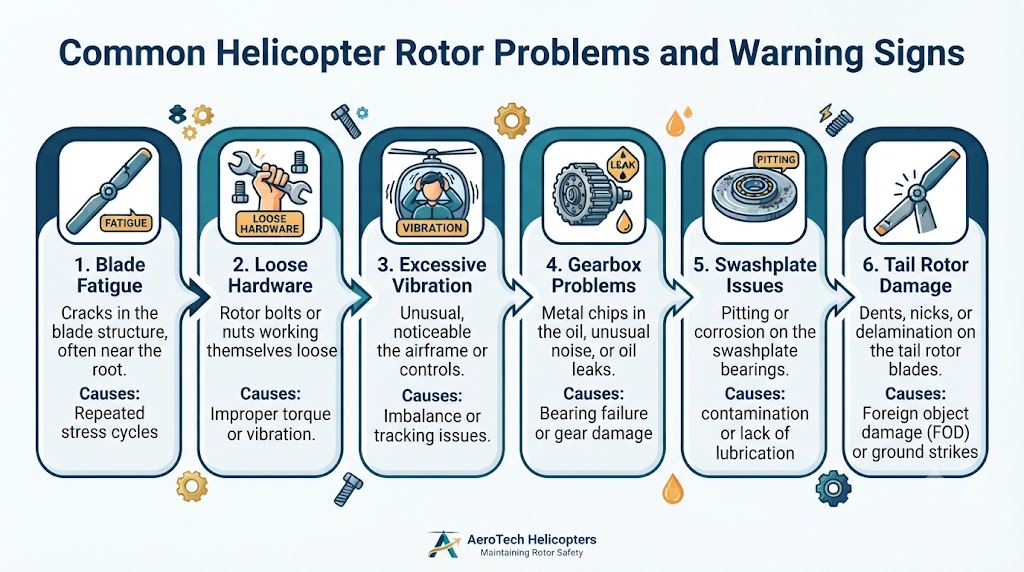
A helicopter’s rotor system is one of its most important and technically demanding components. The main rotor provides lift and contributes to aircraft control, while the tail rotor or other directional-control system plays an important role in managing the helicopter’s heading, depending on the aircraft design.
Because rotor components operate under significant aerodynamic and mechanical loads, their condition deserves careful attention. Problems involving rotor blades, hubs, control components, or related systems can produce noticeable changes in vibration, noise, handling, or aircraft behavior.
For pilots, owners, and operators, recognizing potential warning signs early can help ensure that appropriate maintenance attention is given before a minor concern becomes a more serious issue.
This guide explains common helicopter rotor problems and warning signs, along with general considerations for prevention and professional mainten.
What Is a Helicopter Rotor System?
A helicopter rotor system is more than just the visible blades.
Depending on the helicopter design, the system can include:
- Main rotor blades
- Main rotor hub
- Blade attachment components
- Swashplate and associated controls
- Rotor-drive components
- Tail rotor
- Tail rotor hub
- Tail rotor blades
- Related control and drive systems
The exact configuration varies considerably between helicopter models.
Some helicopters use conventional tail rotors, while others use alternative directional-control systems. Therefore, maintenance and inspection requirements should always be based on the specific helicopter.
Why Rotor Condition Matters
Rotor systems are fundamental to helicopter operation. Problems affecting the system can influence:
- Aircraft handling
- Vibration
- Control response
- Passenger comfort
- Aircraft performance
- Structural condition
- Overall operational safety
A new vibration, unfamiliar sound, visible damage, or change in normal handling should not simply be dismissed as part of helicopter operation.
It may have a straightforward explanation, but it may also indicate a condition that requires inspection.
Common Rotor Problem #1: Excessive or Unusual Vibration
Vibration is one of the most noticeable potential warning signs of a rotor-system issue.
Some vibration is normal in helicopter operations, but a new, unusual, increasing, or significantly different vibration deserves attention.
Potential broad categories of causes can include:
- Rotor imbalance
- Blade condition
- Tracking-related issues
- Component wear
- Drive-system concerns
- Other mechanical abnormalities
It is important to understand that vibration alone cannot identify the cause.
Pilots and owners should avoid attempting to diagnose the source based solely on how the vibration feels. Appropriate maintenance personnel can use aircraft-specific procedures and equipment to investigate the issue.
Why Changes Matter
A pilot who regularly flies the same helicopter often becomes familiar with its normal sound and vibration characteristics.
That familiarity can be useful.
If something suddenly feels or sounds different, it is worth reporting rather than assuming the change is insignificant.
Common Rotor Problem #2: Rotor Blade Damage
Rotor blades can be exposed to demanding operating conditions and may be affected by foreign objects, environmental exposure, wear, or other events.
Potential forms of damage include:
- Cracks
- Dents
- Surface damage
- Erosion
- Corrosion
- Delamination where applicable
- Foreign-object damage
Some defects may be obvious, while others may require specialized inspection techniques.
Why Blade Damage Should Not Be Ignored
A rotor blade is a highly engineered component. A defect that appears small to an untrained observer may still require professional evaluation.
If damage is suspected, follow the helicopter manufacturer’s applicable inspection and maintenance requirements rather than attempting an informal repair.
Common Rotor Problem #3: Rotor Blade Erosion and Wear
Rotor blades can experience surface wear during normal operation, particularly in environments involving dust, sand, moisture, or other contaminants.
Leading-edge areas can be particularly exposed to environmental effects.
Potential concerns include:
- Leading-edge erosion
- Surface deterioration
- Abrasion
- Foreign-object impact
- Environmental damage
Progressive deterioration can affect the condition of the blade and may require inspection or maintenance.
The appropriate inspection criteria depend on the specific blade design and manufacturer requirements.
Common Rotor Problem #4: Corrosion
Corrosion is another condition that deserves attention in helicopter rotor systems.
It can potentially affect:
- Rotor blades
- Hub components
- Attachment areas
- Fasteners
- Control components
- Other exposed metal parts
Environmental exposure can increase corrosion concerns, particularly when helicopters operate or are stored in demanding environments.
Why Corrosion Matters
Corrosion can change the condition of a component and, depending on its location and severity, may have structural significance.
Visible corrosion should therefore be evaluated according to the manufacturer’s applicable maintenance documentation.
Do not assume that cleaning or surface treatment alone makes a component serviceable.
Common Rotor Problem #5: Unusual Rotor Noise
Pilots often become familiar with the normal sounds produced by their helicopter.
A new or unusual sound can therefore be an important observation.
Examples may include:
- Clicking
- Grinding
- Whining
- Knocking
- Unusual repetitive sounds
- Changes in the normal rotor-system sound
However, noise by itself cannot establish the cause of a problem.
A sound may originate from several different systems, and attempting to identify the exact source without appropriate training or equipment can be misleading.
What Should You Do?
Record what you noticed and communicate the observation to qualified maintenance personnel.
Details such as when the sound occurs, whether it changes with operating conditions, and whether it appeared suddenly can be useful to professionals investigating the issue.
Common Rotor Problem #6: Changes in Aircraft Handling
A helicopter that suddenly feels different during normal operation deserves attention.
Potential warning signs can include:
- Unusual control response
- Changes in vibration
- Unexpected control forces
- Changes in normal aircraft behavior
A change in handling does not automatically mean that the rotor system is at fault. However, it is important to treat unexplained changes seriously.
Pilots should follow the aircraft’s approved procedures and seek appropriate maintenance evaluation rather than attempting to compensate for an unexplained condition through unauthorized adjustments.
Common Rotor Problem #7: Rotor Tracking or Balance Issues
Rotor tracking and balance are specialized technical concepts associated with rotor-system operation.
When a rotor system is not operating within its required parameters, pilots or maintenance personnel may notice:
- Increased vibration
- Changes in noise
- Reduced passenger comfort
- Other abnormal indications
The specific cause can be complex.
Tracking and balancing should therefore be addressed using the helicopter manufacturer’s procedures and appropriate maintenance equipment.
These are not areas where generic internet instructions should replace aircraft-specific technical guidance.
Common Rotor Problem #8: Hub and Attachment Component Wear
The rotor hub and associated attachment components are subject to significant operational loads.
Potential warning signs may include:
- Abnormal vibration
- Visible damage
- Corrosion
- Unusual movement
- Wear identified during inspection
- Changes in normal aircraft behavior
The exact inspection requirements vary by helicopter.
Because these components can be structurally significant, concerns should be addressed by appropriately qualified maintenance personnel using the manufacturer’s documentation.
Common Rotor Problem #9: Swashplate and Control-System Concerns
The swashplate and associated control system transfer pilot control inputs to the rotor system.
Problems in these areas may produce changes in:
- Control feel
- Control response
- Rotor behavior
- Vibration
- Aircraft handling
A pilot may notice that a control feels different or that the helicopter responds differently from normal.
Such observations should be documented and reported.
The swashplate and associated control components require specialized knowledge and should not be adjusted or repaired based on generic instructions.
Common Rotor Problem #10: Tail Rotor Problems
For helicopters equipped with conventional tail rotors, the tail rotor plays an important role in directional control.
Potential warning signs can include:
- Unusual vibration
- Abnormal noise
- Visible blade damage
- Changes in directional control behavior
- Evidence of corrosion
- Signs of component wear
A suspected tail-rotor problem requires prompt attention.
As with the main rotor, the exact cause cannot be reliably determined from a single symptom. Appropriate maintenance personnel should investigate according to the helicopter manufacturer’s procedures.
Common Rotor Problem #11: Foreign-Object Damage
Rotor blades can encounter foreign objects during helicopter operations.
Potential sources include:
- Stones
- Debris
- Tools
- Ground equipment
- Loose objects
- Other material
Damage can affect both main and tail rotor components, depending on the aircraft.
After Suspected Foreign-Object Contact
If a rotor blade or related component may have contacted a foreign object, the event should be reported and evaluated according to the applicable aircraft procedures.
Do not assume that a component is safe simply because the damage appears minor.
Common Rotor Problem #12: Environmental Damage
Operating and storage environments can affect rotor-system condition.
Potential environmental factors include:
- Salt exposure
- Sand
- Dust
- Moisture
- Extreme temperatures
- Ultraviolet exposure
- Ice
- Snow
- Contaminants
Helicopters operating in coastal, desert, agricultural, or other demanding environments may have different maintenance considerations from aircraft operating in more controlled conditions.
Following the manufacturer’s recommended care and inspection practices is particularly important.
Warning Signs Pilots and Operators Should Never Ignore
Several observations deserve prompt attention.
These can include:
Sudden or Unusual Vibration
A significant change from the helicopter’s normal vibration characteristics should be reported.
New Rotor Noise
Unexpected clicking, grinding, knocking, or other unusual sounds should not be dismissed.
Visible Blade Damage
Cracks, dents, corrosion, erosion, or other suspected damage require appropriate evaluation.
Changes in Control Response
Unexpected changes in control feel or aircraft response should be treated seriously.
Unusual Aircraft Behavior
Any unexplained change in the helicopter’s normal behavior should be communicated to appropriate maintenance personnel.
Damage Following Foreign-Object Contact
Any suspected rotor contact with debris or another object should be evaluated according to applicable procedures.
Maintenance Alerts
Any applicable warning, indication, or maintenance-related alert should be addressed according to the aircraft’s approved procedures.
What to Do When You Notice a Rotor Problem
When a pilot or operator notices a potential rotor-system abnormality, the appropriate response depends on the circumstances and aircraft-specific procedures.
General safety considerations include:
- Follow the helicopter’s approved procedures.
- Do not ignore significant or unexplained abnormalities.
- Record useful observations when practical.
- Communicate the issue to appropriate maintenance personnel.
- Consult the manufacturer’s applicable documentation.
- Arrange qualified inspection when required.
- Do not make unauthorized adjustments or repairs.
The purpose of recognizing warning signs is not to encourage pilots to diagnose complex mechanical problems themselves.
Instead, awareness helps them identify when professional attention may be necessary.
Preventing Common Helicopter Rotor Problems
Prevention begins with disciplined maintenance and observation.
Follow Scheduled Inspections
Use the manufacturer’s applicable inspection requirements and maintenance program.
Perform Appropriate Preflight Inspections
Pilots should complete the inspections required for their helicopter and operating environment.
Monitor Changes
Develop familiarity with the helicopter’s normal sounds, vibration, handling, and indications.
Protect the Aircraft During Storage
Appropriate storage practices can help reduce environmental exposure.
Address Damage Promptly
Do not postpone evaluation of suspected blade damage, corrosion, unusual vibration, or other abnormalities.
Maintain Accurate Records
Good maintenance records help track inspections, repairs, component changes, and other relevant information.
Follow Manufacturer Service Information
Review applicable service information and current maintenance requirements.
Comply With Applicable Airworthiness Requirements
Where applicable, ensure that relevant airworthiness directives and other regulatory requirements are addressed.
The Importance of Professional Rotor Maintenance
Helicopter rotor systems are technically complex.
Proper maintenance may require:
- Specialized training
- Aircraft-specific technical knowledge
- Manufacturer documentation
- Specialized inspection equipment
- Appropriate replacement components
- Accurate maintenance records
For these reasons, rotor-system maintenance should be entrusted to appropriately qualified aviation maintenance professionals.
A pilot’s observations can be extremely valuable, but observations are only the beginning of the maintenance process.
A professional can determine what inspection or corrective action is appropriate.
Helicopter Rotor Awareness Checklist
The following checklist is intended as a general awareness tool and does not replace the helicopter manufacturer’s approved inspection procedures.
- Review applicable aircraft inspection requirements
- Look for visible rotor blade damage
- Observe signs of erosion or surface deterioration
- Check for obvious corrosion
- Note unusual vibration
- Note unusual rotor-system noise
- Report changes in control response
- Check for evidence of foreign-object contact
- Review relevant maintenance information
- Follow applicable manufacturer procedures
- Arrange qualified evaluation when abnormalities are identified
How Operating Environment Can Affect Rotor Condition
Not every helicopter experiences the same operating conditions.
Coastal Operations
Salt-laden air can contribute to corrosion concerns.
Desert Operations
Dust and sand can increase environmental exposure and contribute to wear in certain components.
Cold-Weather Operations
Ice, snow, moisture, and temperature changes can create additional considerations.
High-Use Operations
Helicopters that operate frequently may accumulate component time and inspection requirements more quickly.
Specialized Operations
Helicopters used for particular missions may experience environmental or operational stresses that differ from ordinary recreational use.
The aircraft’s approved maintenance program should account for the applicable operating environment.
Frequently Asked Questions
What are the most common helicopter rotor problems?
Common categories include excessive vibration, blade damage, erosion, corrosion, unusual noise, tracking or balance concerns, hub or attachment-component wear, control-system issues, and tail-rotor problems.
Why does a helicopter develop unusual vibration?
There are many possible causes, including rotor-system balance, blade condition, tracking, component wear, or other mechanical issues. Vibration alone cannot identify the cause and should be evaluated using appropriate maintenance procedures.
What does rotor blade damage look like?
Damage can include cracks, dents, erosion, corrosion, surface defects, or other abnormalities. Some defects may not be obvious without specialized inspection.
Why is unusual rotor noise important?
A new or unusual sound can indicate a change in the aircraft’s normal operating condition. Because different problems can produce similar sounds, professional evaluation is important.
How can corrosion affect rotor components?
Corrosion can affect metal components and, depending on its location and severity, may have structural or serviceability implications. It should be evaluated according to the applicable maintenance documentation.
What are signs of a tail rotor problem?
Potential signs include unusual vibration or noise, visible damage, changes in directional-control behavior, or other abnormal aircraft indications.
Can pilots diagnose rotor problems themselves?
Pilots can recognize and report warning signs, but complex rotor-system diagnosis and maintenance require appropriate training, documentation, equipment, and qualified personnel.
How often should helicopter rotors be inspected?
There is no single inspection interval that applies to every helicopter. Requirements vary by aircraft model, manufacturer, operating program, regulatory framework, and component. Always follow the applicable maintenance documentation.
When should a helicopter be removed from service for a suspected rotor problem?
The appropriate decision depends on the nature of the abnormality and the aircraft’s applicable procedures. Significant or unexplained vibration, visible rotor damage, unusual noises, or changes in handling should receive appropriate professional attention before further operation.
Final Thoughts
Helicopter rotor systems demand careful attention because they are fundamental to aircraft operation and are exposed to significant aerodynamic and mechanical loads. Common concerns include unusual vibration, rotor blade damage, erosion, corrosion, abnormal noise, tracking or balance issues, hub wear, control-system concerns, and tail-rotor abnormalities. The most important lesson for pilots and operators is simple: know what is normal for your helicopter and take unexplained changes seriously. A new sound, unexpected vibration, visible damage, or change in handling does not necessarily identify a specific mechanical fault, but it can be an important reason to seek appropriate inspection.

