
Introduction
Jet propulsion systems are among the most advanced and carefully engineered components of modern aircraft. Whether powering a commercial airliner, business jet, military aircraft, or cargo plane, a jet engine operates under extreme temperatures, high rotational speeds, and significant mechanical stress. To perform safely and efficiently, every component within the propulsion system must be inspected, maintained, and serviced according to approved procedures.
Proper jet engine maintenance is about much more than repairing problems after they occur. Preventive maintenance, routine inspections, timely replacement of worn components, and accurate documentation all play a vital role in maintaining engine reliability and airworthiness. Even a small oversight during maintenance can affect fuel efficiency, engine performance, operational reliability, and, most importantly, flight safety.
Many propulsion-related issues can be avoided by following established maintenance practices and addressing early warning signs before they become major problems. Understanding the most common maintenance mistakes helps aircraft owners, operators, maintenance technicians, and aviation professionals make informed decisions that protect both the aircraft and its passengers.
This guide explores the most common jet propulsion maintenance mistakes to avoid and shares practical recommendations for improving engine performance, reliability, and long-term operational safety.
Why Proper Jet Propulsion Maintenance Matters
Jet engines are precision-built machines designed to deliver dependable performance throughout thousands of operating hours. Regular maintenance ensures that these complex systems continue to function as intended while meeting regulatory and manufacturer requirements.
Proper maintenance provides several important benefits:
- Improves flight safety
- Maintains engine reliability
- Supports consistent aircraft performance
- Enhances fuel efficiency
- Reduces unexpected engine failures
- Extends engine service life
- Minimizes aircraft downtime
- Helps control long-term operating costs
A proactive maintenance strategy helps detect minor issues before they develop into expensive repairs or operational disruptions.
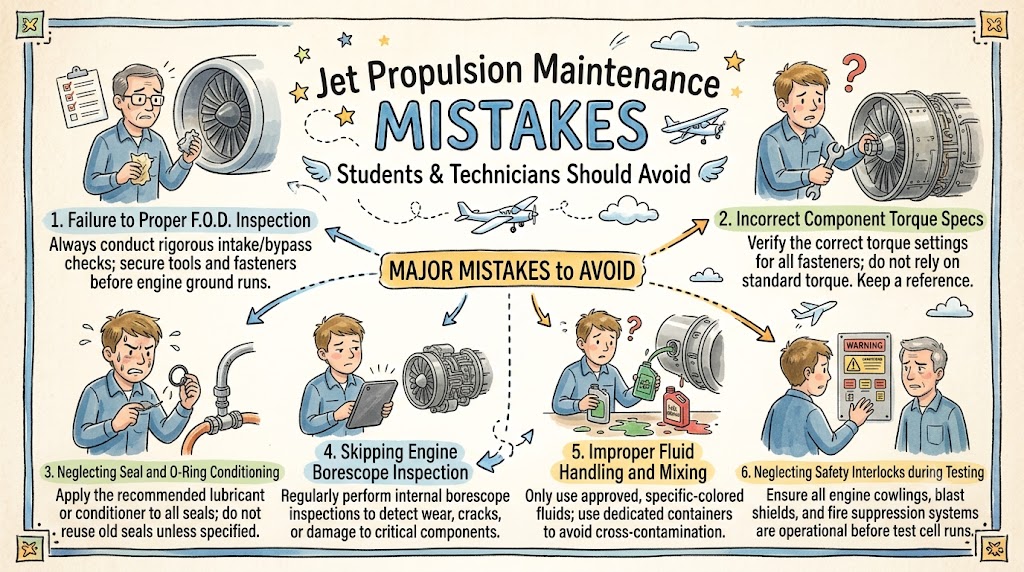
Common Jet Propulsion Maintenance Mistakes to Avoid
1. Delaying Scheduled Maintenance
One of the most common and costly mistakes is postponing scheduled inspections or maintenance tasks.
Jet engines are maintained according to carefully developed service intervals based on operating hours, flight cycles, and manufacturer recommendations. Delaying these inspections can allow wear or damage to progress unnoticed.
Potential consequences include:
- Increased component wear
- Reduced engine efficiency
- Higher repair costs
- Unexpected aircraft downtime
Following scheduled maintenance helps preserve engine performance and reliability.
2. Ignoring Early Warning Signs
Small engine problems often provide early indications before becoming serious failures.
Warning signs may include:
- Unusual engine vibration
- Changes in engine noise
- Reduced thrust
- Increased exhaust temperature
- Oil leaks
- Higher fuel consumption
Addressing these symptoms promptly often prevents more extensive repairs later.
3. Skipping Routine Engine Inspections
Routine inspections are essential for identifying developing problems before they affect aircraft operation.
Common inspection methods include:
- External visual inspections
- Internal borescope inspections
- Foreign Object Damage (FOD) checks
- Wear monitoring
- Leak inspections
Regular inspections improve maintenance planning and reduce unexpected failures.
4. Using Incorrect or Non-Approved Parts
Every component within a jet propulsion system is designed to meet specific engineering requirements.
Installing an incorrect or non-approved component may affect:
- Engine reliability
- Performance
- Compatibility
- Long-term durability
Always verify:
- Part numbers
- Approved documentation
- Compatibility
- Traceability
Using approved replacement parts helps maintain airworthiness.
5. Poor Maintenance Documentation
Maintenance records provide the operational history of an aircraft engine.
Accurate documentation should include:
- Inspection dates
- Maintenance performed
- Installed components
- Part numbers
- Service intervals
- Testing results
Well-maintained records simplify future inspections and maintenance planning.
6. Improper Lubrication Practices
Lubrication protects engine components from excessive friction and wear.
Common lubrication mistakes include:
- Using incorrect lubricants
- Missing scheduled oil changes
- Ignoring oil contamination
- Overlooking oil analysis
Proper lubrication contributes significantly to engine longevity.
7. Ignoring Fuel System Maintenance
A clean and properly functioning fuel system supports efficient engine performance.
Maintenance should include inspection of:
- Fuel filters
- Fuel lines
- Fuel injectors
- Fuel pumps
- Fuel quality
Contaminated fuel or restricted fuel flow may reduce engine performance.
8. Improper Installation After Repairs
Even high-quality replacement components can fail if installed incorrectly.
Installation errors may involve:
- Incorrect torque values
- Poor alignment
- Improper calibration
- Loose connections
- Incorrect routing
Following approved installation procedures helps ensure reliable engine operation.
9. Overlooking Compressor and Turbine Wear
Compressor and turbine sections operate under extremely demanding conditions.
Routine inspections help identify:
- Blade erosion
- Corrosion
- Heat damage
- Cracks
- Balance issues
- Foreign object damage
Early detection often prevents more extensive engine repairs.
10. Returning Aircraft to Service Without Proper Testing
Maintenance is not complete until appropriate testing confirms proper operation.
Typical post-maintenance testing includes:
- Ground engine runs
- Performance monitoring
- Leak inspections
- Sensor verification
- System operational checks
Testing confirms that the propulsion system functions correctly before flight.
Components That Require Regular Attention
Compressor
The compressor increases air pressure before combustion.
Routine inspections monitor blade condition, cleanliness, erosion, and foreign object damage.
Combustion Chamber
The combustion chamber experiences extremely high temperatures.
Maintenance focuses on identifying cracks, thermal damage, and wear.
Turbine
The turbine extracts energy from hot gases to drive the compressor.
Regular inspection helps detect blade damage, heat stress, and material fatigue.
Fuel System
Fuel pumps, injectors, filters, and fuel lines require regular inspection to ensure efficient fuel delivery.
Lubrication System
Oil systems protect rotating components and help remove heat.
Routine maintenance includes oil analysis and filter replacement.
Exhaust System
The exhaust section experiences significant thermal stress.
Inspection helps identify cracking, corrosion, and structural deterioration.
Bearings
Engine bearings support high-speed rotating shafts.
Routine monitoring helps detect excessive wear before failures occur.
Sensors
Modern jet engines rely on numerous sensors for performance monitoring.
Sensor inspections verify accurate data and dependable engine control.
Electronic Engine Controls
Electronic control systems help optimize engine performance.
Maintenance includes software verification, system testing, and connector inspections.
Air Intakes
Air intakes should remain clean and free from damage or foreign objects to support efficient airflow.
Warning Signs of Jet Propulsion Problems
Operators and maintenance personnel should investigate the following symptoms promptly:
- Reduced engine thrust
- Abnormal engine noise
- Excessive vibration
- Increased fuel consumption
- High exhaust temperatures
- Oil leaks
- Smoke
- Engine warning indications
- Slower engine response
- Changes in aircraft performance
Early diagnosis often prevents more serious maintenance issues.
Best Practices for Jet Propulsion Maintenance
Successful maintenance programs emphasize prevention rather than emergency repairs.
Recommended practices include:
- Follow manufacturer maintenance schedules.
- Conduct regular inspections.
- Use approved replacement parts.
- Maintain accurate documentation.
- Perform preventive maintenance.
- Monitor engine performance continuously.
- Inspect for foreign object damage.
- Complete post-maintenance testing before returning the aircraft to service.
Consistent maintenance improves long-term engine reliability.
Benefits of Proper Propulsion Maintenance
Improved Flight Safety
Reliable propulsion systems reduce operational risk.
Better Engine Reliability
Well-maintained engines experience fewer unexpected failures.
Lower Operating Costs
Preventive maintenance often costs less than emergency repairs.
Reduced Aircraft Downtime
Scheduled maintenance minimizes unexpected grounding.
Longer Engine Life
Routine inspections and proper servicing maximize component life.
Improved Fuel Efficiency
Healthy engines operate more efficiently, reducing fuel consumption.
Better Aircraft Performance
Properly maintained propulsion systems deliver consistent performance.
Regulatory Compliance
Approved maintenance procedures support continued airworthiness.
Increased Aircraft Value
Comprehensive maintenance records improve resale confidence.
Greater Operational Confidence
Reliable propulsion systems support safer and more efficient flight operations.
Jet Engine Maintenance Checklist
| Maintenance Task | Why It Matters |
|---|---|
| Perform scheduled inspections | Detects problems early |
| Verify approved replacement parts | Maintains airworthiness |
| Monitor oil condition | Protects engine components |
| Inspect compressor blades | Preserves engine performance |
| Check fuel system | Supports efficient combustion |
| Maintain accurate records | Improves traceability |
| Conduct engine testing | Verifies proper operation |
| Inspect for foreign object damage | Prevents engine damage |
| Verify sensor operation | Supports reliable monitoring |
| Complete final inspection | Enhances flight safety |
Common Myths About Jet Engine Maintenance
Myth: If the Engine Runs Normally, Maintenance Can Wait
Reality: Many engine problems develop gradually without immediately affecting performance. Scheduled inspections help identify hidden issues before they become serious.
Myth: Minor Vibrations Are Harmless
Reality: Even small vibration changes may indicate imbalance, bearing wear, or compressor damage that requires investigation.
Myth: Any Similar Component Can Be Installed
Reality: Every engine component must match approved specifications to ensure proper performance and compatibility.
Myth: Engine Inspections Are Only Necessary After Problems Occur
Reality: Preventive inspections help identify wear long before failures develop.
Myth: Maintenance Documentation Is Optional
Reality: Accurate maintenance records support compliance, traceability, maintenance planning, and continued airworthiness.
Why JETANDROTOR.COM Is a Valuable Aviation Resource
Maintaining jet propulsion systems requires accurate information, careful planning, and a commitment to aviation safety. JETANDROTOR.COM provides educational resources covering jet engines, aircraft propulsion systems, maintenance best practices, preventive inspections, aviation safety, and technical guidance for aviation professionals and enthusiasts. These resources help readers better understand propulsion maintenance and make informed decisions that support reliable aircraft operation.
Frequently Asked Questions
1. Why is jet propulsion maintenance important?
Proper maintenance improves flight safety, engine reliability, fuel efficiency, regulatory compliance, and long-term operational performance while reducing the likelihood of unexpected failures.
2. What are the most common jet engine maintenance mistakes?
Common mistakes include delaying inspections, ignoring warning signs, using incorrect parts, poor documentation, inadequate lubrication, skipping inspections, and failing to conduct post-maintenance testing.
3. How often should jet engines be inspected?
Inspection frequency depends on manufacturer maintenance schedules, operating hours, flight cycles, operating conditions, and regulatory requirements.
4. What warning signs indicate engine problems?
Symptoms may include unusual vibration, increased fuel consumption, abnormal engine noise, oil leaks, high exhaust temperatures, smoke, and reduced thrust.
5. Why are approved replacement parts important?
Approved components are designed to meet precise engineering specifications, supporting compatibility, reliability, and continued airworthiness.
6. What is preventive maintenance?
Preventive maintenance involves regularly scheduled inspections, servicing, adjustments, and component replacement before failures occur.
7. How does maintenance improve engine performance?
Proper maintenance preserves fuel efficiency, reduces wear, maintains system reliability, and supports consistent engine operation.
8. What documentation should be maintained?
Maintenance logs should include inspection dates, service performed, installed components, testing results, replacement history, and applicable maintenance records.
9. Who should perform jet propulsion maintenance?
Maintenance should be performed by qualified aviation maintenance professionals using approved procedures, proper tools, and accurate documentation.
10. How can operators reduce unexpected engine failures?
Following maintenance schedules, monitoring engine performance, replacing worn components promptly, maintaining accurate records, and conducting regular inspections all contribute to reliable engine operation.
Conclusion
Jet propulsion systems are among the most critical components of any aircraft, and their performance depends heavily on disciplined maintenance practices. Avoiding common mistakes—such as delaying scheduled maintenance, ignoring early warning signs, using non-approved parts, or overlooking inspections—helps improve engine reliability, enhance fuel efficiency, and support safe flight operations. Preventive maintenance, accurate documentation, and thorough post-maintenance testing are essential for protecting both the aircraft and everyone on board.
Whether you are an aircraft owner, operator, maintenance professional, or aviation enthusiast, understanding proper jet propulsion maintenance is key to reducing long-term operating costs and maximizing engine life. By following approved maintenance procedures and relying on trusted educational resources like JETANDROTOR.COM, you can make informed maintenance decisions that promote safer, more reliable, and more efficient aircraft operations.

