
Introduction
Modern aviation depends heavily on advanced engineering systems to maintain safety, operational efficiency, aircraft reliability, and long-term performance. Whether operating a business jet, private aircraft, helicopter fleet, or specialized rotorcraft, aviation operators rely on highly skilled engineering teams to inspect, maintain, diagnose, repair, and optimize complex aircraft systems.
Jet aircraft and rotorcraft contain thousands of interconnected components that must function precisely under demanding operational conditions. Turbine engines, avionics systems, hydraulic systems, rotor assemblies, electrical networks, and structural components all require ongoing engineering support to remain airworthy and compliant with aviation regulations.
For aircraft owners and operators, understanding aviation engineering services is critical for making informed maintenance decisions, reducing downtime, improving operational reliability, and protecting long-term aircraft value. However, many operators may not fully understand how engineering programs work, what inspections are required, how diagnostics are performed, or how engineering technologies continue evolving within the aviation industry.
This comprehensive guide explains everything operators should know about jet and rotor engineering services, including aircraft systems engineering, rotorcraft maintenance, turbine engine support, avionics engineering, FAA compliance, preventive maintenance strategies, engineering diagnostics, repair procedures, and future aviation engineering trends.
Real-world use cases include:
- Business jet maintenance
- Helicopter fleet support
- Turbine engine inspections
- Aircraft structural repairs
- Avionics modernization projects
- Emergency maintenance troubleshooting
- Aircraft restoration programs
- FAA compliance management
Evaluation Criteria for Buyers
Before selecting aviation engineering providers, operators should evaluate:
- FAA certifications
- Engineering expertise
- Aircraft specialization
- Maintenance capabilities
- Turnaround times
- Safety reputation
- Technical support
- Facility equipment
- Parts availability
- Quality assurance standards
Best for: Private aircraft owners, helicopter operators, corporate aviation fleets, and general aviation maintenance teams.
Not ideal for: Commercial airline operations discussions or military aviation engineering topics.
What Are Jet and Rotor Engineering Services?
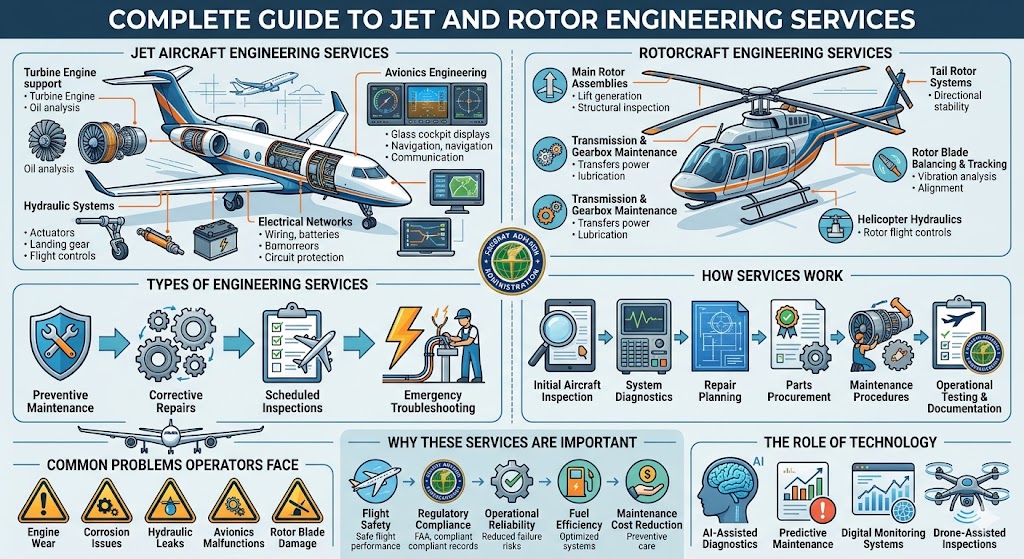
Jet and rotor engineering services involve the inspection, maintenance, troubleshooting, repair, overhaul, modification, and optimization of aircraft systems used in fixed-wing jets and rotorcraft.
These services support:
- Aircraft airworthiness
- Regulatory compliance
- Operational reliability
- Safety performance
- Long-term aircraft value
Jet Aircraft Engineering Support
Jet engineering services focus on systems commonly found in:
- Business jets
- Turbine-powered aircraft
- Corporate aviation fleets
- Executive transport aircraft
Rotorcraft Engineering Support
Rotorcraft engineering focuses on helicopter-specific systems such as:
- Main rotor assemblies
- Tail rotor systems
- Gearboxes
- Rotor blade balancing
- Helicopter vibration diagnostics
Preventive vs Corrective Engineering Services
| Engineering Type | Purpose |
|---|---|
| Preventive Maintenance | Reduce future failures |
| Corrective Maintenance | Repair existing issues |
| Scheduled Engineering | Routine compliance inspections |
| Emergency Engineering | Immediate operational repairs |
Why Aviation Engineering Services Are Important
Flight Safety
Safety remains the most important priority in aviation.
Proper engineering support helps ensure:
- Reliable aircraft operation
- Structural integrity
- Safe flight performance
- Reduced operational risk
Regulatory Compliance
Aircraft must comply with FAA operational and maintenance requirements.
Aircraft Reliability
Reliable engineering support reduces unexpected operational failures.
Operational Efficiency
Well-maintained aircraft generally operate more efficiently.
Fuel Efficiency
Optimized systems often improve fuel consumption performance.
Aircraft Longevity
Proper engineering support extends the operational life of aircraft systems.
Maintenance Cost Reduction
Preventive maintenance can reduce expensive long-term repairs.
Understanding Jet Aircraft Engineering Systems
Turbine Engine Systems
Turbine engines are among the most complex systems in aviation.
Engine Inspections
Routine inspections evaluate:
- Compressor systems
- Turbine blades
- Combustion systems
- Oil systems
Engine Diagnostics
Modern diagnostic systems monitor engine performance continuously.
Oil Analysis Programs
Oil analysis helps identify internal wear conditions early.
Turbine Blade Inspections
Blade inspections help detect:
- Cracking
- Heat damage
- Foreign object damage
Engine Overhauls
Overhauls restore engine performance and operational reliability.
Fuel Systems
Fuel systems require regular inspection for:
- Contamination prevention
- Leak detection
- Proper fuel delivery
Hydraulic Systems
Hydraulic systems power critical aircraft functions including:
- Landing gear operation
- Flight controls
- Brake systems
Electrical Systems
Electrical systems support avionics and onboard operational systems.
Environmental Control Systems
Environmental systems regulate:
- Cabin pressure
- Temperature
- Air circulation
Flight Control Systems
Flight controls require precise engineering and regular inspections.
Landing Gear Systems
Landing gear systems experience significant operational stress during takeoff and landing.
Understanding Rotorcraft Engineering Systems
Main Rotor Systems
The main rotor generates lift and flight control capability.
Tail Rotor Systems
Tail rotors maintain directional stability and control.
Transmission Systems
Rotorcraft transmissions transfer engine power to rotor assemblies.
Rotor Blade Maintenance
Rotor blades require regular inspections for:
- Structural damage
- Wear
- Imbalance
- Surface deterioration
Helicopter Hydraulics
Hydraulic systems support rotorcraft flight control operations.
Helicopter Avionics
Modern helicopters use advanced avionics systems similar to fixed-wing aircraft.
Vibration Analysis
Vibration diagnostics help identify rotor imbalance and mechanical wear.
Types of Aviation Engineering Services
Routine Maintenance Engineering
Routine maintenance supports daily operational reliability.
Scheduled Inspection Programs
Scheduled inspections ensure continued airworthiness compliance.
Structural Engineering Repairs
Structural repairs restore damaged airframe integrity.
Avionics Engineering
Avionics engineering supports navigation and communication systems.
Engine Overhaul Services
Overhauls restore engine operational performance.
Aircraft Modification Programs
Modification projects upgrade aircraft capability and efficiency.
Corrosion Control Programs
Corrosion prevention helps preserve structural integrity.
Emergency Repair Services
Emergency maintenance restores aircraft following unexpected failures.
FAA Aviation Engineering Regulations
FAA Repair Station Requirements
Approved repair facilities must meet FAA operational standards.
Aircraft Airworthiness Standards
Aircraft must maintain approved airworthiness conditions.
Airworthiness Directives
Airworthiness Directives identify mandatory corrective actions.
Maintenance Documentation
Accurate records are essential for regulatory compliance.
Inspection Authorization IA
Certain inspections require authorized inspection personnel.
FAA Compliance Programs
Compliance programs support operational safety and regulatory adherence.
How Aviation Engineering Services Work
Initial Aircraft Inspection
Technicians evaluate aircraft condition and identify maintenance needs.
System Diagnostics
Diagnostic systems help locate technical issues.
Engineering Analysis
Engineering teams assess repair strategies and operational impacts.
Repair Planning
Maintenance procedures and timelines are developed.
Parts Procurement
Approved replacement components are sourced and verified.
Maintenance Procedures
Repairs are completed according to approved engineering standards.
Operational Testing
Systems undergo testing before aircraft return to service.
Final Inspection and Documentation
Final evaluations confirm operational readiness and compliance.
Common Problems Jet and Rotor Operators Face
Turbine Engine Wear
Engine wear develops over time through heat and operational stress.
Corrosion Issues
Corrosion remains one of the most common long-term aviation concerns.
Hydraulic Leaks
Hydraulic failures may affect flight controls and landing systems.
Electrical Failures
Electrical issues can affect avionics and aircraft reliability.
Rotor Blade Damage
Rotor blades may experience:
- Surface wear
- Structural fatigue
- Impact damage
Avionics Malfunctions
Modern avionics systems require advanced diagnostics and maintenance.
Landing Gear Problems
Landing gear systems require extensive inspection and servicing.
Structural Fatigue
Repeated flight cycles may contribute to structural fatigue over time.
Turbine Engine Engineering Services
Engine Monitoring Programs
Continuous monitoring improves engine reliability.
Turbine Blade Inspections
Blade inspections help identify operational risks early.
Oil Analysis Programs
Oil analysis supports predictive maintenance planning.
Engine Overhaul Procedures
Overhauls restore operational performance and reliability.
Engine Cooling Systems
Cooling systems regulate operational temperatures.
Engine Performance Diagnostics
Diagnostic systems help identify performance abnormalities.
Rotorcraft Maintenance and Engineering
Rotor Balancing
Proper rotor balancing reduces vibration and component wear.
Blade Tracking
Blade tracking ensures rotor alignment and operational efficiency.
Gearbox Maintenance
Gearboxes require extensive lubrication and inspection programs.
Transmission Inspections
Transmission systems are critical for safe rotorcraft operation.
Helicopter Structural Repairs
Structural repairs restore airworthiness and safety.
Rotor Vibration Diagnostics
Vibration diagnostics identify imbalance and mechanical stress.
Aircraft Avionics Engineering Services
Glass Cockpit Upgrades
Modern digital displays improve operational awareness.
Navigation Systems
Navigation systems support accurate flight operations.
GPS Integration
Modern GPS systems improve routing and efficiency.
ADS-B Compliance
Many operators upgrade systems to maintain regulatory compliance.
Communication Systems
Reliable communication systems are essential for aviation safety.
Flight Data Systems
Flight data monitoring improves maintenance analysis and operational planning.
Aircraft Structural Engineering Services
Aluminum Structural Repair
Aluminum airframes require specialized repair procedures.
Composite Material Repair
Composite systems require advanced inspection and repair techniques.
Corrosion Treatment
Corrosion control programs preserve structural integrity.
Fuselage Repairs
Fuselage repairs restore operational strength and safety.
Wing Repairs
Wing structures must maintain precise aerodynamic performance.
Rotor Structure Repairs
Rotor structures require extensive engineering oversight.
How Much Do Aviation Engineering Services Cost?
Engineering costs vary depending on aircraft type and operational complexity.
Aircraft Type
Larger and more advanced aircraft generally require more complex engineering support.
Aircraft Age
Older aircraft may require additional maintenance attention.
System Complexity
Advanced avionics and turbine systems increase engineering requirements.
Labor Rates
Engineering labor rates vary by expertise level and facility.
Parts Availability
Specialized components may increase repair costs.
Emergency Maintenance
Urgent repairs often involve premium operational costs.
Downtime Requirements
Extended downtime can affect operational productivity.
Aviation Engineering Cost Factors Table
| Cost Driver | Impact |
|---|---|
| Aircraft Size | High |
| Engine Type | High |
| Avionics Complexity | Moderate |
| Labor Rates | High |
| Parts Availability | Variable |
| Emergency Repairs | High |
Preventive Maintenance Strategies for Aircraft Operators
Scheduled Maintenance Planning
Structured maintenance programs reduce unexpected failures.
Corrosion Prevention
Regular cleaning and inspections help reduce corrosion risks.
Proper Aircraft Storage
Hangar storage protects aircraft from environmental exposure.
Engine Preservation
Engine preservation programs extend operational life.
Regular Diagnostics
Routine diagnostics identify developing issues early.
Maintenance Recordkeeping
Accurate documentation supports compliance and aircraft value.
Common Mistakes Aircraft Operators Make
- Delaying inspections
- Ignoring corrosion signs
- Using non-approved parts
- Poor maintenance planning
- Ignoring avionics updates
- Delaying turbine inspections
- Weak documentation practices
- Choosing providers only by price
- Delaying diagnostics
- Poor storage practices
How to Choose the Right Aviation Engineering Provider
FAA Certifications
Always verify FAA-approved operational status.
Engineering Experience
Experienced engineering teams improve maintenance quality.
Aircraft Type Specialization
Specialized experience supports operational efficiency.
Facility Capabilities
Modern equipment improves diagnostic and repair accuracy.
Technical Support
Strong support improves maintenance coordination.
Turnaround Time
Efficient scheduling reduces operational downtime.
Quality Assurance
Quality programs improve consistency and safety.
Reputation and Reviews
Strong reputations often indicate reliable service quality.
Questions Operators Should Ask Before Approving Services
- Is the facility FAA certified?
- What aircraft models are supported?
- Are approved parts used?
- What warranties are provided?
- What is the estimated downtime?
- How are reports documented?
- What diagnostics are included?
- What maintenance programs are recommended?
- Are emergency services available?
- What engineering technologies are used?
The Role of Technology in Modern Aviation Engineering
AI-Assisted Diagnostics
Artificial intelligence improves troubleshooting efficiency.
Predictive Maintenance Systems
Predictive analytics help identify problems before failures occur.
Digital Aircraft Monitoring
Digital monitoring systems support real-time operational analysis.
Drone-Assisted Inspections
Inspection drones help evaluate hard-to-access aircraft areas.
Advanced Avionics Diagnostics
Modern avionics tools improve system troubleshooting.
Digital Maintenance Tracking
Electronic maintenance systems improve operational organization.
Future Trends in Jet and Rotor Engineering
Predictive Aviation Maintenance
Predictive maintenance technologies will continue expanding rapidly.
Electric Aircraft Engineering
Electric propulsion systems will introduce new engineering requirements.
AI-Based Maintenance Diagnostics
Artificial intelligence will improve fault detection accuracy.
Sustainable Aviation Engineering
Environmental efficiency will increasingly influence aviation maintenance.
Smart Aircraft Monitoring
Connected aircraft systems will continue evolving.
Advanced Composite Technologies
Composite materials will continue becoming more advanced and lightweight.
Frequently Asked Questions
1. What are aviation engineering services?
Aviation engineering services include aircraft inspection, maintenance, diagnostics, repair, overhaul, and compliance support.
2. How often should aircraft inspections occur?
Inspection schedules depend on aircraft type, regulations, and operational usage.
3. What causes turbine engine wear?
Heat, operational stress, contamination, and flight cycles contribute to engine wear.
4. How expensive are aircraft engineering services?
Costs vary depending on aircraft size, complexity, repair scope, and parts availability.
5. What FAA certifications matter?
FAA repair station approvals and certified technician credentials are important considerations.
6. Why is rotor balancing important?
Proper rotor balancing reduces vibration and improves operational safety.
7. What causes aircraft corrosion?
Moisture exposure, environmental conditions, and inadequate maintenance commonly contribute to corrosion.
8. Are avionics upgrades necessary?
Many upgrades improve safety, compliance, navigation capability, and operational efficiency.
9. How can operators reduce maintenance costs?
Preventive maintenance and regular inspections often reduce long-term repair expenses.
10. What should operators do during emergency maintenance situations?
Immediately consult certified aviation maintenance professionals and avoid operating affected aircraft until repairs are completed.
Conclusion
Jet and rotor engineering services are essential for maintaining aircraft safety, reliability, performance, regulatory compliance, and long-term operational efficiency in modern aviation. From turbine engine inspections and rotorcraft diagnostics to avionics engineering, structural repairs, corrosion prevention, and predictive maintenance planning, aviation engineering teams play a critical role in supporting safe and efficient aircraft operations. Whether operating business jets, helicopters, or general aviation aircraft, owners and operators benefit significantly from proactive maintenance strategies, modern diagnostic technologies, FAA-compliant engineering programs, and experienced technical support teams. As aviation technology continues evolving through AI-assisted diagnostics, predictive analytics, smart aircraft monitoring systems, advanced avionics, and lightweight composite materials, the future of jet and rotor engineering services will continue becoming more advanced, data-driven, and operationally efficient for the next generation of aviation operators.

