
Introduction
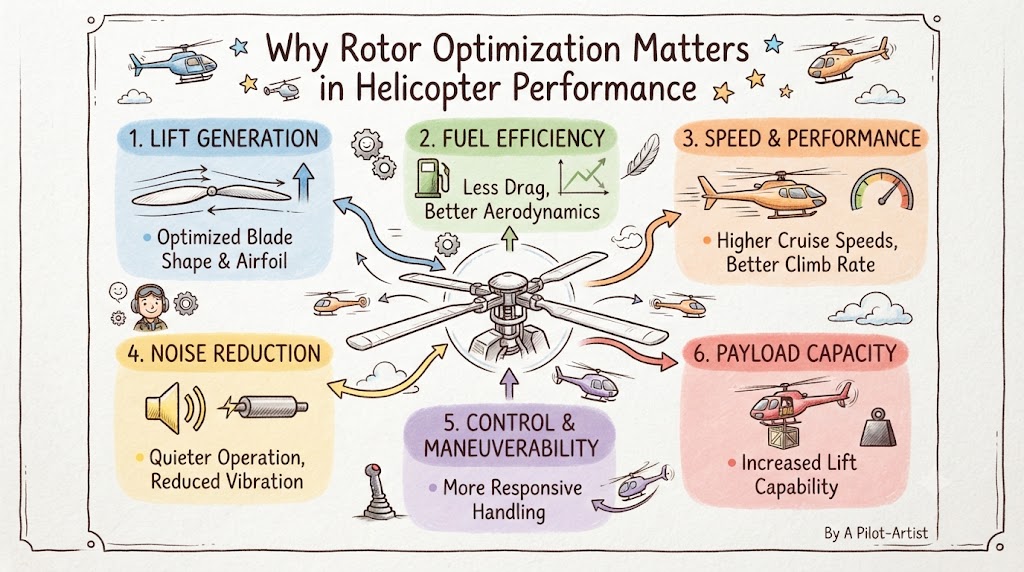
Helicopters are among the most versatile aircraft in aviation because they can take off and land vertically, hover in place, and operate in locations where traditional aircraft cannot. However, the ability of a helicopter to perform these unique operations depends heavily on one critical system: the rotor.
The rotor system is responsible for generating lift, controlling movement, maintaining stability, and supporting overall flight performance. Even small improvements in rotor design, balance, and efficiency can significantly influence how a helicopter operates.
Rotor optimization focuses on improving the performance, reliability, and efficiency of helicopter rotor systems through advanced engineering, aerodynamic improvements, weight management, and maintenance practices. It helps helicopters achieve better flight characteristics while reducing operational challenges.
What Is Helicopter Rotor Optimization?
Helicopter rotor optimization is the process of improving rotor system performance by refining design, materials, aerodynamics, and operating conditions.
The goal of rotor optimization is to create a rotor system that can provide:
- Efficient lift generation
- Better flight stability
- Reduced vibration
- Improved energy efficiency
- Enhanced operational reliability
A helicopter rotor is a complex engineering system that must perform under different flight conditions, including hovering, forward flight, climbing, descending, and maneuvering.
Engineers optimize rotor systems by studying factors such as:
- Blade design
- Rotor geometry
- Aerodynamic performance
- Weight distribution
- Vibration characteristics
- Material selection
An optimized rotor system helps helicopters perform more effectively while maintaining safe operating conditions.
Understanding the Role of Helicopter Rotor Systems
The rotor is often considered the heart of a helicopter because it performs functions that fixed-wing aircraft achieve through wings and control surfaces.
Generating Lift
The primary function of helicopter rotors is creating lift.
Rotor blades rotate at high speed, moving air downward and producing an upward force that allows the helicopter to rise.
Efficient rotor operation helps improve:
- Takeoff capability
- Hover performance
- Load-carrying ability
- Flight efficiency
The design and condition of rotor blades directly influence how effectively a helicopter generates lift.
Providing Directional Control
Rotor systems also allow helicopters to move in different directions.
Pilots control helicopter movement through changes in rotor blade angles and power adjustments.
The rotor system supports:
- Forward movement
- Side movement
- Climbing
- Descending
- Turning
A well-optimized rotor system provides smoother and more responsive aircraft control.
Supporting Stability
Rotor balance and efficiency are essential for stable helicopter operation.
Proper rotor optimization helps reduce:
- Unwanted movement
- Excessive vibration
- Control difficulties
Stable rotor performance improves pilot confidence and passenger comfort.
Key Factors That Influence Rotor Performance
1. Rotor Blade Design
Rotor blade design plays a major role in helicopter performance.
Engineers consider factors such as:
- Blade shape
- Blade length
- Blade profile
- Materials
- Aerodynamic characteristics
A properly designed rotor blade can improve airflow management and reduce unnecessary drag.
Blade design influences:
- Lift generation
- Noise levels
- Fuel efficiency
- Flight smoothness
Modern rotor systems often use advanced designs to achieve better performance across different operating conditions.
2. Aerodynamic Optimization
Aerodynamics is one of the most important areas in rotor development.
Rotor blades interact continuously with surrounding air, and small aerodynamic changes can affect helicopter performance.
Aerodynamic optimization focuses on:
- Improving airflow around blades
- Reducing drag
- Increasing efficiency
- Managing airflow changes during flight
Better aerodynamic performance allows helicopters to operate more efficiently while maintaining required capabilities.
3. Rotor Weight and Material Selection
Weight management is an important consideration in helicopter engineering.
Heavy rotor components can increase energy requirements and affect aircraft performance.
Modern rotor systems may use advanced materials that provide:
- Strength
- Durability
- Reduced weight
- Better performance characteristics
Lightweight rotor components can support improved efficiency and handling.
However, materials must also meet strict durability and safety requirements.
4. Vibration Reduction
Vibration is one of the major challenges in helicopter operations.
Rotor systems contain moving components that operate at high speeds, creating forces that must be carefully controlled.
Excessive vibration can affect:
- Passenger comfort
- Component life
- Maintenance requirements
- Aircraft reliability
Rotor optimization helps reduce vibration through:
- Blade balancing
- Rotor tracking
- Improved component design
- Proper maintenance procedures
A smoother rotor system improves both aircraft performance and operational comfort.
5. Rotor Speed Management
Rotor speed plays an important role in helicopter performance.
Maintaining proper rotor speed helps ensure:
- Effective lift production
- Stable flight characteristics
- Efficient power usage
Pilots and aircraft systems continuously monitor rotor performance to maintain safe operating conditions.
Incorrect rotor speed management can affect aircraft handling and efficiency.
How Rotor Optimization Improves Helicopter Performance
1. Improved Lift Capability
Optimized rotor systems help helicopters generate lift more effectively.
Benefits include:
- Better hovering performance
- Improved load capability
- Enhanced operation in challenging environments
This is especially important for helicopters performing specialized missions where performance requirements are demanding.
2. Better Fuel Efficiency
Rotor efficiency influences how much power is required during flight.
Optimized rotor systems can help reduce unnecessary energy losses through:
- Improved aerodynamics
- Reduced drag
- Better airflow management
Improved efficiency can support more effective aircraft operation.
3. Enhanced Flight Stability
A properly optimized rotor system improves aircraft handling.
Benefits include:
- Smoother flight control
- Reduced vibration
- Better pilot response
Stable helicopter performance is important for both safety and mission effectiveness.
4. Increased Operational Reliability
Rotor optimization also supports long-term aircraft reliability.
Efficient rotor systems may experience:
- Reduced mechanical stress
- Improved component performance
- Better maintenance predictability
Reliable rotor operation helps reduce unexpected operational challenges.
5. Improved Mission Capability
Different helicopter missions require different performance characteristics.
Rotor optimization supports operations such as:
- Emergency medical transport
- Search and rescue
- Military missions
- Offshore transportation
- Utility operations
Each mission benefits from improved rotor efficiency and control.
Rotor Optimization Techniques Used in Helicopter Engineering
Computer-Aided Design and Simulation
Modern helicopter engineering uses advanced digital tools to study rotor performance.
Engineers can analyze:
- Airflow behavior
- Blade performance
- Structural characteristics
- Operating conditions
Simulation helps improve designs before physical testing.
Rotor Blade Testing
Testing helps verify rotor performance and safety.
Engineers evaluate:
- Structural strength
- Aerodynamic behavior
- Operating performance
Testing ensures rotor systems meet required standards.
Blade Tracking and Balancing
Blade tracking ensures rotor blades operate correctly together.
Proper balancing helps:
- Reduce vibration
- Improve smoothness
- Protect components
Regular tracking and balancing are important parts of rotor maintenance.
Advanced Materials
Modern rotor technology increasingly uses advanced materials.
Composite materials can provide:
- High strength
- Reduced weight
- Better durability
Material improvements continue to support helicopter performance development.
Importance of Rotor Maintenance for Performance Optimization
Even the most advanced rotor design requires proper maintenance.
Regular rotor maintenance helps ensure:
- Safe operation
- Reliable performance
- Early detection of problems
Important inspection areas include:
Rotor Blade Condition
Technicians inspect blades for:
- Surface damage
- Wear
- Cracks
- Structural issues
Rotor Balance
Balance checks help identify vibration-related problems.
Attachment Points
Rotor connections require careful inspection to ensure proper operation.
Rotor Components
Other mechanical components must be monitored for wear and condition.
Common Rotor Performance Problems
Excessive Vibration
Excessive vibration may result from:
- Blade imbalance
- Improper tracking
- Component wear
Ignoring vibration issues can affect aircraft performance and maintenance requirements.
Reduced Lift Performance
Reduced lift capability may be caused by:
- Damaged blades
- Poor rotor condition
- Incorrect adjustments
Proper inspection helps identify potential causes.
Increased Noise
Rotor noise can be influenced by:
- Blade design
- Airflow patterns
- Rotor condition
Engineering improvements continue to focus on reducing helicopter noise.
Increased Maintenance Requirements
Poor rotor condition can increase maintenance needs.
Regular monitoring helps prevent unnecessary operational issues.
Rotor Optimization vs Traditional Rotor Systems
| Factor | Optimized Rotor Systems | Traditional Rotor Systems |
|---|---|---|
| Aerodynamic Efficiency | Improved airflow management and design | Limited by older design approaches |
| Vibration Control | Better balancing and monitoring | May require more adjustments |
| Fuel Efficiency | Supports improved energy use | May have higher operational demands |
| Flight Stability | Enhanced control response | Depends on system design |
| Maintenance Requirements | Better monitoring capabilities | More manual tracking may be required |
| Mission Capability | Supports diverse operations | May have operational limitations |
Industries That Benefit From Rotor Optimization
Emergency Medical Helicopters
Medical helicopters require dependable performance for urgent missions.
Rotor optimization supports:
- Reliable operations
- Smooth flight characteristics
- Mission readiness
Search and Rescue Operations
Search and rescue helicopters often operate in challenging environments.
Optimized rotor systems help improve:
- Maneuverability
- Stability
- Operational flexibility
Commercial Helicopter Services
Passenger and transportation operators benefit from:
- Improved comfort
- Better efficiency
- Reliable operations
Military and Defense Applications
Military helicopters require advanced performance capabilities.
Rotor optimization supports:
- Mission flexibility
- Operational efficiency
- Aircraft performance
Utility and Offshore Operations
Utility helicopters often carry equipment or operate in demanding locations.
Efficient rotor systems help support:
- Heavy operations
- Extended missions
- Reliable performance
Future Trends in Helicopter Rotor Technology
Helicopter rotor technology continues to advance through engineering innovation.
Future developments may include:
Advanced Composite Rotor Blades
New materials may help create lighter and more efficient rotor systems.
Smart Rotor Monitoring Systems
Digital monitoring technologies can provide better information about rotor condition.
Noise Reduction Technologies
Engineers continue developing quieter rotor systems for improved community compatibility.
Data-Driven Maintenance
Advanced data analysis can help predict maintenance requirements and improve aircraft availability.
Frequently Asked Questions
1. What is helicopter rotor optimization?
Helicopter rotor optimization is the process of improving rotor design, efficiency, and operation to enhance aircraft performance and reliability.
2. Why are rotor systems important for helicopters?
Rotor systems generate lift, provide control, and help helicopters maintain stable flight.
3. How does rotor design affect helicopter performance?
Rotor design influences lift capability, efficiency, vibration levels, and overall flight characteristics.
4. Can rotor optimization improve fuel efficiency?
Optimized rotor systems can support improved efficiency by reducing aerodynamic losses and improving power usage.
5. Why is vibration control important in helicopters?
Reducing vibration improves passenger comfort, protects components, and supports reliable operations.
6. How often should helicopter rotors be inspected?
Inspection schedules depend on helicopter type, rotor design, operating conditions, and manufacturer guidelines.
7. What materials are used in modern rotor blades?
Modern rotor blades may use advanced materials, including composite materials designed for strength and reduced weight.
8. How does rotor optimization improve flight stability?
Optimized rotors improve balance, reduce vibration, and provide smoother control responses.
9. What industries benefit from optimized rotor systems?
Industries such as emergency services, transportation, military operations, and utility aviation benefit from rotor optimization.
10. What is the future of helicopter rotor technology?
Future rotor technology focuses on improved efficiency, quieter operation, advanced materials, and smarter monitoring systems.
Conclusion
Rotor optimization plays a critical role in helicopter performance by improving efficiency, stability, reliability, and mission capability. Since helicopters depend entirely on rotor systems for lift and control, even small improvements in rotor design and maintenance can have significant operational benefits. Modern rotor engineering combines advanced materials, aerodynamic research, digital analysis, and maintenance practices to create safer and more efficient aircraft. As helicopter technology continues to evolve, rotor optimization will remain an important area of development, helping rotorcraft achieve better performance across a wide range of aviation missions.

