
Introduction
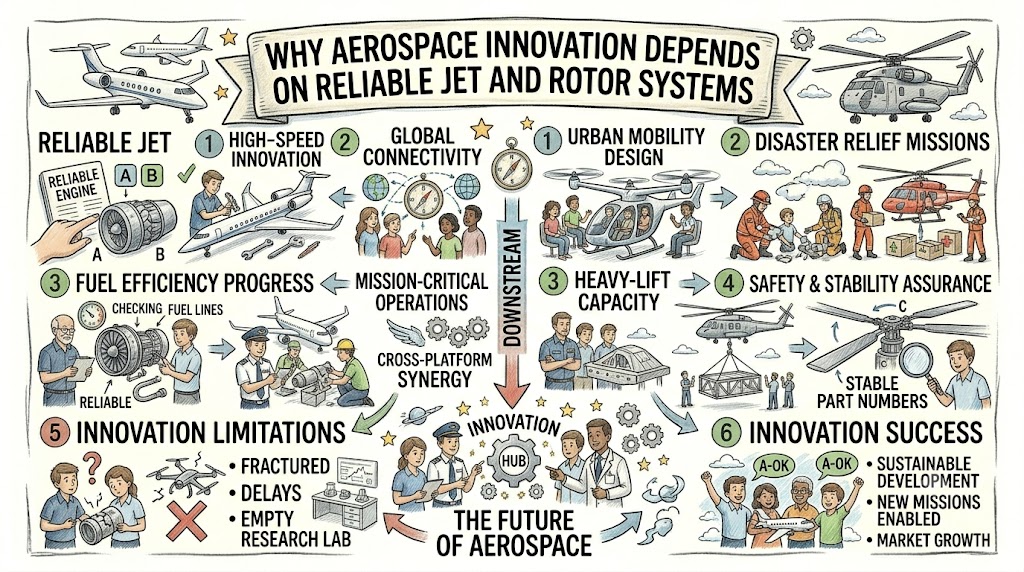
In modern aerospace, the reliability of jet and rotor systems is critical for innovation, safety, and performance. These systems are the backbone of aircraft operation, whether in fixed-wing jets, helicopters, or hybrid rotorcraft. Without dependable propulsion and lift mechanisms, even the most advanced aerospace technologies cannot achieve their full potential. Reliable systems enable engineers to push boundaries in speed, maneuverability, fuel efficiency, and operational capabilities while maintaining the safety standards essential for both commercial and military aviation. Understanding the pivotal role these systems play helps stakeholders prioritize design, maintenance, and testing practices to foster continuous innovation.
Real-world Use Cases
Reliable jet engines allow commercial airliners to achieve longer flight ranges and improved fuel efficiency, which supports global airline expansion. In rotorcraft, dependable rotor systems enable emergency medical services and military operations where precision, stability, and performance under extreme conditions are critical. For experimental aircraft and UAVs, consistent propulsion and rotor reliability are essential for testing new aerodynamic designs, hybrid propulsion technologies, and advanced materials. Across all aviation sectors, innovation relies on confidence in the systems that provide lift, thrust, and control.
Evaluation Criteria for Aerospace Systems
When evaluating jet and rotor systems, engineers and operators consider performance metrics, component durability, maintenance cycles, system redundancy, and regulatory compliance. Factors such as vibration tolerance, temperature resilience, and aerodynamic efficiency determine whether a system can support both current operations and future innovations. High reliability reduces downtime, allows for more aggressive testing of new technologies, and ensures consistent operational performance.
Key Reasons Reliable Jet and Rotor Systems Enable Innovation
1- Flight Safety
Reliable systems are essential to prevent in-flight failures, accidents, or emergencies. Safety forms the foundation upon which aerospace innovation can proceed confidently.
2- Performance Optimization
Consistent thrust and lift enable engineers to test new aerodynamic designs, increase payload capabilities, and optimize fuel efficiency.
3- Fuel Efficiency and Environmental Impact
Reliable systems allow precise tuning and integration of fuel-efficient technologies, reducing operational costs and emissions while supporting eco-friendly innovation.
4- Maintenance Predictability
Dependable components simplify maintenance schedules, reduce unexpected downtime, and allow engineering teams to focus on development and performance testing rather than reactive repairs.
5- Regulatory Compliance
Aerospace innovations must meet strict regulatory standards. Reliable systems ensure that experimental and operational aircraft can achieve certification without compromising safety or performance.
6- Supports Advanced Technologies
Cutting-edge systems such as hybrid-electric propulsion, autonomous flight control, and adaptive rotor designs rely on dependable jets and rotors for safe testing and implementation.
7- Longevity and Cost Efficiency
Durable and reliable systems extend aircraft service life and reduce lifecycle costs, freeing resources for research and innovation in other areas of aerospace engineering.
8- Operational Reliability
For both commercial and specialized operations, consistent system performance allows broader experimentation, more aggressive flight profiles, and confident deployment of novel technologies.
Practical Tips for Aerospace Professionals
- Implement rigorous testing and monitoring programs for all jet and rotor systems.
- Prioritize maintenance schedules that maintain performance consistency.
- Choose components with proven reliability and track records for innovation projects.
- Document performance metrics to guide design improvements and predictive maintenance.
- Collaborate with suppliers and manufacturers to integrate new technologies with reliable core systems.
Comparison Notes
Innovations built on robust jet and rotor systems outperform designs using inconsistent or untested components. Reliable systems allow engineers to push the envelope on performance, safety, and operational capabilities, while weaker or unpredictable systems constrain design choices and limit potential advancements.
FAQs
1- Why is reliability critical in jet and rotor systems?
Reliability ensures safety, consistent performance, and supports experimental testing without risk of in-flight failure.
2- Can unreliable systems hinder aerospace innovation?
Yes. Unstable systems prevent safe testing of new technologies and limit design experimentation.
3- How is system reliability measured?
Metrics include component lifespan, failure rates, vibration tolerance, temperature resilience, and maintenance requirements.
4- Do reliable systems reduce operational costs?
Yes. Fewer failures and predictable maintenance schedules reduce downtime and lifecycle costs.
5- Are all rotor systems equally reliable?
No. Reliability depends on design, materials, manufacturing quality, and maintenance practices.
6- How do engineers ensure reliability in new designs?
Through extensive simulations, testing, redundancy, and quality control in manufacturing.
7- Can reliable systems improve fuel efficiency?
Yes. Stable thrust and lift allow optimization of aerodynamics, fuel use, and performance.
8- Do regulatory authorities require system reliability?
Absolutely. Certification standards mandate minimum performance and reliability metrics for safety.
9- How does reliability impact military or emergency rotorcraft?
High reliability ensures mission success, reduces operational risk, and allows safe performance in critical situations.
10- Does reliable propulsion support emerging technologies?
Yes. Autonomous systems, hybrid propulsion, and experimental airframes depend on dependable jets and rotors for safe operation and testing.
Conclusion
Aerospace innovation depends on the backbone of reliable jet and rotor systems. Safety, performance, and operational consistency are non-negotiable prerequisites for advancing aircraft design, integrating new technologies, and improving efficiency. Engineers, operators, and manufacturers must prioritize reliability through design, testing, and maintenance to enable ambitious aerospace projects. Dependable propulsion and lift systems allow experimentation, cost-efficient operations, and confident deployment, ensuring that innovation continues to push the boundaries of aviation safely and effectively.

