
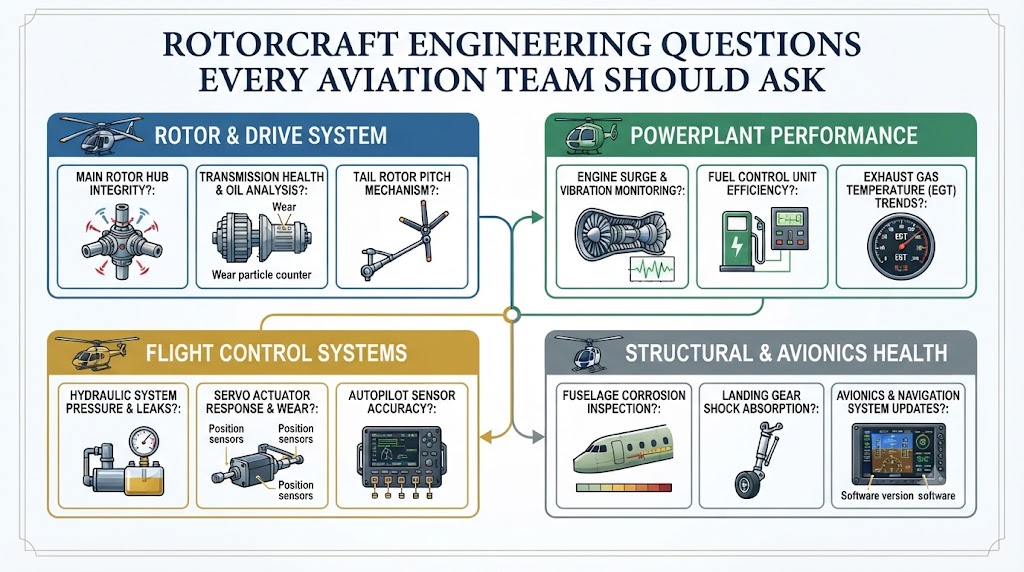
Rotorcraft such as helicopters play a critical role in many industries, including emergency services, defense, transportation, offshore operations, tourism, and corporate aviation. Unlike fixed-wing aircraft, rotorcraft rely on highly complex systems that require precise engineering, continuous monitoring, and careful maintenance planning.
Every component of a rotorcraft, from rotor blades and engines to avionics and structural systems, contributes to safe and efficient flight operations. Even small engineering decisions can have a significant impact on aircraft performance, reliability, and operational costs.
For aviation teams, asking the right rotorcraft engineering questions is essential. These questions help organizations identify potential risks, improve maintenance strategies, enhance aircraft performance, and ensure long-term operational success.
What Is Rotorcraft Engineering?
Rotorcraft engineering focuses on the design, development, maintenance, and improvement of helicopters and other aircraft that use rotating blades to generate lift.
Unlike traditional aircraft, rotorcraft have unique engineering challenges because their flight depends on complex interactions between:
- Rotor systems
- Engines and power systems
- Flight controls
- Structural components
- Avionics
- Mechanical assemblies
Rotorcraft engineers work to improve:
- Flight safety
- Aircraft performance
- System reliability
- Fuel efficiency
- Maintenance efficiency
- Operational capability
Effective engineering ensures that rotorcraft can perform safely in demanding environments and mission conditions.
Why Rotorcraft Engineering Decisions Matter
Rotorcraft operate under significant mechanical stress. Rotor blades rotate at high speeds, engines produce continuous power, and aircraft structures experience constant vibration and load changes.
Engineering decisions directly influence:
- Passenger and crew safety
- Aircraft availability
- Maintenance requirements
- Operating expenses
- Aircraft lifespan
Poor engineering decisions can lead to:
- Increased downtime
- Higher repair costs
- Reduced performance
- Safety concerns
A strong engineering approach helps aviation teams prevent problems before they affect operations.
Essential Questions Every Aviation Team Should Ask About Rotorcraft Engineering
1. Are Rotorcraft Design and Engineering Decisions Meeting Safety Requirements?
Safety is the foundation of every rotorcraft engineering process.
Aviation teams should evaluate whether engineering decisions comply with:
- Aviation regulations
- Certification standards
- Manufacturer requirements
- Safety management procedures
- Structural reliability expectations
Engineers must consider safety throughout the entire aircraft lifecycle, including:
- Initial design
- Component selection
- System upgrades
- Maintenance planning
- Aircraft modifications
A safety-focused engineering approach reduces operational risks and improves aircraft reliability.
2. How Reliable Is the Rotor System?
The rotor system is one of the most important parts of any helicopter or rotorcraft. It directly controls lift, stability, and flight performance.
Aviation teams should monitor:
- Main rotor condition
- Tail rotor performance
- Rotor blade integrity
- Blade alignment
- Vibration levels
- Rotor component wear
Important questions include:
- Are rotor components reaching their expected service life?
- Are inspections being completed regularly?
- Are vibration issues being detected early?
- Are replacement schedules properly planned?
A reliable rotor system improves flight stability and reduces unexpected maintenance problems.
3. Are Aircraft Components Designed for Long-Term Performance?
Rotorcraft components must withstand extreme operating conditions, including vibration, temperature changes, and mechanical stress.
Engineering teams should evaluate:
- Material quality
- Component durability
- Environmental resistance
- Maintenance requirements
- Expected service life
Long-term component performance helps reduce:
- Frequent replacements
- Aircraft downtime
- Operational interruptions
Selecting reliable components during design and maintenance planning supports better aircraft performance.
4. How Effective Is the Rotorcraft Maintenance Strategy?
A strong maintenance strategy is essential for keeping rotorcraft safe and operational.
Aviation teams should review:
- Scheduled inspections
- Preventive maintenance programs
- Component tracking
- Maintenance records
- Replacement planning
Modern maintenance strategies often include:
Preventive Maintenance
This focuses on servicing components before failures occur.
Predictive Maintenance
This uses aircraft data and monitoring systems to identify potential problems early.
Condition-Based Maintenance
This approach uses real aircraft conditions to determine maintenance requirements.
An effective maintenance plan improves aircraft availability and reduces unexpected repairs.
5. Are Engineering Teams Monitoring Aircraft Performance Data?
Modern rotorcraft generate valuable operational data that can support better engineering decisions.
Aviation teams should analyze:
- Flight performance information
- Engine data
- Sensor readings
- Vibration measurements
- System alerts
Data monitoring helps identify:
- Early component wear
- Performance changes
- System abnormalities
- Maintenance requirements
By using data-driven engineering, teams can move from reactive repairs to proactive maintenance.
6. How Are Vibration and Noise Challenges Managed?
Vibration is one of the biggest engineering challenges in rotorcraft operations.
Because helicopters depend on rotating systems, even minor imbalance can affect:
- Passenger comfort
- Component lifespan
- Aircraft performance
- Maintenance requirements
Engineering teams should evaluate:
- Rotor balancing procedures
- Component alignment
- Structural vibration analysis
- Vibration monitoring systems
Noise reduction is also important, especially for passenger operations and urban flight environments.
Proper vibration and noise management improves:
- Aircraft reliability
- Passenger experience
- Operational efficiency
7. Are Rotorcraft Engines and Power Systems Performing Efficiently?
The engine and power system are critical for rotorcraft performance.
Aviation teams should monitor:
- Engine efficiency
- Fuel consumption
- Power output
- Temperature levels
- Maintenance requirements
Important engineering considerations include:
- Engine reliability
- Fuel efficiency improvements
- Power management
- Component condition
Efficient power systems help reduce operating costs while maintaining safe flight performance.
8. How Is Avionics Technology Integrated Into Rotorcraft Systems?
Modern rotorcraft rely heavily on advanced avionics systems for navigation, communication, and aircraft control.
Aviation teams should evaluate:
- Flight management systems
- Navigation equipment
- Communication systems
- Digital displays
- Automated flight features
Advanced avionics improve:
- Pilot decision-making
- Situational awareness
- Flight accuracy
- Operational safety
However, avionics upgrades require careful engineering evaluation to ensure compatibility with existing aircraft systems.
9. Are Rotorcraft Modifications and Upgrades Properly Evaluated?
Aircraft upgrades can improve performance, but they must be carefully planned.
Before implementing modifications, engineering teams should evaluate:
- Weight changes
- Structural impact
- System compatibility
- Certification requirements
- Performance improvements
Examples of rotorcraft upgrades include:
- New avionics systems
- Improved communication equipment
- Enhanced safety systems
- Performance improvements
Proper evaluation ensures upgrades provide benefits without creating new operational challenges.
10. How Can Rotorcraft Engineering Improve Operational Efficiency?
Engineering decisions directly influence the overall efficiency of rotorcraft operations.
Effective engineering practices help organizations achieve:
- Reduced maintenance costs
- Improved aircraft availability
- Better fuel efficiency
- Longer aircraft lifespan
- Enhanced mission capability
For operators, engineering is not only about fixing problems. It is about creating systems that prevent issues and improve aircraft performance over time.
Key Areas of Rotorcraft Engineering Evaluation
| Engineering Area | Why It Matters |
|---|---|
| Rotor System Design | Ensures stability, control, and flight performance |
| Maintenance Planning | Reduces downtime and improves reliability |
| Component Quality | Supports safety and long-term durability |
| Data Monitoring | Helps identify problems before failures occur |
| Avionics Integration | Improves aircraft control and operational awareness |
| Power System Efficiency | Enhances performance and reduces operating costs |
Common Rotorcraft Engineering Challenges
Rotor Vibration Issues
Rotor vibration can affect aircraft comfort, component life, and maintenance requirements.
Engineering teams must regularly monitor and address vibration problems.
Component Wear and Fatigue
Continuous operation creates stress on aircraft components.
Regular inspections help identify:
- Material fatigue
- Structural damage
- Component degradation
Maintenance Complexity
Rotorcraft systems are highly specialized and require detailed maintenance planning.
Aging Aircraft Systems
Older rotorcraft may require:
- Component replacements
- Technology upgrades
- Structural inspections
Parts Availability Challenges
Access to reliable replacement components is essential for maintaining aircraft operations.
Technology Integration
Adding modern systems requires careful engineering analysis and testing.
Benefits of Strong Rotorcraft Engineering Practices
Improved Flight Safety
Proper engineering reduces risks by ensuring systems operate correctly and reliably.
Increased Aircraft Reliability
Well-designed systems and maintenance practices improve operational confidence.
Reduced Maintenance Costs
Early problem detection helps avoid expensive repairs.
Better Aircraft Performance
Engineering improvements can increase efficiency, capability, and reliability.
Longer Aircraft Service Life
Proper engineering management helps extend the useful life of rotorcraft.
How JetAndRotor.com Supports Aviation Professionals
Rotorcraft engineering requires continuous learning, technical knowledge, and access to reliable aviation information.
JetAndRotor.com helps aviation professionals explore rotorcraft technology, helicopter systems, aircraft engineering topics, and industry insights.
By staying informed about engineering practices, maintenance approaches, and technology advancements, aviation teams can make better decisions that improve aircraft safety and performance.
Reliable aviation knowledge supports better planning, efficient operations, and long-term rotorcraft success.
Frequently Asked Questions (FAQs)
1. What questions should aviation teams ask about rotorcraft engineering?
Teams should evaluate safety standards, rotor system reliability, maintenance strategies, component quality, avionics integration, and aircraft performance.
2. Why is rotor system engineering important for helicopters?
The rotor system controls lift, stability, and flight performance, making proper engineering essential for safe operations.
3. How does predictive maintenance improve rotorcraft reliability?
Predictive maintenance uses aircraft data to identify potential issues early, reducing unexpected failures and downtime.
4. What role does avionics play in rotorcraft engineering?
Avionics systems improve navigation, communication, aircraft monitoring, and pilot decision-making.
5. How can aviation teams reduce rotorcraft maintenance costs?
Teams can reduce costs through preventive maintenance, data monitoring, proper component management, and early issue detection.
6. Why is vibration control important in helicopter engineering?
Managing vibration improves aircraft comfort, protects components, and increases system reliability.
7. How do engineering upgrades improve rotorcraft performance?
Properly evaluated upgrades can improve safety systems, efficiency, technology capabilities, and operational performance.
Final Thoughts
Rotorcraft engineering is a complex field that requires continuous attention to safety, performance, and reliability. Every engineering decision, from rotor system management to avionics upgrades, can influence the overall success of aircraft operations. Aviation teams should regularly evaluate their engineering practices, maintenance strategies, component performance, and technology improvements. By asking the right questions and following strong engineering principles, organizations can improve rotorcraft safety, reduce operational challenges, and ensure their aircraft remain reliable for years to come.

