
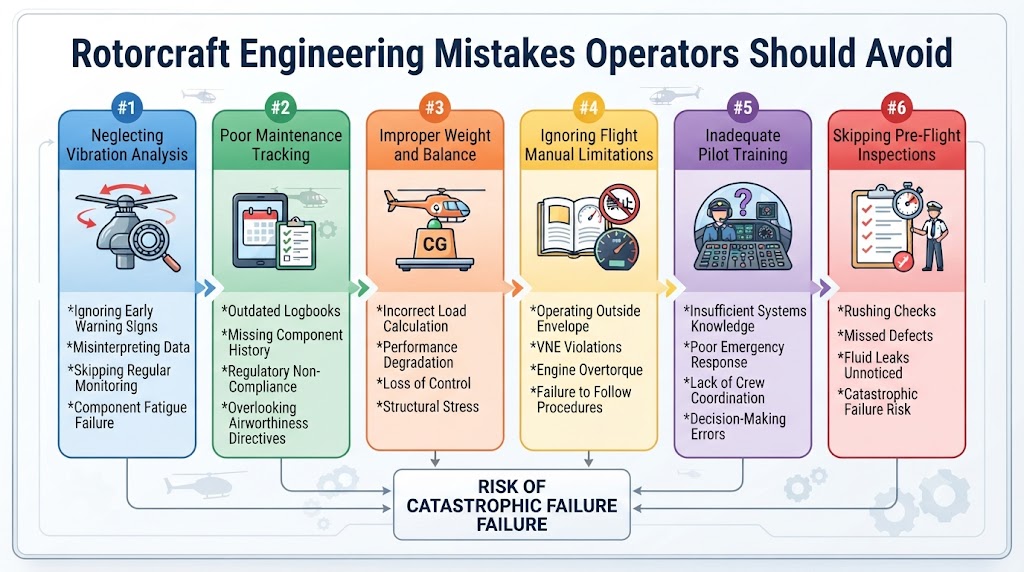
Introduction
Rotorcraft engineering plays a major role in the safety, reliability, and performance of helicopters and other rotary-wing aircraft. Unlike fixed-wing aircraft, rotorcraft depend on complex systems such as main rotors, tail rotors, gearboxes, rotor heads, transmission systems, and vibration-sensitive components. These systems must work together with great accuracy during every flight.
Even a small engineering mistake can create larger operational problems. Delayed inspections, incorrect replacement parts, poor maintenance planning, or weak communication between flight crews and maintenance teams can increase costs and reduce aircraft availability. In more serious cases, these mistakes may affect flight safety.
Rotorcraft operators must therefore treat engineering as a continuous responsibility rather than a one-time maintenance activity. Good engineering decisions help prevent unexpected failures, reduce downtime, extend component life, and improve overall operational efficien.
Understanding Rotorcraft Engineering
Rotorcraft engineering includes the inspection, maintenance, repair, monitoring, modification, and technical management of helicopters and other rotary-wing aircraft.
It covers many important systems, including:
- Main rotor systems
- Tail rotor systems
- Rotor blades
- Engines
- Transmission systems
- Main gearboxes
- Hydraulic systems
- Flight controls
- Electrical systems
- Fuel systems
- Landing gear
- Structural components
- Avionics
Rotorcraft engineering is different from fixed-wing aircraft engineering because helicopters depend on rotating components that operate under constant vibration, high loads, and changing aerodynamic forces.
Every engineering decision must consider:
- Aircraft type
- Manufacturer instructions
- Flight hours
- Component life limits
- Operating environment
- Mission requirements
- Maintenance history
- Regulatory requirements
A strong engineering program connects technical inspections with operational planning. It helps operators understand the current condition of the aircraft and prepare for future maintenance needs.
Why Rotorcraft Engineering Mistakes Can Be Expensive
Engineering mistakes can increase costs in several ways.
A delayed inspection may allow a minor issue to become a major repair. An incorrect replacement part may create compatibility problems. Poor maintenance records can make troubleshooting difficult. Weak planning can keep an aircraft grounded longer than expected.
Common financial and operational effects include:
- Unexpected aircraft downtime
- Increased labour costs
- Emergency part orders
- Shorter component life
- Repeated repairs
- Lost flight revenue
- Reduced fleet availability
- Compliance problems
- Higher insurance and operating risk
Preventing these issues is often much less expensive than correcting them after failure.
1. Ignoring Preventive Maintenance
One of the most common mistakes is waiting for a problem to appear before taking action.
Preventive maintenance is designed to identify wear, damage, contamination, looseness, or performance changes before they cause failure. Rotorcraft operate in environments where dust, heat, moisture, vibration, and heavy workloads can affect components quickly.
Preventive maintenance may include:
- Scheduled inspections
- Lubrication
- Filter replacement
- Fluid checks
- Corrosion inspection
- Rotor tracking
- Vibration monitoring
- Engine performance review
- Fastener checks
Operators who delay preventive maintenance may save time for a short period, but the long-term cost is usually much higher.
A better approach is to follow the manufacturer’s maintenance schedule and use actual operating data to plan inspections.
2. Delaying Time-Limited Component Replacement
Many rotorcraft components have fixed life limits based on flight hours, calendar time, cycles, or operating conditions.
Examples include:
- Rotor blades
- Bearings
- Gearbox components
- Engine parts
- Control links
- Drive shafts
- Clutches
- Critical fasteners
Operating a component beyond its approved limit can create serious reliability and compliance problems.
Some operators delay replacement because the component still appears to be working normally. However, internal fatigue or material weakness may not be visible during a basic inspection.
Operators should maintain clear life-tracking records and plan replacement well before the limit is reached.
3. Using Incorrect or Unapproved Replacement Parts
Using the wrong replacement part is a serious engineering mistake.
Parts that look similar may have different:
- Dimensions
- Materials
- Strength levels
- Manufacturing standards
- Operating limits
- Installation requirements
Before purchasing or installing a component, operators should verify:
- Part number
- Aircraft model
- Engine or gearbox model
- Serial number compatibility
- Manufacturer approval
- Technical documentation
- Modification status
Only approved and properly documented parts should be used.
Using an incorrect or unverified part may result in poor fit, reduced performance, repeated maintenance, or regulatory concerns.
4. Ignoring Rotor Blade Inspections
Rotor blades are among the most important components on a helicopter.
They operate under high aerodynamic and mechanical loads. Small damage can grow over time if it is not found early.
Rotor blade inspections should look for:
- Cracks
- Dents
- Erosion
- Delamination
- Corrosion
- Leading-edge damage
- Bonding issues
- Paint damage
- Surface distortion
- Lightning damage
Operators should also monitor blade balance, tracking, and vibration.
A rotor blade that appears acceptable from a distance may still have hidden damage. Inspections should always follow approved procedures.
5. Overlooking Gearbox Maintenance
The gearbox transfers engine power to the rotor system. It operates under high loads and depends on correct lubrication, temperature control, and internal alignment.
Gearbox problems can become expensive very quickly.
Common warning signs include:
- Unusual noise
- Increased vibration
- Oil leakage
- Metal particles in oil
- Rising temperature
- Abnormal oil pressure
- Changes in performance
Operators should perform regular oil analysis, chip detector inspections, lubrication checks, and condition monitoring.
Ignoring small changes may allow internal wear to continue until a major repair or replacement is required.
6. Failing to Monitor Engine Performance
Engine condition should not be judged only by whether the aircraft can still fly.
Small changes in engine behaviour may indicate developing problems.
Operators should monitor:
- Temperature
- Torque
- Fuel flow
- Oil pressure
- Oil temperature
- Power output
- Starting performance
- Exhaust condition
- Engine vibration
- Fuel efficiency
Trend monitoring can help identify gradual changes that are easy to miss during daily operations.
For example, a slow increase in fuel consumption may point to a performance problem even when the engine appears to operate normally.
7. Ignoring Vibration Analysis
Vibration is a normal part of rotorcraft operation, but unusual vibration can indicate a mechanical or aerodynamic problem.
Possible causes include:
- Rotor imbalance
- Incorrect blade tracking
- Worn bearings
- Misalignment
- Loose components
- Damaged drive shafts
- Gearbox wear
- Tail rotor imbalance
- Engine problems
Ignoring vibration can increase stress on many connected components.
Regular vibration analysis helps maintenance teams identify the source of the problem and correct it before larger damage occurs.
It also improves:
- Passenger comfort
- Pilot confidence
- Component life
- Maintenance planning
- Aircraft reliability
8. Keeping Poor Maintenance Records
Accurate records are essential in rotorcraft engineering.
Weak documentation makes it difficult to understand what work has been completed, which parts were installed, and when future maintenance is due.
Important records include:
- Inspection history
- Component replacements
- Repair details
- Flight hours
- Cycles
- Life-limited part tracking
- Modification records
- Oil analysis results
- Defect reports
- Engineering approvals
Good records also support regulatory inspections, aircraft resale, troubleshooting, and long-term planning.
A missing record may create uncertainty even when the actual maintenance work was completed correctly.
9. Skipping Engineering Reviews Before Modifications
Rotorcraft operators often add equipment for specific missions.
Examples include:
- Medical equipment
- Cameras
- Searchlights
- Lifting systems
- Communication equipment
- Rescue equipment
- Sensors
- Additional seating
- External cargo systems
Every modification can affect:
- Weight
- Balance
- Electrical load
- Structural load
- Aerodynamics
- Vibration
- Performance
- Emergency procedures
Installing equipment without a proper engineering review can create hidden problems.
All modifications should be reviewed, approved, documented, and tested according to the applicable requirements.
10. Ignoring Weight and Balance Changes
Rotorcraft are highly sensitive to weight and centre-of-gravity limits.
Small changes in equipment, fuel, passengers, cargo, or mission systems can affect aircraft handling.
Operators should never assume that a previous loading arrangement is still acceptable after a modification or equipment change.
Weight and balance calculations should be updated when:
- Equipment is installed or removed
- Seating is changed
- Structural repairs are completed
- Mission equipment is added
- Interior layouts are changed
Incorrect weight and balance can reduce control authority and affect safe operation.
11. Using Short-Term Repairs as Permanent Solutions
Temporary repairs may sometimes be necessary to return an aircraft to service under approved conditions.
The mistake occurs when temporary solutions are allowed to remain longer than planned.
Repeated short-term fixes may hide a deeper engineering issue.
Examples include:
- Repeatedly tightening the same component
- Replacing a fuse without finding the cause
- Correcting vibration without checking root cause
- Sealing repeated leaks without inspecting the system
- Resetting warnings without investigating them
Operators should use root-cause analysis instead of treating only the visible symptom.
12. Inadequate Technician Training
Rotorcraft maintenance requires specialized knowledge.
Technicians must understand the differences between aircraft types, rotor systems, engines, transmissions, and flight-control designs.
Insufficient training may lead to:
- Incorrect inspections
- Missed defects
- Improper installation
- Weak troubleshooting
- Poor maintenance planning
- Documentation errors
Operators should invest in:
- Aircraft-type training
- Refresher training
- Safety training
- Human-factors training
- Diagnostic skills
- Technical manual training
- New technology training
Experienced technicians also need continuous learning because aircraft systems and maintenance practices change over time.
13. Poor Communication Between Pilots and Maintenance Teams
Pilots often notice changes before a technical problem becomes obvious.
These may include:
- New vibration
- Unusual sound
- Slower engine response
- Changes in control feel
- Warning indications
- Starting problems
- Reduced performance
- Fluid smell
If these observations are not clearly reported, maintenance teams may not know where to begin their inspection.
Operators should create a simple and consistent reporting process.
Reports should include:
- When the issue happened
- Flight condition
- Aircraft configuration
- Weather conditions
- Warning indications
- Sound or vibration description
- Whether the issue repeated
Good communication reduces troubleshooting time and improves maintenance accuracy.
14. Failing to Plan Spare Parts Availability
An aircraft can remain grounded even when the required repair is simple if the replacement part is not available.
Operators should plan spare parts based on:
- Fleet size
- Aircraft type
- Common defects
- Component lead time
- Operating location
- Mission importance
- Supplier reliability
Critical parts with long delivery times should be identified in advance.
Good spare-parts planning reduces aircraft downtime and avoids costly emergency shipping.
15. Ignoring Environmental Operating Conditions
Rotorcraft often operate in difficult environments, including:
- Coastal areas
- Deserts
- Mountains
- Forests
- Offshore locations
- Cold regions
- High-humidity areas
These conditions can affect corrosion, filtration, lubrication, cooling, and component wear.
For example:
- Sand can damage blades and engines.
- Salt can increase corrosion.
- Cold weather can affect batteries and fluids.
- High-altitude operations can change engine and rotor performance.
- Moisture can damage electrical systems.
Maintenance programs should reflect the real operating environment rather than relying only on basic schedules.
16. Focusing Only on Compliance
Meeting regulatory requirements is essential, but compliance should be treated as the minimum standard rather than the final goal.
A technically compliant aircraft may still show early signs of wear, poor performance, or repeated defects.
Strong operators also monitor:
- Reliability trends
- Repeat maintenance issues
- Component performance
- Operating cost
- Fleet availability
- Defect patterns
- Pilot reports
A proactive engineering culture looks beyond basic compliance and focuses on long-term safety and reliability.
Engineering Mistake Comparison Table
| Engineering Mistake | Possible Impact | Recommended Practice |
|---|---|---|
| Delaying preventive maintenance | Unexpected failures | Follow approved maintenance schedules |
| Using incorrect parts | Reliability and compliance problems | Verify approval and compatibility |
| Ignoring rotor blade damage | Reduced structural reliability | Perform detailed blade inspections |
| Overlooking gearbox condition | Expensive internal damage | Use oil analysis and condition monitoring |
| Ignoring vibration | Increased component wear | Perform regular vibration analysis |
| Poor maintenance records | Weak traceability | Maintain complete digital or written records |
| Skipping modification reviews | Weight, balance, or structural risks | Complete engineering approval before installation |
| Weak technician training | Missed defects and installation errors | Provide regular type-specific training |
| Poor pilot-maintenance communication | Delayed troubleshooting | Use clear defect reporting procedures |
| No spare-parts planning | Longer aircraft downtime | Maintain critical inventory and supplier support |
Best Practices for Rotorcraft Engineering
Operators can improve safety and reliability by following a structured engineering approach.
Recommended practices include:
- Follow manufacturer maintenance instructions.
- Track all life-limited components.
- Perform preventive maintenance on time.
- Use approved and documented replacement parts.
- Monitor engine and gearbox performance.
- Conduct regular vibration analysis.
- Inspect rotor blades carefully.
- Update maintenance records immediately.
- Review all modifications before installation.
- Provide continuous technician training.
- Encourage clear communication between pilots and engineers.
- Plan spare-parts requirements.
- Adjust maintenance for environmental conditions.
- Investigate repeat defects.
- Use long-term reliability data for planning.
Rotorcraft Engineering Checklist
Use this checklist during engineering and maintenance planning.
- Are all scheduled inspections current?
- Are life-limited components correctly tracked?
- Have rotor blades been inspected?
- Has vibration analysis been completed?
- Are engine trends being monitored?
- Has gearbox oil been checked or analysed?
- Are approved parts being used?
- Are maintenance records complete?
- Have modifications received engineering review?
- Is weight and balance information current?
- Are technicians properly trained?
- Are pilot defect reports clear and complete?
- Are critical spare parts available?
- Are repeated defects being investigated?
- Does the maintenance program reflect the operating environment?
Benefits of Proper Rotorcraft Engineering
A strong engineering program creates benefits across the entire operation.
Improved Safety
Regular inspections and condition monitoring help identify problems before they become serious.
Better Aircraft Reliability
Proper maintenance and quality parts reduce repeated defects and unexpected failures.
Lower Maintenance Costs
Preventive action is usually less expensive than emergency repair or major component replacement.
Longer Component Life
Correct installation, lubrication, alignment, and monitoring help components operate efficiently.
Reduced Downtime
Good planning improves part availability and helps maintenance teams complete work faster.
Better Compliance
Accurate documentation and approved procedures support regulatory requirements.
Higher Aircraft Value
A helicopter with complete records and a strong maintenance history is generally easier to evaluate and manage.
Improved Operational Planning
Reliable engineering data helps operators plan flight schedules, maintenance events, and budgets more accurately.
JETANDROTOR.COM can serve as a useful industry resource for operators looking to understand rotorcraft systems, engineering practices, maintenance planning, and helicopter operational requirements.
Frequently Asked Questions
1. Why is rotorcraft engineering different from fixed-wing aircraft engineering?
Rotorcraft use rotating lift systems, transmissions, rotor heads, and vibration-sensitive components. These systems require specialized inspection and maintenance methods.
2. Why are rotor blade inspections important?
Rotor blades experience continuous aerodynamic and mechanical stress. Damage such as cracks, erosion, corrosion, or delamination can affect performance and safety.
3. What is vibration analysis?
Vibration analysis measures vibration levels and patterns to identify imbalance, wear, misalignment, or other mechanical problems.
4. Why should operators follow maintenance schedules?
Maintenance schedules are designed to inspect and replace components before their condition becomes unsafe or unreliable.
5. Can operators use alternative replacement parts?
Only properly approved and compatible parts should be used. Operators should verify documentation, part numbers, and manufacturer guidance.
6. Why are maintenance records so important?
Records provide traceability, show component history, support inspections, and help maintenance teams plan future work.
7. How can operators reduce rotorcraft maintenance costs?
Preventive maintenance, condition monitoring, technician training, spare-parts planning, and early defect reporting can reduce long-term costs.
8. What should happen before modifying a helicopter?
The proposed modification should receive an engineering review covering structure, weight, balance, electrical load, performance, and regulatory approval.
9. Why should pilots report small changes in aircraft behaviour?
Small changes in sound, vibration, control feel, or performance may be early signs of a technical problem.
10. How can operators improve rotorcraft reliability?
Operators should combine scheduled maintenance, accurate records, performance monitoring, trained technicians, approved parts, and strong communication.
Final Thoughts
Rotorcraft engineering requires accuracy, planning, technical knowledge, and continuous attention. Helicopters operate through complex systems that are highly sensitive to wear, vibration, loading, and maintenance quality.
Operators can avoid many expensive problems by performing preventive maintenance, using approved parts, monitoring component condition, maintaining complete records, and investing in qualified technicians. Clear communication between pilots, engineers, and operations managers also plays an important role in early problem detection.
The goal should not be simply to keep an aircraft flying today. A strong engineering program should support safe, reliable, and efficient operation over the full life of the rotorcraft.

