
Introduction
Rotorcraft, including helicopters and other rotary-wing aircraft, play a vital role in industries such as emergency medical services, search and rescue, offshore transportation, law enforcement, tourism, construction, agriculture, and corporate aviation. Unlike fixed-wing aircraft, rotorcraft rely on highly dynamic rotor systems, complex transmissions, and specialized flight controls that require continuous engineering attention to ensure safe and reliable operation.
Because rotorcraft operate under demanding conditions, regular engineering inspections and preventive maintenance are essential. Every component—from the rotor blades and gearbox to the hydraulic system and engine—must work together precisely to maintain stability, lift, maneuverability, and overall flight performance. Even minor wear or damage can affect operational safety if not identified early.
A structured engineering checklist helps operators, maintenance teams, and flight departments monitor critical systems, identify developing issues, and plan maintenance before problems become serious. While inspection procedures vary depending on the aircraft model, manufacturer recommendations, operating environment, and applicable aviation regulations, following a systematic engineering approach supports both safety and operational efficiency.
Why Rotorcraft Engineering Matters
Rotorcraft engineering is fundamental to maintaining safe, reliable, and efficient flight operations. Every inspection, maintenance activity, and engineering review helps ensure that the aircraft continues to perform as designed.
Strong engineering practices help operators:
- Improve flight safety
- Increase mechanical reliability
- Maintain consistent aircraft performance
- Reduce unexpected downtime
- Extend component service life
- Support operational efficiency
- Protect long-term aircraft value
Preventive maintenance and disciplined engineering oversight help detect wear, fatigue, corrosion, and system degradation before they affect aircraft performance.
Key Engineering Factors Every Rotorcraft Operator Should Monitor
Airframe Condition
The airframe provides the structural foundation of the rotorcraft.
Operators should monitor:
- Structural integrity
- Corrosion
- Skin damage
- Attachment points
- Fastener security
Routine structural inspections help identify early signs of fatigue or environmental damage.
Rotor System Health
The rotor system generates lift and provides flight control, making it one of the most important engineering areas.
Critical inspection areas include:
- Main rotor blades
- Tail rotor blades
- Rotor hub
- Blade attachment hardware
- Blade tracking
- Rotor balance
Maintaining rotor system health contributes directly to flight stability and performance.
Powerplant Performance
The engine supplies the power required to operate the rotor system and onboard systems.
Engineering inspections commonly include:
- Engine condition
- Fuel system
- Lubrication system
- Air intake
- Exhaust system
- Engine monitoring data
Reliable engine performance supports safe rotorcraft operations.
Transmission System
The transmission transfers engine power to the rotor system.
Operators should inspect:
- Main gearbox
- Intermediate gearbox
- Tail rotor gearbox
- Drive shafts
- Bearings
- Couplings
Proper lubrication and early detection of wear help maintain efficient power transmission.
Flight Control Systems
Rotorcraft flight controls require precise operation.
Engineering inspections typically include:
- Control linkages
- Servo mechanisms
- Hydraulic systems
- Bearings
- Flight control movement
Responsive flight controls are essential for safe maneuvering.
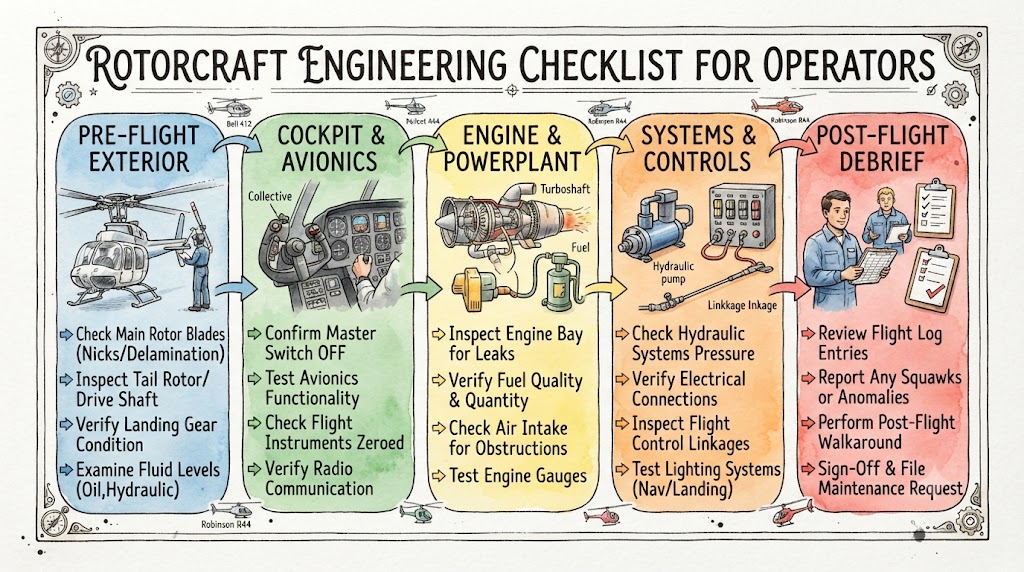
Rotorcraft Engineering Checklist
1. Airframe Inspection
Begin every engineering review with a detailed airframe inspection.
Check for:
- Structural cracks
- Corrosion
- Loose fasteners
- Surface damage
- Evidence of fatigue
A sound airframe provides the foundation for safe aircraft operation.
2. Main Rotor Inspection
The main rotor should receive careful visual and functional inspection.
Review:
- Blade condition
- Leading-edge wear
- Surface damage
- Fastener security
- Blade tracking
- Rotor balance
Proper rotor maintenance supports smooth flight characteristics.
3. Tail Rotor Inspection
The tail rotor provides directional control.
Inspect:
- Blade integrity
- Gearbox condition
- Pitch control mechanisms
- Fasteners
- Rotor balance
Any abnormal condition should receive immediate maintenance attention.
4. Engine Inspection
The engine should be inspected for both external condition and operational performance.
Review:
- Oil leaks
- Fuel system
- Air intake
- Exhaust system
- Engine mounts
- External damage
Routine inspections help maintain dependable engine performance.
5. Transmission Inspection
The transmission system requires careful monitoring because it continuously transfers engine power.
Inspect:
- Gearbox condition
- Oil levels
- Bearings
- Drive shafts
- Couplings
Proper lubrication and wear monitoring contribute to long-term reliability.
6. Hydraulic System Inspection
Hydraulic systems assist flight control operation in many rotorcraft.
Review:
- Hydraulic fluid levels
- Hoses
- Pumps
- Actuators
- External leaks
Hydraulic system reliability supports predictable aircraft handling.
7. Electrical System Inspection
Electrical systems power essential aircraft equipment.
Inspect:
- Wiring
- Connectors
- Batteries
- Lighting systems
- Circuit protection
- Avionics power supply
Reliable electrical performance supports safe flight operations.
8. Landing Gear Inspection
Whether equipped with skids or wheels, landing gear should be inspected before flight.
Review:
- Structural condition
- Attachment points
- Wear
- Shock absorption components
- Alignment
Landing gear inspections help maintain safe ground handling.
9. Fuel System Inspection
The fuel system delivers clean fuel to the engine.
Inspect:
- Fuel tanks
- Fuel pumps
- Fuel lines
- Fuel filters
- Leak points
Maintaining a clean fuel system helps support engine reliability.
10. Avionics Inspection
Modern rotorcraft rely on avionics for navigation, communication, and flight awareness.
Review:
- Flight instruments
- Communication equipment
- Navigation systems
- Display units
- Warning systems
Functional avionics improve situational awareness and operational safety.
Daily Operational Engineering Checklist
Before beginning operations, review the following checklist:
- Perform a visual airframe inspection.
- Inspect the main rotor.
- Inspect the tail rotor.
- Check engine fluid levels.
- Review transmission condition.
- Inspect hydraulic systems.
- Examine the fuel system.
- Verify electrical system operation.
- Inspect landing gear.
- Confirm avionics functionality.
Using a consistent checklist helps improve inspection quality and operational readiness.
Warning Signs Operators Should Never Ignore
Certain conditions require immediate engineering evaluation.
Excessive Vibration
Unexpected vibration may indicate rotor imbalance, drivetrain issues, or mechanical wear.
Unusual Rotor Noise
Abnormal sounds from the rotor system may suggest damage or improper adjustment.
Fluid Leaks
Hydraulic fluid, engine oil, or fuel leaks should always be investigated promptly.
Gearbox Overheating
Elevated gearbox temperatures may indicate lubrication or mechanical problems.
Reduced Engine Performance
Loss of engine power requires immediate maintenance evaluation.
Hydraulic Pressure Warnings
Hydraulic system abnormalities can affect flight control responsiveness.
Flight Control Stiffness
Restricted control movement should never be ignored.
Abnormal Instrument Indications
Unexpected cockpit warnings or unusual system readings should be investigated before further flight.
Preventive Maintenance Best Practices
Perform Routine Visual Inspections
Frequent visual inspections help identify developing problems before they become significant maintenance issues.
Follow Scheduled Maintenance
Manufacturer maintenance schedules help ensure critical systems receive appropriate inspection and servicing.
Maintain Proper Lubrication
Correct lubrication reduces wear throughout rotor systems, gearboxes, bearings, and transmissions.
Care for Rotor Blades
Routine cleaning and careful inspections help detect damage, erosion, or surface deterioration.
Maintain Accurate Maintenance Records
Complete maintenance documentation supports inspection planning, troubleshooting, and long-term aircraft management.
Work With Qualified Engineering Personnel
Experienced maintenance professionals help ensure inspections and repairs follow approved procedures and manufacturer recommendations.
Common Engineering Mistakes Operators Should Avoid
Ignoring Minor Vibrations
Small vibration changes may indicate developing mechanical problems.
Delaying Repairs
Minor maintenance issues often become larger problems if left unresolved.
Incomplete Maintenance Documentation
Accurate records are essential for effective maintenance planning.
Using Incorrect Replacement Parts
Compatible and approved components help maintain system reliability.
Skipping Pre-Flight Inspections
Every flight should begin with a complete operational inspection.
Ignoring Manufacturer Recommendations
Manufacturer guidance provides valuable engineering information for maintaining aircraft safety and reliability.
Technology Improving Rotorcraft Engineering
Engineering technology continues to improve rotorcraft maintenance efficiency.
Digital Maintenance Management
Electronic maintenance systems simplify scheduling and documentation.
Rotor Health Monitoring
Advanced monitoring systems track rotor performance and detect developing abnormalities.
Predictive Maintenance Software
Data analysis helps maintenance teams identify potential issues before failures occur.
Vibration Monitoring Systems
Modern sensors help engineers analyze drivetrain and rotor system behavior.
AI-Assisted Maintenance Planning
Intelligent software tools support maintenance scheduling and operational planning.
Digital Inspection Records
Electronic documentation improves maintenance consistency and record management.
Rotorcraft Engineering Checklist Table
| Aircraft System | Inspection Priority | Primary Objective |
|---|---|---|
| Airframe | Structural condition | Maintain structural safety |
| Main Rotor | Blade integrity | Ensure lift and stability |
| Tail Rotor | Balance and control | Maintain directional control |
| Engine | Performance and condition | Provide reliable power |
| Transmission | Lubrication and wear | Transfer engine power efficiently |
| Hydraulic System | Pressure and leaks | Support responsive flight controls |
| Electrical System | Reliability | Power aircraft systems |
| Fuel System | Leak prevention and cleanliness | Ensure uninterrupted engine operation |
| Landing Gear | Structural integrity | Support safe ground operations |
| Avionics | Functional operation | Improve flight awareness and communication |
Frequently Asked Questions
1. Why is rotorcraft engineering important?
Rotorcraft engineering helps maintain aircraft safety, reliability, performance, and operational efficiency through regular inspections and preventive maintenance.
2. What should operators inspect before every flight?
Operators should inspect the airframe, rotor systems, engine, transmission, hydraulic system, fuel system, landing gear, electrical system, and avionics.
3. Why is rotor blade inspection critical?
Rotor blades generate lift and directly affect flight performance, making their condition essential for safe operation.
4. What causes excessive rotor vibration?
Possible causes include rotor imbalance, worn bearings, drivetrain issues, damaged blades, or improper maintenance.
5. How often should transmission systems be inspected?
Inspection frequency depends on manufacturer recommendations, operating conditions, flight hours, and applicable maintenance regulations.
6. Why are hydraulic systems important?
Hydraulic systems support smooth and responsive flight control operation in many rotorcraft.
7. How do operators identify early maintenance problems?
Routine inspections, engine monitoring, vibration analysis, maintenance records, and pilot reports help identify developing issues.
8. What technologies improve rotorcraft maintenance?
Digital maintenance systems, rotor health monitoring, predictive maintenance software, vibration monitoring, AI-assisted planning, and digital inspection records all contribute to improved maintenance management.
9. Why should maintenance records be updated regularly?
Accurate maintenance records support inspection planning, regulatory compliance, troubleshooting, and long-term aircraft reliability.
10. Why should operators follow manufacturer maintenance recommendations?
Manufacturer guidance is developed specifically for each aircraft model and provides recommended inspection procedures, maintenance practices, and operational limitations that help maintain safety and reliability.
Conclusion
Safe and efficient rotorcraft operations depend on disciplined engineering practices, systematic inspections, and proactive maintenance planning. Every major aircraft system—including the airframe, rotor assemblies, engine, transmission, hydraulic controls, fuel system, landing gear, and avionics—plays an essential role in maintaining reliable flight performance. Regular inspections help detect wear, corrosion, leaks, imbalance, and other developing issues before they affect operational safety.
By following a structured rotorcraft engineering checklist, maintaining accurate maintenance records, using modern diagnostic technologies, and working with qualified aviation maintenance professionals, operators can improve aircraft reliability, reduce unplanned downtime, extend component service life, and support consistent operational performance. A preventive maintenance mindset not only protects valuable aircraft assets but also contributes to safer flights and greater confidence in every mission.

