
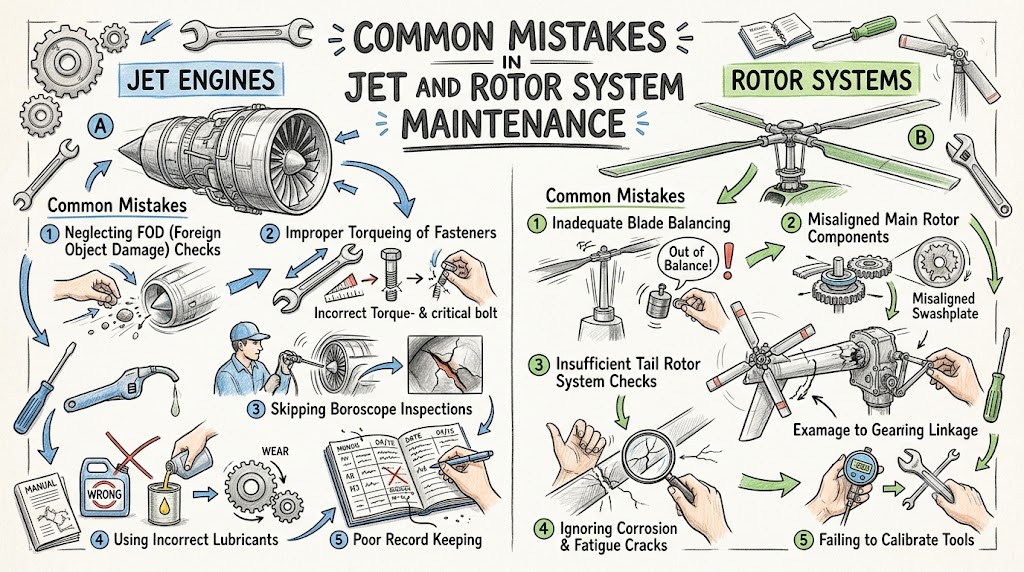
Introduction
Jet and rotor system maintenance is one of the most safety-critical areas in aviation. Jet engines and rotorcraft systems operate under high stress, vibration, heat, pressure, and constant mechanical load. Because of this, even small maintenance errors can affect aircraft reliability, flight safety, operational readiness, and long-term component life.
Maintenance teams work in an environment where accuracy matters. A missed inspection point, wrong lubricant, incomplete log entry, incorrect torque value, or overlooked vibration issue can create bigger problems later. Jet engines and rotor systems are complex, and they require disciplined inspection, correct tools, trained technicians, accurate documentation, and strict procedure compliance.
For operators, maintenance mistakes can lead to unplanned downtime, higher repair costs, reduced aircraft availability, and safety concerns. For technicians, the goal is not only to repair problems but to prevent them before they become serious. Good maintenance is built on consistency, attention to detail, and respect for approved procedures.
This blog explains the most common mistakes in jet and rotor system maintenance and how aviation maintenance teams can avoid them through better planning, inspection discipline, documentation, training, and safety-focused work habits.
Why Proper Maintenance Matters
Proper maintenance is essential because jet and rotor systems are directly connected to aircraft safety and performance. These systems must operate reliably in demanding conditions, often with little room for error.
Jet engines depend on clean airflow, precise fuel control, temperature management, turbine integrity, lubrication, and accurate monitoring. Rotor systems depend on blade condition, hub integrity, pitch control, balancing, bearings, gearboxes, and vibration control. Both systems require careful inspection and maintenance discipline.
Proper maintenance supports:
- Flight safety: Well-maintained systems reduce the risk of in-flight failures.
- Operational reliability: Aircraft can remain available for scheduled operations.
- Reduced downtime: Preventive maintenance helps avoid unexpected repairs.
- Longer component life: Correct care reduces premature wear and fatigue.
- Better performance: Engines and rotor systems perform more efficiently when maintained properly.
- Regulatory confidence: Accurate records and approved procedures support compliance.
- Cost control: Early detection prevents small issues from becoming major repairs.
- Crew confidence: Pilots and operators depend on reliable maintenance decisions.
Aviation maintenance is not only about fixing what is broken. It is about preventing failure through careful inspection, correct servicing, and professional accountability.
Mistake 1- Skipping Scheduled Inspections
One of the most serious mistakes in jet and rotor system maintenance is skipping or delaying scheduled inspections. Scheduled inspections are designed to identify wear, cracks, corrosion, leaks, vibration issues, loose hardware, contamination, and performance changes before they become unsafe.
When inspections are delayed, small issues can remain hidden. A minor crack, worn bearing, loose fastener, blade erosion, or fluid leak may not be obvious during normal operation, but it can worsen over time.
Common risks of skipped inspections include:
- Undetected rotor blade damage
- Jet turbine blade erosion
- Gearbox wear
- Loose hardware
- Bearing fatigue
- Fuel or oil leaks
- Corrosion growth
- Control system wear
- Vibration-related damage
- Reduced system reliability
Scheduled inspections should be treated as a safety requirement, not an optional task. Even when an aircraft appears to operate normally, inspections are still necessary because many faults develop gradually.
Maintenance teams should use approved inspection schedules, track due items carefully, and avoid pushing work beyond safe or approved limits.
Mistake 2- Improper Lubrication
Lubrication is critical for moving parts, bearings, gearboxes, linkages, and other mechanical systems. Improper lubrication can create friction, overheating, accelerated wear, contamination, and component failure.
Common lubrication mistakes include:
- Using the wrong lubricant type
- Applying too much lubricant
- Applying too little lubricant
- Missing lubrication points
- Mixing incompatible lubricants
- Using contaminated grease or oil
- Ignoring lubricant condition
- Not following service intervals
- Failing to clean fittings before lubrication
- Using poor storage practices for lubricants
In rotor systems, lubrication errors can affect bearings, pitch change links, swashplate components, hinges, gearboxes, and drive systems. In jet systems, lubrication quality affects bearings, accessory gearboxes, seals, and internal engine components.
Too little lubrication can cause wear and overheating. Too much lubrication can attract dirt, create pressure issues, or hide leaks. Contaminated lubricant can carry particles into sensitive areas and increase damage.
The correct lubricant, amount, method, and interval should always follow approved maintenance guidance. Lubrication should also be documented properly so future maintenance teams know what was done.
Mistake 3- Neglecting Component Wear Checks
Jet and rotor systems contain components that experience stress, vibration, heat, and repeated load cycles. Ignoring wear checks can allow problems to develop unnoticed.
Important wear areas include:
- Rotor blades
- Rotor hubs
- Pitch links
- Bearings
- Swashplate components
- Gearboxes
- Drive shafts
- Fasteners
- Turbine blades
- Compressor blades
- Exhaust components
- Engine mounts
- Fuel system parts
- Control cables and linkages
Rotor blade cracks, leading-edge damage, delamination, erosion, or impact marks must be taken seriously. Jet engine turbine and compressor components should be inspected for erosion, cracks, foreign object damage, overheating signs, and abnormal wear.
Wear checks should not be rushed. Technicians should use proper lighting, inspection tools, measurement methods, and approved criteria. If a defect is outside acceptable limits, it should be addressed before the aircraft returns to service.
Ignoring small wear signs can lead to expensive repairs and safety risks.
Mistake 4- Inaccurate Documentation
Accurate documentation is a core part of aviation maintenance. Poor documentation can create confusion, compliance problems, repeated work, missed inspections, and safety tracking issues.
Maintenance records should clearly show what work was performed, who performed it, what parts were installed, what inspections were completed, what measurements were taken, and what corrective actions were made.
Common documentation mistakes include:
- Missing logbook entries
- Incomplete work orders
- Incorrect part numbers
- Missing serial numbers where applicable
- Unclear inspection results
- Missing torque records
- Not recording lubrication details
- Not documenting defects properly
- Not closing corrective actions
- Poor handwriting or unclear digital entries
- Failure to record service bulletin actions where applicable
Good documentation helps future technicians understand the aircraft’s maintenance history. It also supports troubleshooting, inspections, audits, resale value, and operational confidence.
If maintenance action is not properly recorded, it may be difficult to prove that the work was completed correctly. In aviation, documentation is part of the maintenance process, not an afterthought.
Mistake 5- Using Incorrect Tools or Procedures
Using incorrect tools or skipping approved procedures can create serious maintenance problems. Jet and rotor systems often require specific tools, calibrated instruments, torque wrenches, alignment fixtures, balancing equipment, and inspection devices.
Common tooling and procedure mistakes include:
- Using uncalibrated torque tools
- Applying incorrect torque values
- Using makeshift tools
- Skipping alignment checks
- Not using approved pullers or fixtures
- Ignoring special tool requirements
- Using damaged measuring equipment
- Not following step-by-step procedures
- Skipping safety checks before operation
- Not verifying final installation
Incorrect tooling can damage parts, create inaccurate measurements, or cause improper installation. For example, over-torquing a fastener can stretch or damage it, while under-torquing can allow loosening under vibration.
Approved maintenance procedures exist for a reason. They help ensure consistency, safety, and correct system operation. Technicians should avoid shortcuts, especially on critical systems such as rotor assemblies, engine mounts, fuel systems, gearboxes, and control linkages.
Mistake 6- Overlooking Rotor and Engine Balancing
Balance is critical in both rotor and jet engine systems. Unbalanced components can create vibration, stress, wear, noise, pilot discomfort, and premature failure.
In rotor systems, imbalance can affect:
- Rotor blades
- Rotor hub
- Tail rotor
- Drive system
- Gearbox
- Bearings
- Airframe vibration levels
- Control feel
In jet systems, imbalance can affect:
- Compressor sections
- Turbine sections
- Rotating assemblies
- Bearings
- Engine mounts
- Vibration monitoring results
- Overall engine health
Ignoring vibration or imbalance can lead to fatigue damage over time. Even if the aircraft remains flyable, vibration can affect multiple systems and increase maintenance cost.
Maintenance teams should investigate unusual vibration, track vibration trends where applicable, and perform balancing according to approved procedures. Balance-related issues should never be dismissed as normal without proper evaluation.
Mistake 7- Ignoring Corrosion and Environmental Effects
Environmental exposure can damage jet and rotor systems over time. Moisture, salt air, humidity, temperature changes, dust, chemicals, and poor storage conditions can all affect aircraft components.
Corrosion can appear on:
- Rotor blades
- Fasteners
- Hinges
- Bearings
- Airframe fittings
- Engine mounts
- Exhaust areas
- Electrical connectors
- Landing gear components
- Fuel system fittings
- Control system hardware
Jet engines can also be affected by dust, sand, moisture, and corrosive environments. Compressor blades, turbine components, ducts, and external engine hardware may need careful inspection in harsh operating conditions.
Common corrosion-related mistakes include:
- Not cleaning components properly
- Missing early corrosion signs
- Ignoring protective coatings
- Poor storage practices
- Not inspecting hidden areas
- Allowing moisture in sensitive spaces
- Not addressing paint or coating damage
- Overlooking electrical connector corrosion
Corrosion control should be part of regular maintenance, especially for aircraft operating near coastal areas, humid regions, dusty environments, or rough field conditions.
Mistake 8- Neglecting Safety Protocols
Maintenance work involves physical, mechanical, electrical, chemical, and operational hazards. Neglecting safety protocols can put technicians, crew, and aircraft at risk.
Common safety mistakes include:
- Not following lockout and tagout procedures where required
- Failing to secure aircraft before maintenance
- Not using proper protective equipment
- Working near rotating parts without safeguards
- Not depressurizing systems properly
- Ignoring hot section hazards
- Mishandling fuel, oil, or chemicals
- Not using proper lifting or support equipment
- Poor tool control
- Not performing final safety checks
- Leaving foreign objects near critical systems
Jet and rotor systems can be especially hazardous because they involve high-speed rotating parts, hot surfaces, heavy components, and sensitive control systems.
Safety protocols should never be bypassed to save time. A safe maintenance environment protects technicians and helps prevent aircraft damage.
Mistake 9- Failing to Train or Update Skills
Aviation maintenance technology continues to evolve. Aircraft systems, inspection methods, materials, avionics, diagnostics, and maintenance procedures can change. Technicians who do not update their skills may miss important improvements or requirements.
Training gaps can lead to:
- Incorrect troubleshooting
- Misunderstanding of newer systems
- Poor inspection technique
- Incorrect use of diagnostic tools
- Missed service information
- Weak documentation habits
- Inconsistent procedures
- Reduced safety awareness
Maintenance teams should encourage continuous learning, refresher training, practical skill updates, and review of current maintenance guidance. Technicians should also stay familiar with service bulletins, manual revisions, and approved procedures that apply to the aircraft they maintain.
Strong training improves confidence, accuracy, and maintenance quality.
Mistake 10- Not Following Manufacturer Guidelines
Manufacturer guidelines, maintenance manuals, service bulletins, and approved procedures provide the foundation for safe aircraft maintenance. Deviating from these instructions without proper authorization can create risk.
Common mistakes include:
- Using unofficial procedures
- Ignoring manual revisions
- Skipping inspection steps
- Installing parts without approved guidance
- Using incorrect torque values
- Not following limits and tolerances
- Ignoring service bulletins where applicable
- Assuming procedures from one aircraft apply to another
- Using unapproved alternatives without verification
Aircraft systems are designed with specific tolerances, materials, and operating conditions. Maintenance procedures are created to protect those requirements.
When technicians follow approved guidelines, they reduce guesswork and support consistent maintenance quality.
Mistake 11- Poor Foreign Object Debris Control
Foreign object debris is a serious risk in jet and rotor system maintenance. Small objects such as washers, safety wire pieces, tools, rags, loose fasteners, or dirt can cause major problems if left near sensitive systems.
Foreign object risks include:
- Engine ingestion damage
- Blocked passages
- Electrical faults
- Jammed controls
- Damaged bearings
- Rotor system interference
- Fuel or oil contamination
- Costly teardown or inspection
Maintenance teams should use strong tool control, clean work areas, parts accountability, and final inspection practices. Every small item should be tracked and removed before the aircraft is returned to service.
Clean maintenance habits are essential for both jet engine and rotor system reliability.
Mistake 12- Ignoring Fluid Leaks and Contamination
Fluid leaks and contamination can indicate developing problems. Oil, fuel, hydraulic fluid, grease, and other fluids should be inspected carefully during maintenance.
Common mistakes include:
- Treating small leaks as normal without inspection
- Not identifying the source of a leak
- Ignoring discoloration or unusual smell
- Not checking filters or screens where applicable
- Allowing contamination during servicing
- Reusing contaminated containers
- Not documenting fluid findings
- Delaying corrective action
Leaks in jet or rotor systems may point to seal wear, fitting issues, hose damage, gasket failure, gearbox problems, or pressure-related concerns. Contaminated fluids can damage internal components and reduce system life.
Maintenance teams should identify, document, and correct leaks according to approved guidance.
Mistake 13- Rushing Post-Maintenance Checks
After maintenance is completed, post-maintenance checks are essential. Rushing this stage can allow installation errors, loose hardware, incorrect settings, leaks, abnormal vibration, or system faults to go unnoticed.
Post-maintenance checks may include:
- Visual inspection
- Tool and parts count
- Fluid level checks
- Leak checks
- Control movement verification
- Torque verification
- Functional checks
- Engine run checks where required
- Vibration checks where applicable
- Documentation review
- Final sign-off
A good maintenance job is not complete until the system has been verified properly. The final check protects both the technician and the aircraft.
Checklist for Jet and Rotor System Maintenance
Use this practical checklist to reduce common maintenance errors:
- Review the latest approved maintenance instructions.
- Confirm inspection schedule and due items.
- Verify all required tools are available and calibrated.
- Confirm correct lubricants and fluids.
- Inspect rotor blades for cracks, erosion, and damage.
- Check rotor hub, pitch links, bearings, and control components.
- Inspect jet engine compressor and turbine areas where applicable.
- Check for fluid leaks and contamination.
- Inspect gearboxes, drives, and mounts.
- Verify torque values and fastener security.
- Check corrosion-prone areas.
- Perform balance and vibration checks where required.
- Follow tool control and foreign object prevention practices.
- Document all maintenance actions clearly.
- Review service bulletins and manual updates where applicable.
- Complete post-maintenance functional checks.
- Confirm final sign-off only after verification.
A checklist helps technicians stay consistent and avoid missed steps.
How to Choose Reliable Maintenance Practices
Reliable maintenance practices are built on discipline, training, documentation, and quality control. Maintenance teams should create systems that reduce human error and support safe work.
Strong practices include:
- Following approved maintenance manuals
- Using standard operating procedures
- Keeping tools calibrated
- Training technicians regularly
- Using clear inspection checklists
- Maintaining accurate records
- Applying strong tool control
- Performing quality assurance reviews
- Encouraging safety reporting
- Avoiding rushed maintenance
- Tracking recurring defects
- Reviewing maintenance trends
- Using experienced oversight for critical tasks
Reliable maintenance is not based on memory alone. It is based on controlled processes, documented work, and continuous improvement.
Role of Team Communication in Maintenance Quality
Communication is critical in jet and rotor system maintenance. Many errors happen when information is not passed clearly between shifts, technicians, supervisors, pilots, or maintenance planners.
Good communication should include:
- Clear work handovers
- Accurate defect descriptions
- Maintenance status updates
- Parts availability information
- Tooling requirements
- Safety concerns
- Open items
- Inspection findings
- Final release status
If one technician starts a task and another finishes it, the handover must be clear. If a pilot reports vibration, noise, or performance changes, maintenance teams should capture the details accurately.
Strong communication reduces confusion and improves safety.
Importance of Quality Assurance
Quality assurance helps verify that maintenance work meets required standards. It can catch errors before the aircraft returns to service.
Quality assurance may include:
- Independent inspection
- Documentation review
- Tool calibration checks
- Procedure compliance checks
- Parts verification
- Torque record review
- Functional test review
- Defect trend analysis
- Safety audit participation
Quality assurance is not about blaming technicians. It is about creating a second layer of protection for aircraft safety and maintenance reliability.
Signs Maintenance Teams Should Investigate Immediately
Some signs should never be ignored in jet and rotor systems.
Investigate immediately if you notice:
- Unusual vibration
- New or increasing noise
- Oil or fuel leaks
- Burning smell
- Abnormal temperature indications
- Unusual engine performance
- Rotor track or balance concerns
- Control stiffness
- Loose hardware
- Corrosion growth
- Cracks or impact marks
- Repeated fault indications
- Unusual wear patterns
- Contaminated fluids
Early investigation can prevent larger failures and reduce downtime.
FAQs
1- What is the most common maintenance mistake in rotor systems?
One common mistake is overlooking early signs of wear, vibration, or imbalance. Rotor systems experience constant stress, so blade condition, hub components, bearings, pitch links, and control parts should be inspected carefully and regularly.
2- How often should jet turbine inspections be performed?
Inspection frequency depends on the aircraft, engine type, operating conditions, and approved maintenance program. Maintenance teams should follow the applicable maintenance manual, inspection schedule, and service guidance rather than relying on general assumptions.
3- What type of lubrication is recommended for rotor systems?
The correct lubricant depends on the aircraft model, component type, temperature range, and approved maintenance instructions. Technicians should always use the lubricant specified in the applicable maintenance guidance and avoid mixing incompatible products.
4- How can I detect early signs of rotor imbalance?
Early signs may include unusual vibration, pilot reports, uneven wear, abnormal noise, control feedback, or vibration trend changes. Proper inspection and balancing equipment should be used according to approved procedures when imbalance is suspected.
5- Is it acceptable to skip minor maintenance steps?
No, minor steps should not be skipped. In aviation, small maintenance steps often support safety, inspection accuracy, and system reliability. Skipping procedures can lead to missed defects, incorrect installation, or future failures.
6- What documentation is critical for compliance?
Important documentation may include logbook entries, inspection records, work orders, part numbers, serial numbers where applicable, torque records, service bulletin actions, defect corrections, and final release sign-offs. Accurate records support traceability and compliance.
7- How do environmental factors affect jet and rotor systems?
Moisture, salt air, dust, temperature extremes, and chemical exposure can increase corrosion, erosion, contamination, and wear. Aircraft operating in harsh environments may need more careful cleaning, inspection, and corrosion prevention.
8- Should technicians receive continuous training?
Yes, continuous training is important because aircraft systems, maintenance procedures, tools, and inspection methods can change. Refresher training helps technicians stay accurate, confident, and aligned with approved maintenance practices.
9- What tools are essential for rotor maintenance?
Rotor maintenance may require calibrated torque tools, inspection mirrors, measurement tools, balancing equipment, approved fixtures, lubrication tools, and manufacturer-specified special tools. The exact tools depend on the aircraft and maintenance task.
10- How important is following OEM procedures exactly?
Following manufacturer and approved maintenance procedures is extremely important. These procedures include required steps, limits, tolerances, torque values, inspection criteria, and safety instructions. Deviating from them can compromise reliability and safety.
Conclusion
Proper jet and rotor system maintenance is essential for safety, reliability, performance, and operational readiness. Most maintenance mistakes happen when inspections are delayed, lubrication is handled incorrectly, documentation is incomplete, tools are not properly used, or approved procedures are bypassed. Rotor systems and jet engines operate under demanding conditions, so small errors can quickly become expensive or unsafe problems. Maintenance teams should follow approved guidance, use calibrated tools, document work clearly, control foreign object risks, monitor vibration, and investigate abnormal signs early. Continuous training, strong communication, and quality assurance also play a major role in preventing mistakes. When maintenance is performed with discipline and attention to detail, aircraft remain safer, more reliable, and better prepared for every flight.

